
9 AI in customer service statistics you should know about in 2027
.avif)

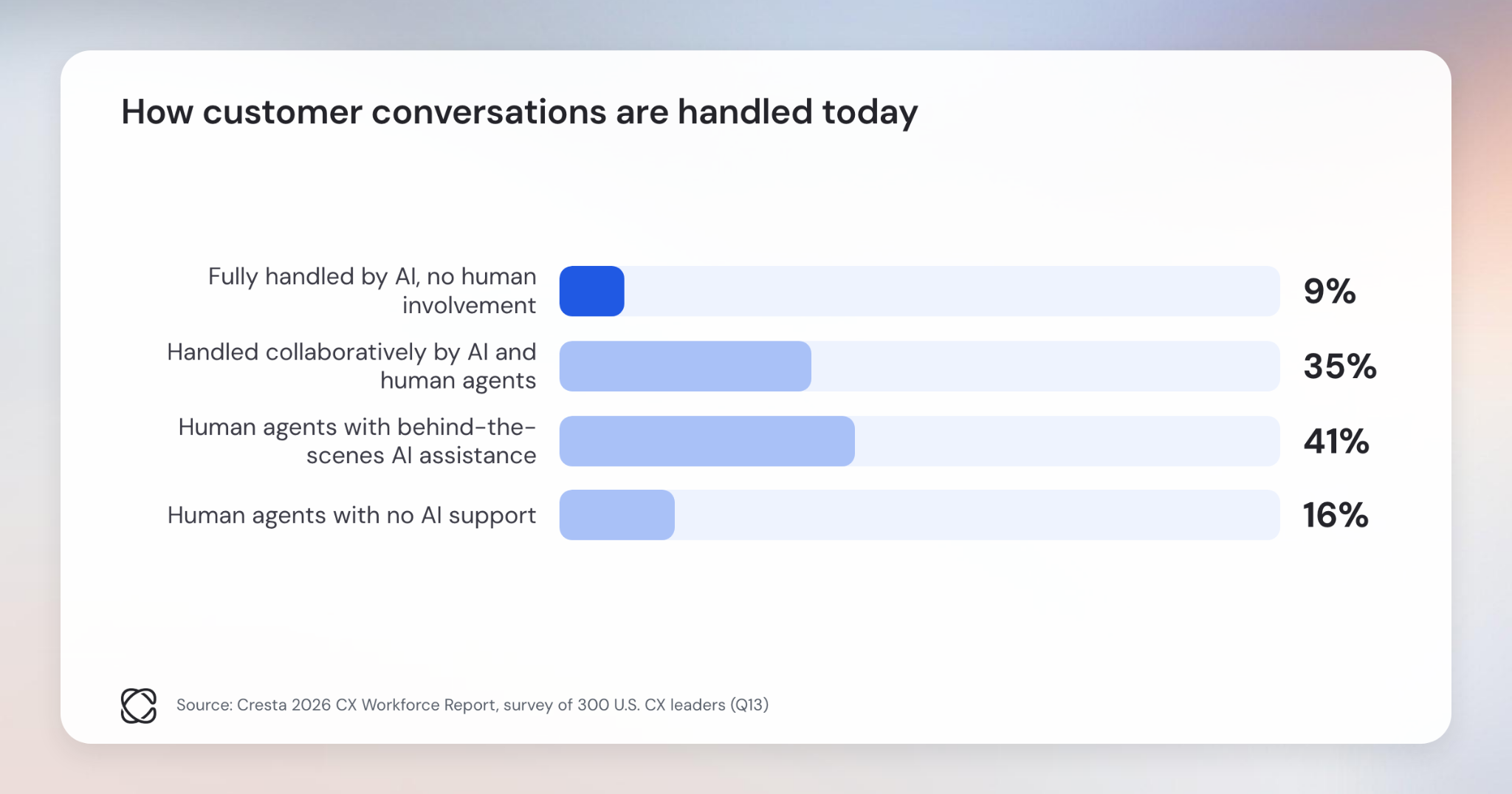
- The future of customer service is hybrid. Only 9% of conversations are handled entirely by AI, while 76% involve both AI and humans
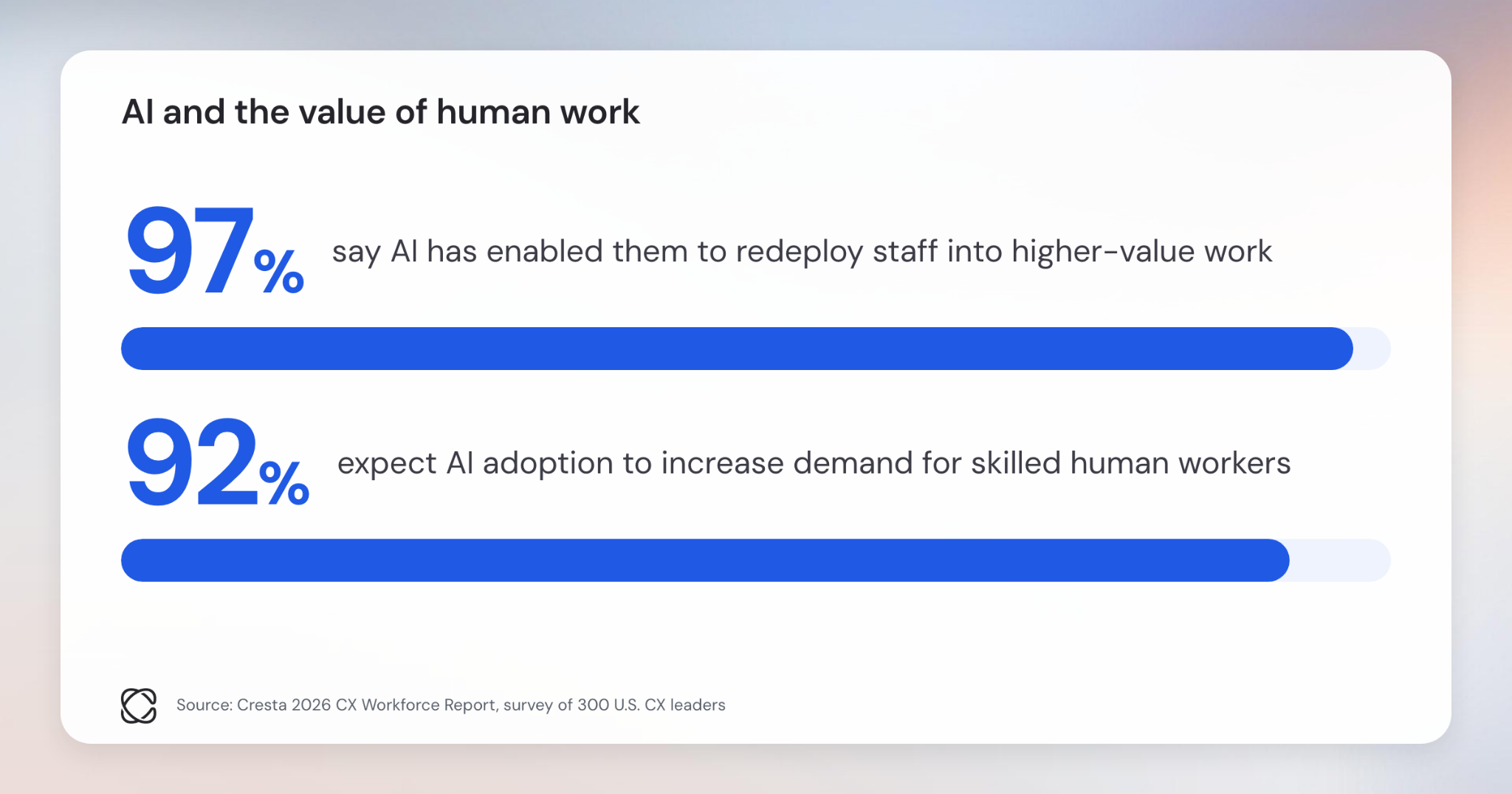
- AI is making human work harder and more valuable. 93% of leaders say human-handled calls are getting more complex, and 92% expect AI to increase demand for skilled agents
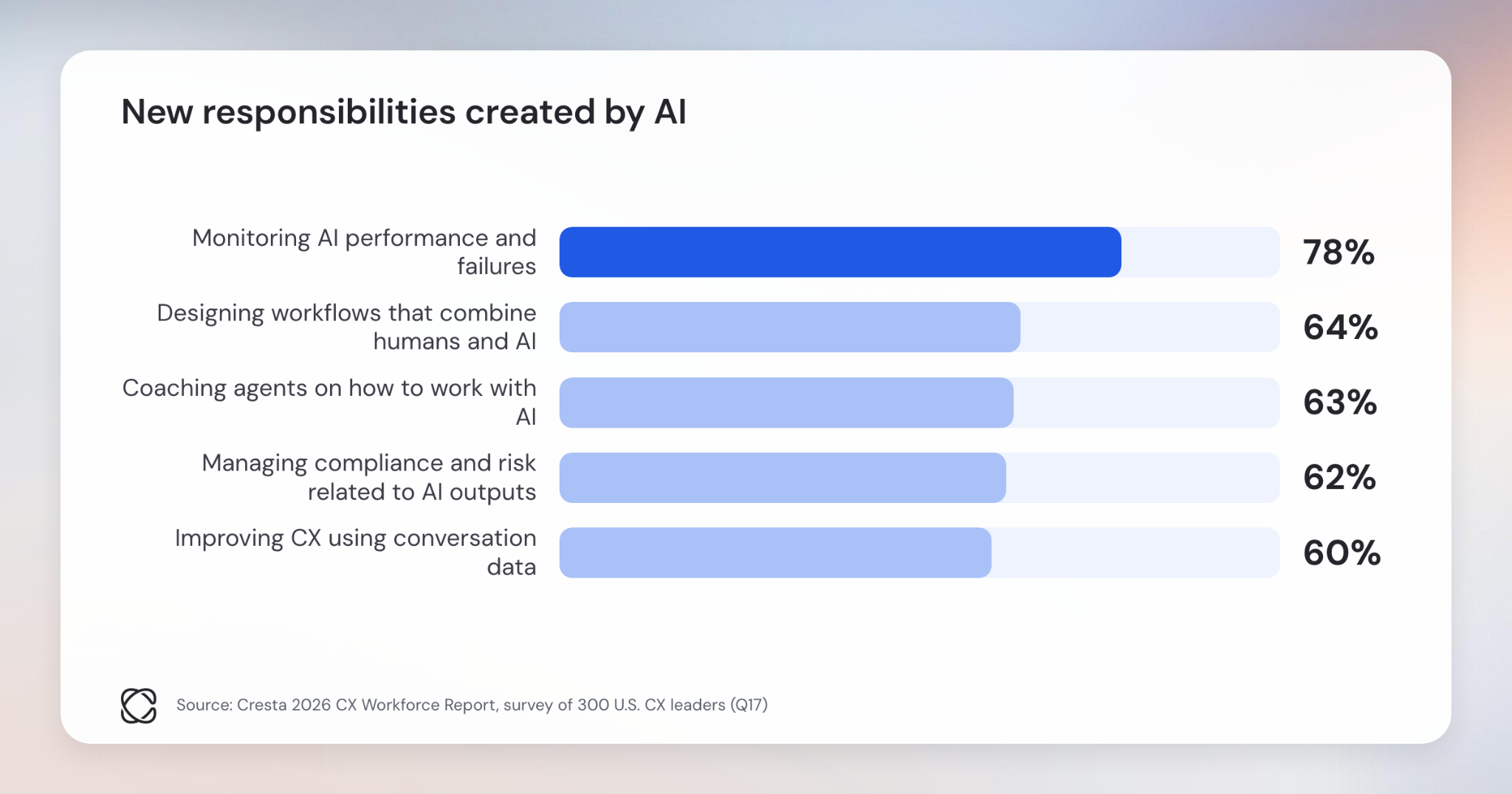
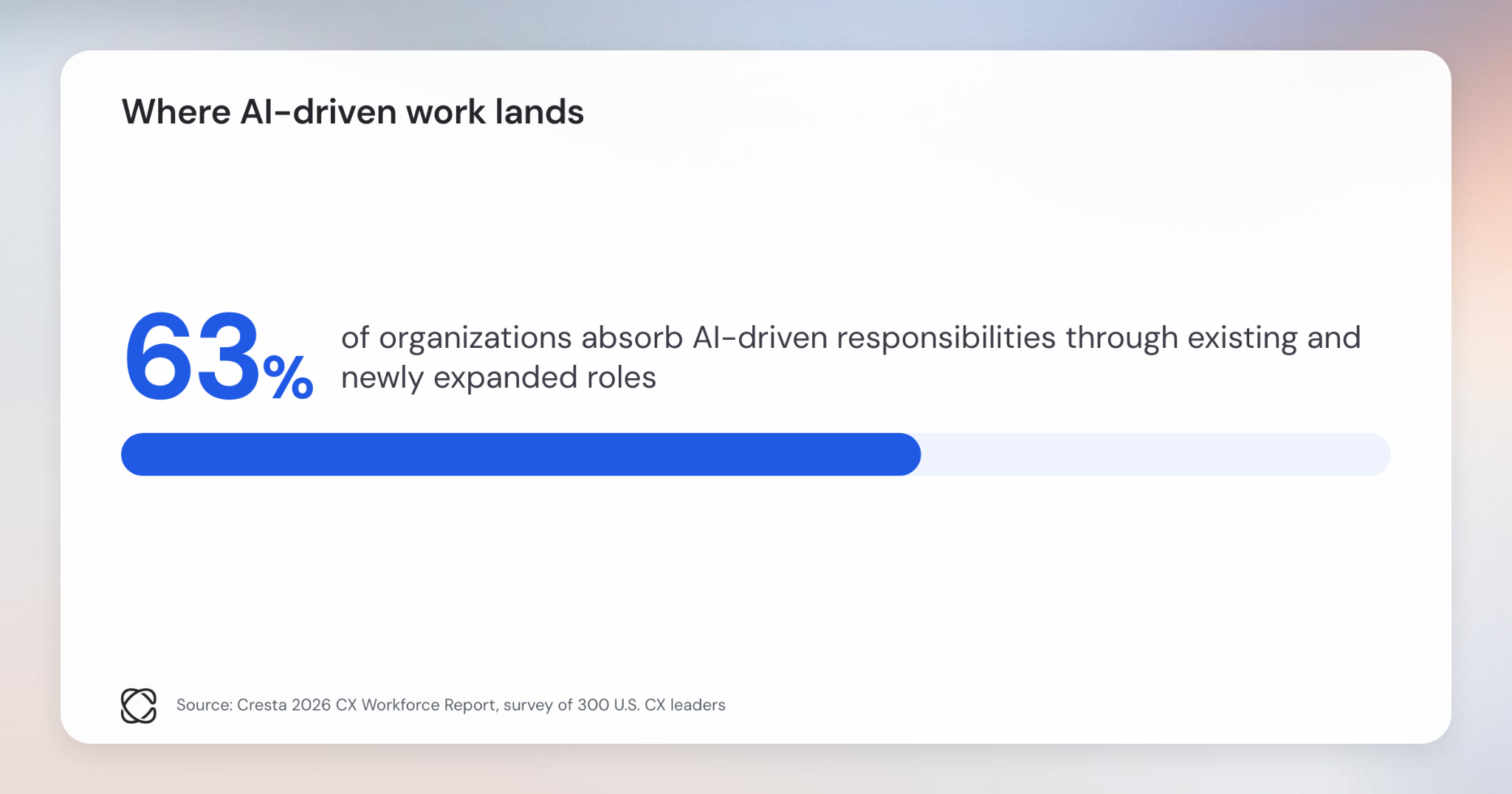
- AI is creating new work faster than organizations can define roles. 78% say monitoring AI is a new responsibility, yet 63% absorb it into existing roles
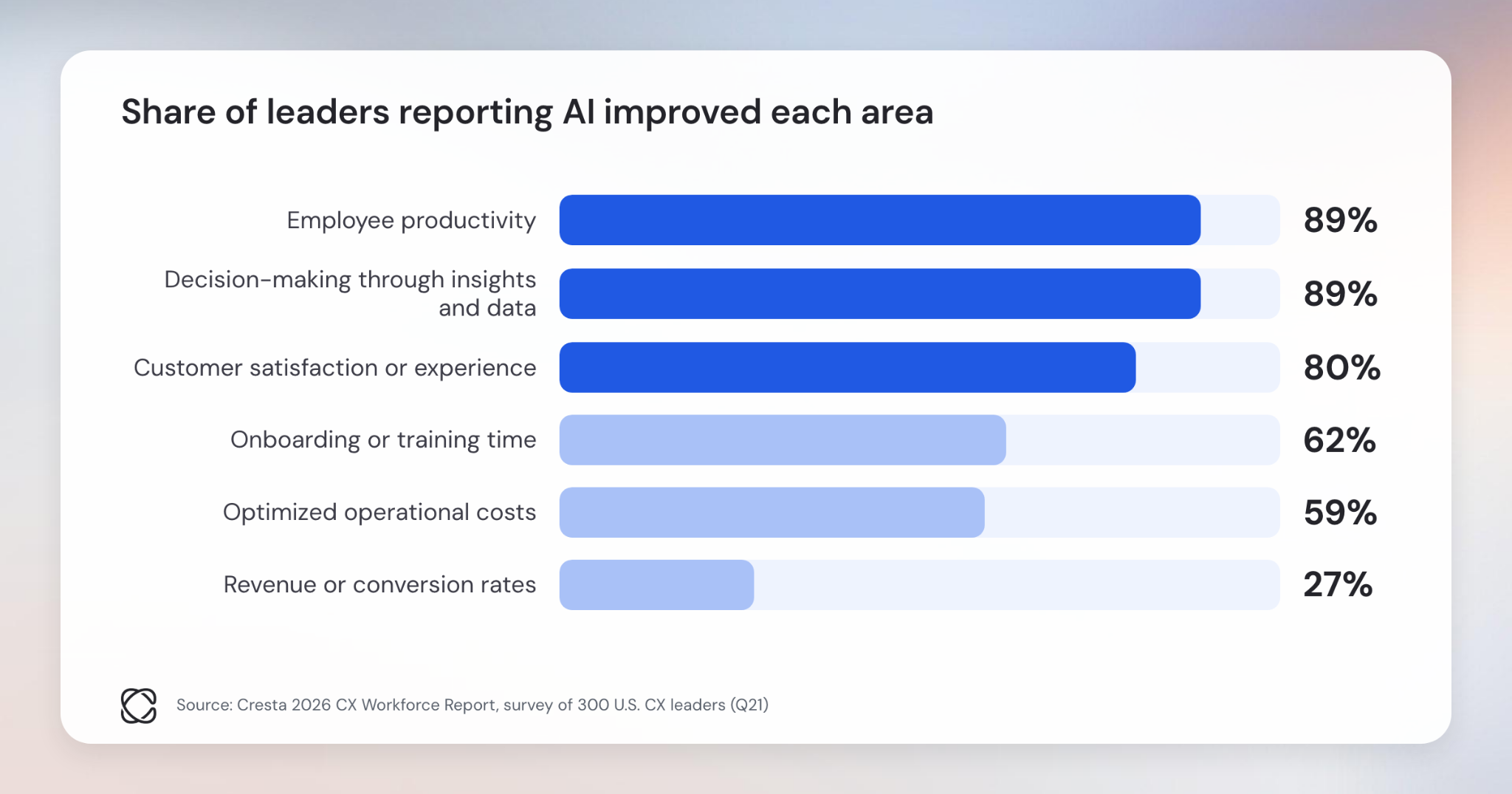
- AI’s strongest return so far is operational. 89% report higher productivity, compared with just 27% who see gains in revenue or conversion
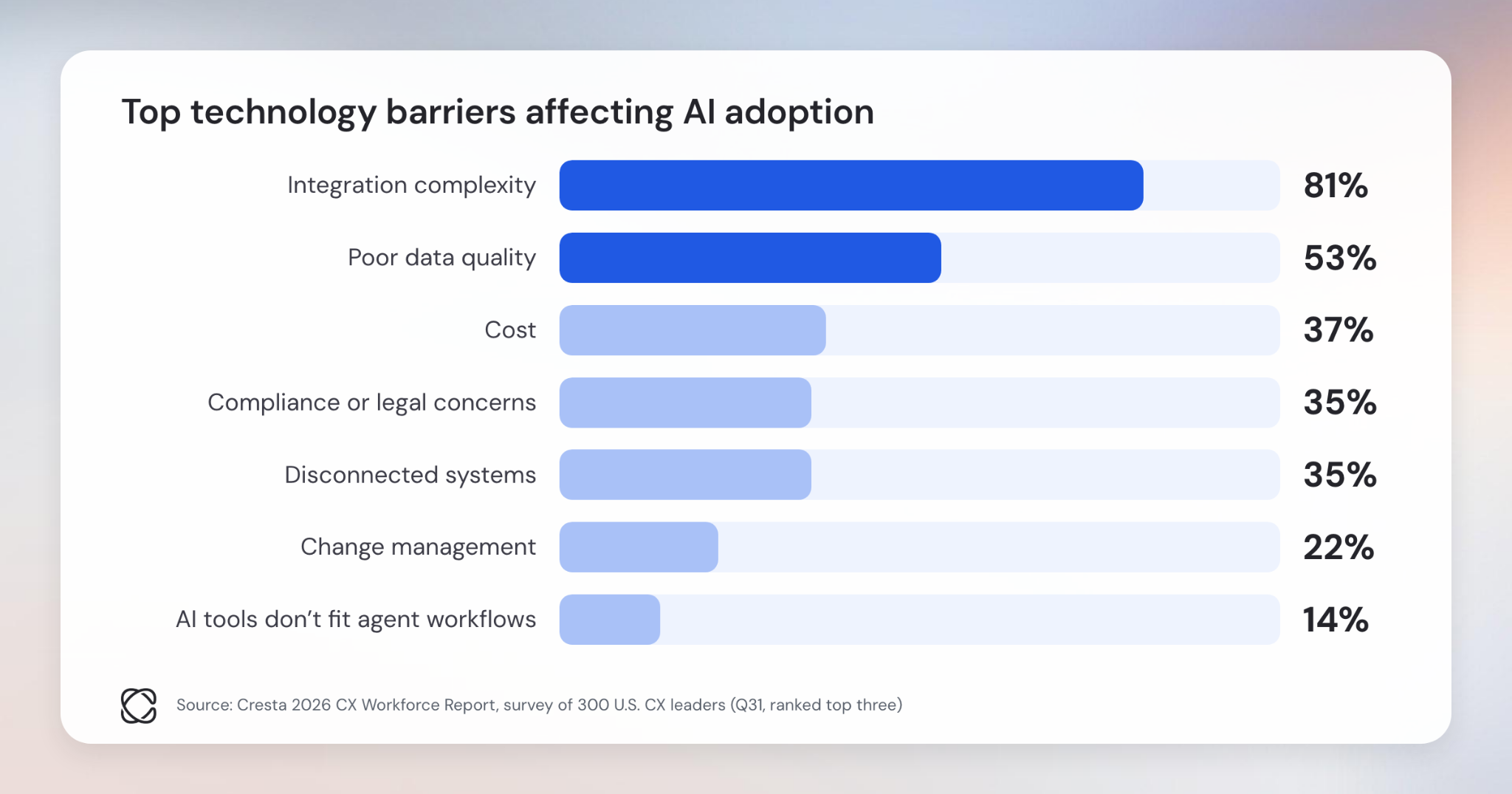
- Integration, not the technology, sets the pace of adoption. 81% cite integration complexity as a top barrier, well ahead of cost at 37%
Most AI in customer service statistics measure what the technology can do. The ones below measure what CX leaders say is happening inside their contact centers, so you can use the results to benchmark your AI rollout.
All of the findings come from our 2026 CX Workforce Report, a survey of 300 U.S. decision-makers responsible for customer support or customer experience software.
Taken together, they cover the hybrid operating model, the new shape of human work, the operational payoff of AI, and the readiness gaps that stall adoption.
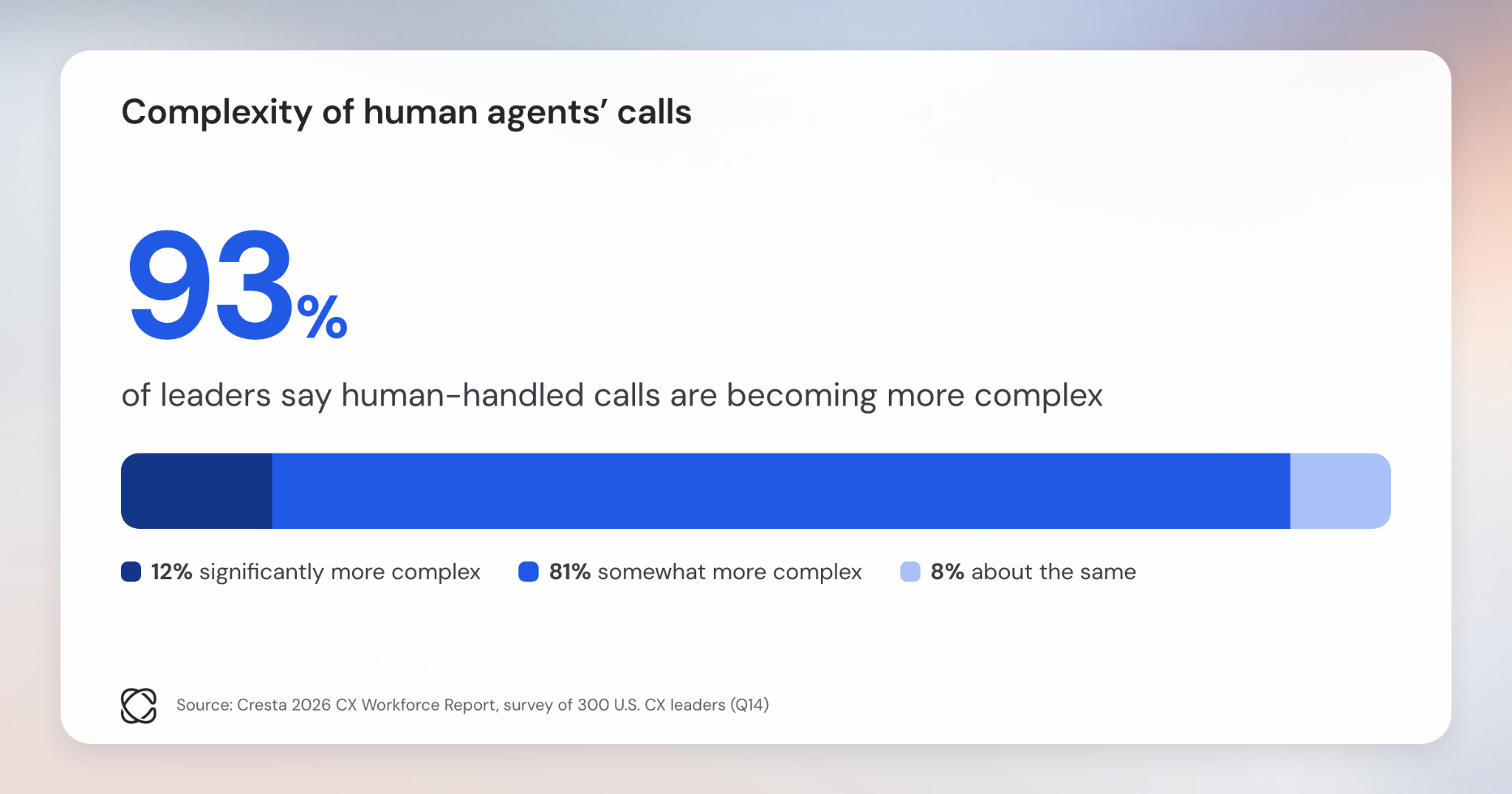
93% of leaders say calls handled by human agents are getting more complex
Eighty one percent of respondents said that human-handled calls are becoming somewhat more complex and another 12% say significantly more complex. Only 7% say complexity is about the same.
This finding makes sense intuitively: Relatively simple work gets automated first, so what remains for human agents is harder.
Only 9% of customer conversations are handled entirely by AI
The most common set up is a human agent with behind-the-scenes AI assistance (41%), followed by AI and human agents handling a conversation together (35%). Another 16% are handled by human agents with no AI support at all.
That puts 76% of conversations in a hybrid model, with AI and humans both involved.
97% of leaders say AI has enabled them to redeploy staff into higher-value work
A further 92% expect AI adoption to increase demand for skilled human workers.
Leaders are using AI to expand what their existing workforce can handle, and human agents that can roll up their sleeves and take on the most complex calls are only getting valued more.
78% of leaders say monitoring AI performance and failures is a new responsibility in their contact center
Designing workflows that combine humans and AI (64%) and coaching agents on how to work with AI (63%) come next.
The additional scope of responsibilities around AI will create new roles in contact centers that are likely to mirror what other workplaces add over the coming years.
63% of organizations absorb AI-driven responsibilities into existing and newly-expanded roles
New work often shows up before formal role design does. That can leave ownership fragmented and some labor hidden from workforce planning.
When organizations do create dedicated roles, Data & Analytics and AI Operations are the areas respondents name most often.
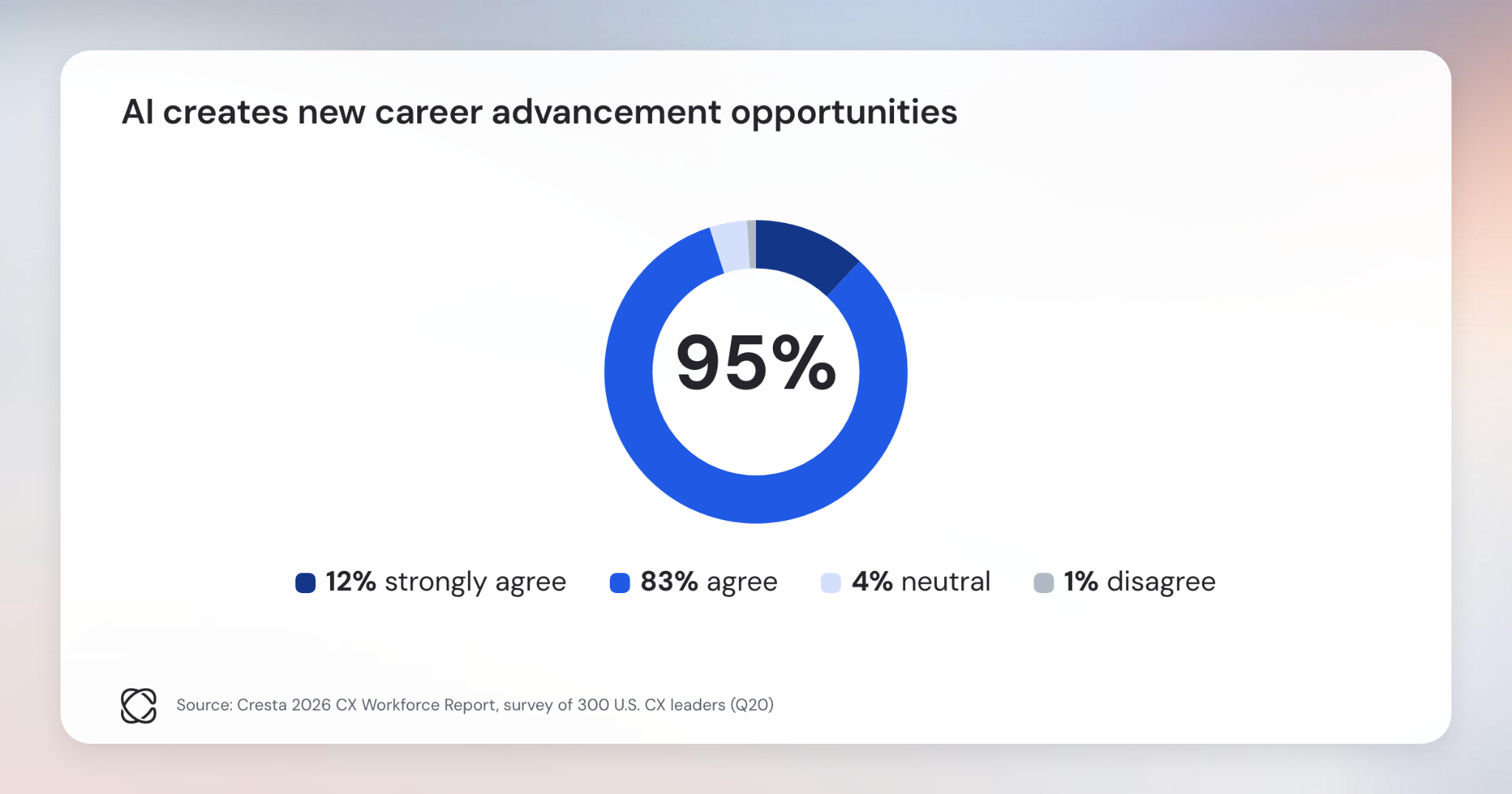
95% of leaders agree that AI is creating new career advancement opportunities
That includes 12% who strongly agree and 83% who agree. Only 1% disagree.
The opportunities extend beyond entirely new jobs into adjacent disciplines like analytics, operations, enablement, compliance, QA, and workflow design.
89% of leaders say AI has improved employee productivity
As far as other KPIs AI improves, decision making through insights is tied at 89%, followed by customer satisfaction or experience at 80%.
Revenue or conversion rates trail significantly at 27%, which points to operational gains as AI's strongest return so far.
81% of leaders cite integration complexity as a top barrier to AI adoption
Leaders ranked their three biggest technology barriers, and integration complexity led by a wide margin. Cost (37%), compliance or legal concerns (35%), and disconnected systems (35%) follow.
However, barriers vary by organization type. Mid-market companies and hospitality brands are more likely to cite cost, for example, while enterprises and financial services firms are more likely to cite compliance.
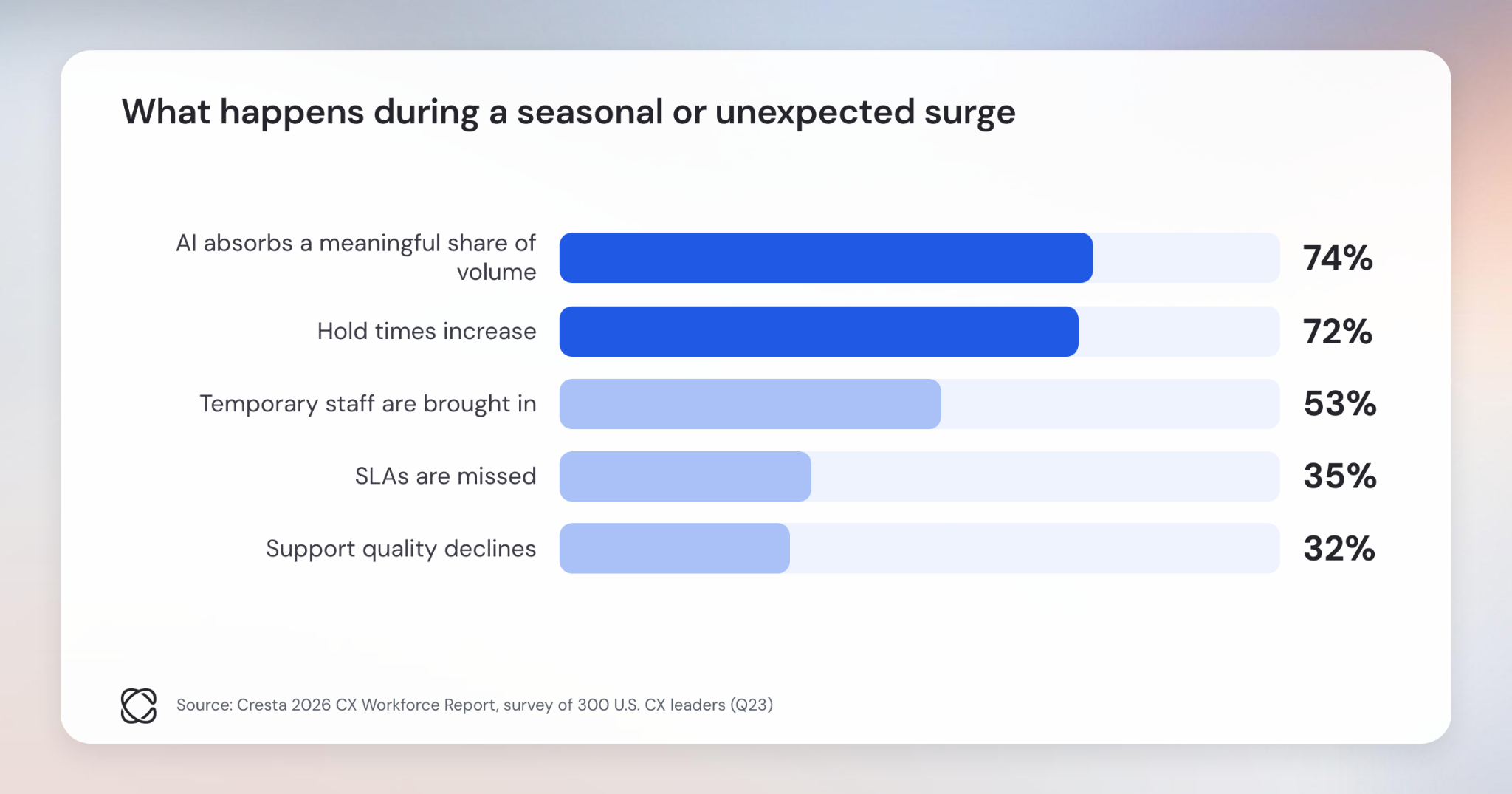
72% of leaders say hold times increase during demand surges, even with AI absorbing meaningful volume
During a seasonal or unexpected surge, 74% say AI absorbs a meaningful share of volume. Even then, 53% bring in temporary staff, 35% miss SLAs, and 32% see support quality decline.
AI clearly adds resilience, but human flex capacity still matters when demand spikes.
Final thoughts
Not every finding here applies equally to your contact center.
If you’re a mid-market retailer, you may care most about the cost and productivity numbers, while if you’re a regulated enterprise, you may care more about the compliance and role-design findings.
But across all nine data points, it’s clear that most contact centers will adopt a hybrid model where AI takes routine volume, human agents take the harder conversations, and the quality of the surrounding data and systems sets the pace of progress.
See the full research here.