The best HappyRobot alternatives in 2027


- The seven HappyRobot alternatives worth shortlisting are Cresta, Bland, Sierra, Parloa, NiCE Cognigy, Retell AI, and Synthflow
- The buying question has shifted from whether a tool can automate calls to whether automation, human-agent augmentation, and conversation intelligence run on one system
- If your work is freight brokerage and carrier calls, HappyRobot's logistics workflows may still be the closest fit
If you need AI agents for high-volume, multi-step phone work like scheduling and collections, you've likely looked at HappyRobot, an agentic AI platform.
HappyRobot is strong at operational workflows, covers 30+ languages, and has extended that into new industries, like financial services and insurance. That said, its testing and analytics center on AI agents, so it may not offer the real-time guidance, QA, and coaching human agents need when they take escalations.
To help you decide whether HappyRobot is the right fit for your business, we've compared it to the top alternatives.
Note: This guide was updated on 11/16/2026. The information on this page can change in the future.
How we evaluated alternatives to HappyRobot
We reviewed the vendors’ documentation, third-party reviews on G2, analyst coverage from Gartner and Forrester, and our own conversations with prospects and customers.
Using these inputs, we scored every option against the same five criteria:
- Fit to the conversation type: whether the platform matches the conversations you're automating, since routine, clear-goal requests suit AI agents while high-emotion, high-value moments need a person with AI behind the scenes
- Human-agent augmentation: whether the platform augments the people who take escalations with real-time guidance, knowledge, and automation during live calls
- Conversation intelligence and QA: whether it analyzes every conversation, AI and human, and feeds QA scoring and coaching, or only reviews a sample
- Integration and ownership: how it connects to your CCaaS, telephony, CRM, and knowledge systems, whether your team can build and change agents itself, and whether pricing is published
- Guardrails, testing, and compliance: how the platform locks required steps, tests agents before launch, monitors them live, and which certifications it holds
Here are the top HappyRobot alternatives scored against these criteria:
The top HappyRobot alternatives
Let's go deeper on each HappyRobot alternative,.
1. Cresta
Cresta, the AI operating system for CX, brings AI Agent, Agentic Assist, Deputy Agent, and Conversation Intelligence into one conversation layer, with models trained on your own conversations.
Highlights
- AI Agent resolves multi-step voice and digital conversations end to end, built from your real conversations, with guardrails, adversarial testing, and live oversight in the Agent Operations Center
- Agentic Assist augments human agents in real time with guidance, knowledge, and automation, so reps improve calls without waiting for a manager's review
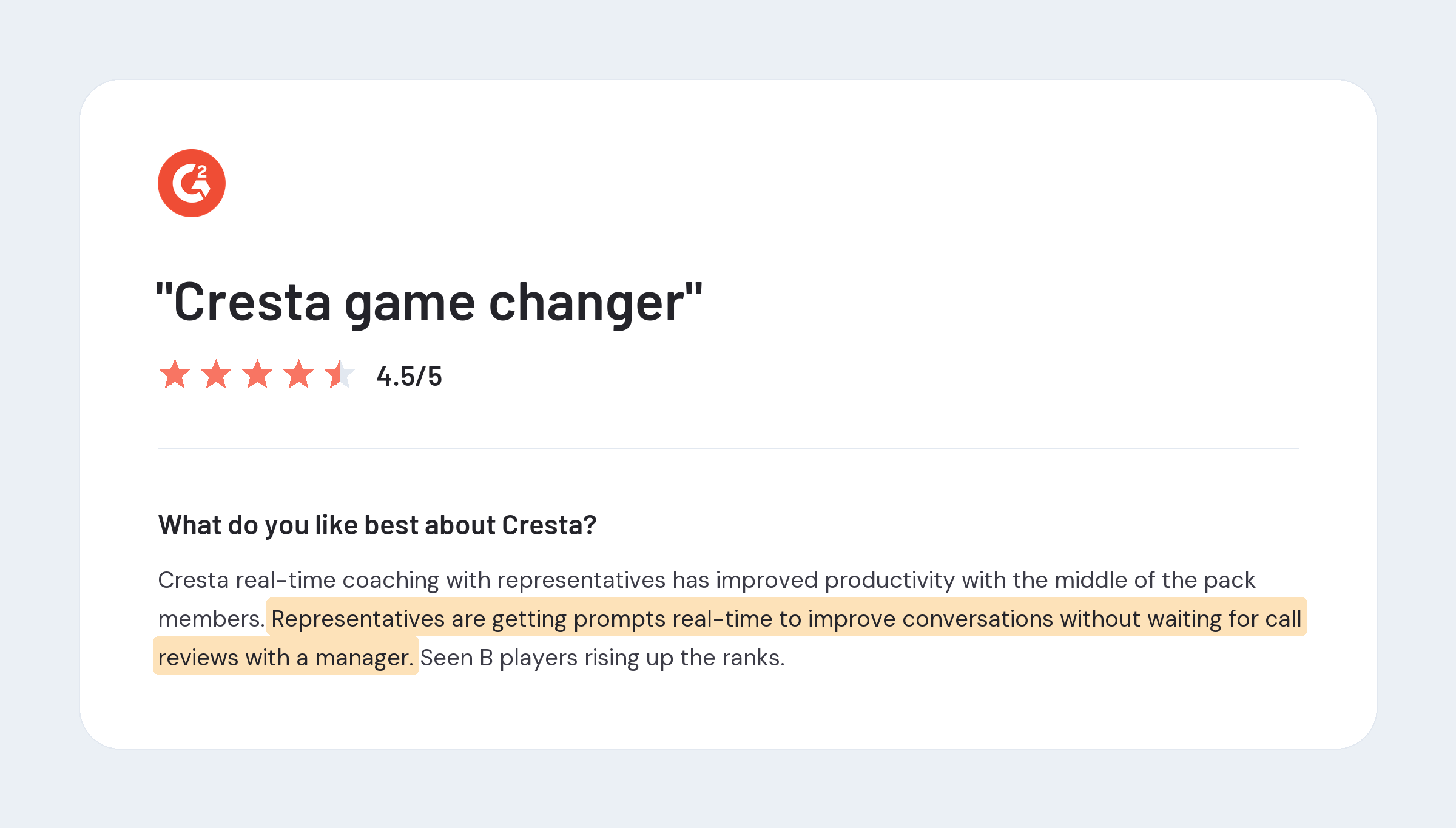
- Conversation Intelligence analyzes 100% of conversations using behavioral recognition rather than keyword matching, so you can see which agent behaviors drive outcomes like resolution, CSAT, and sales conversion
- Cresta was named a Leader in The Forrester Wave™: Conversation Intelligence Solutions for Contact Centers, Q2 2025, and it received the highest score in the Current Offering category
- Cresta Deputy Agent is a long-running agent that keeps goals and context across conversations, systems, and teams. It completes operational work in your CRM, case management, and payments systems, with people approving key steps
Why choose Cresta over HappyRobot
When you want to automate the right conversations and lift the human agents who handle the rest, Cresta runs AI Agent, Agentic Assist, Conversation Intelligence, and Deputy Agent on one platform. HappyRobot’s evaluation and analytics tools cover only its own AI agents’ sessions, with no real-time guidance, QA, or coaching for human agents.
Learn how Cresta can transform your CX operations
2. Bland
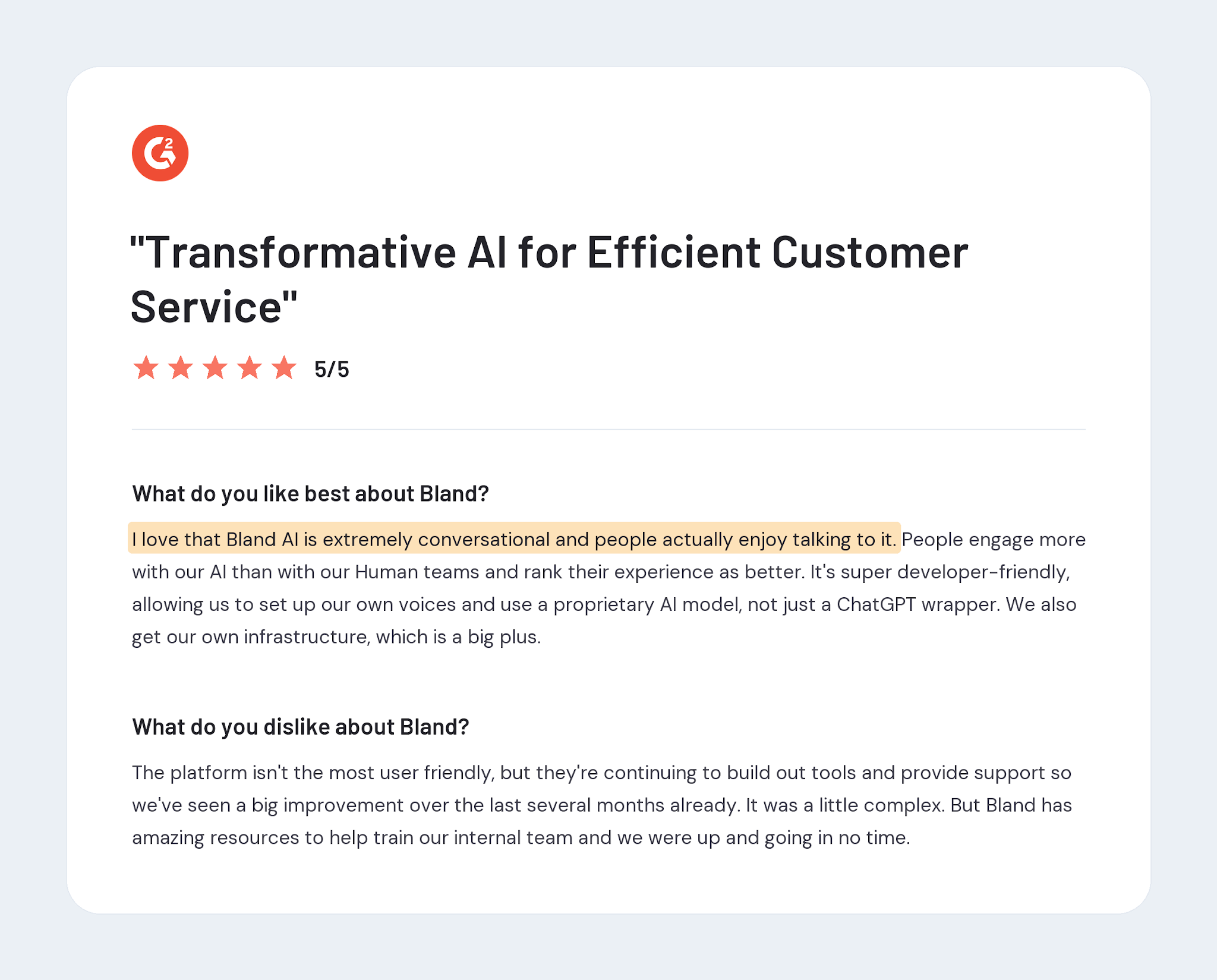
Bland is an enterprise voice AI platform for regulated phone calls, built on voice models it developed in-house for complex, high-stakes conversations.
Highlights
- An owned stack covers telephony, speech, language, and voice, deployable in Bland's cloud, your cloud, or on-prem on Enterprise plans, which gives regulated teams more control
- Conversational Pathways lock required steps like identity checks, disclosures, and amount confirmation, so compliance scripts run every time while the rest of the call stays natural
- Norm builds agents from a plain description, diagnoses flagged calls, and drafts and tests fixes, with each version passing checks before a staged release
- Bland Speech v3 is a text-to-speech model built for phone calls with about 200 ms responses. This natural pacing helps keep callers engaged on the line
- Security credentials include SOC 2 Type I and II, ISO 27001, HIPAA BAAs, and FedRAMP 20x Class A, which is useful for regulated and public-sector buyers
Why choose Bland over HappyRobot
When you want one vendor to own the whole call stack, with on-prem deployment as an option, Bland runs telephony, speech, language, and voice on its own models. HappyRobot runs in its managed cloud or your own AWS, GCP, or Azure tenant, and it relies on failover across outside LLM and speech providers.
Related: A guide to Bland AI alternatives
3. Sierra
Sierra is an enterprise conversational AI platform for customer-facing agents, sold on outcome-based pricing and founded by Bret Taylor (former Salesforce co-CEO) and Clay Bavor.
Highlights
- Ghostwriter builds agents from SOPs, transcripts, or plain-language goals and auto-generates simulations, with your team reviewing changes before anything ships
- Agent Studio lets teams build no-code journeys with agent traces, and Voice Sims stress-test agents against noise, accents, and transcription errors before launch
- Sierra agents take actions across connected systems, so one agent can carry more of the customer journey end to end
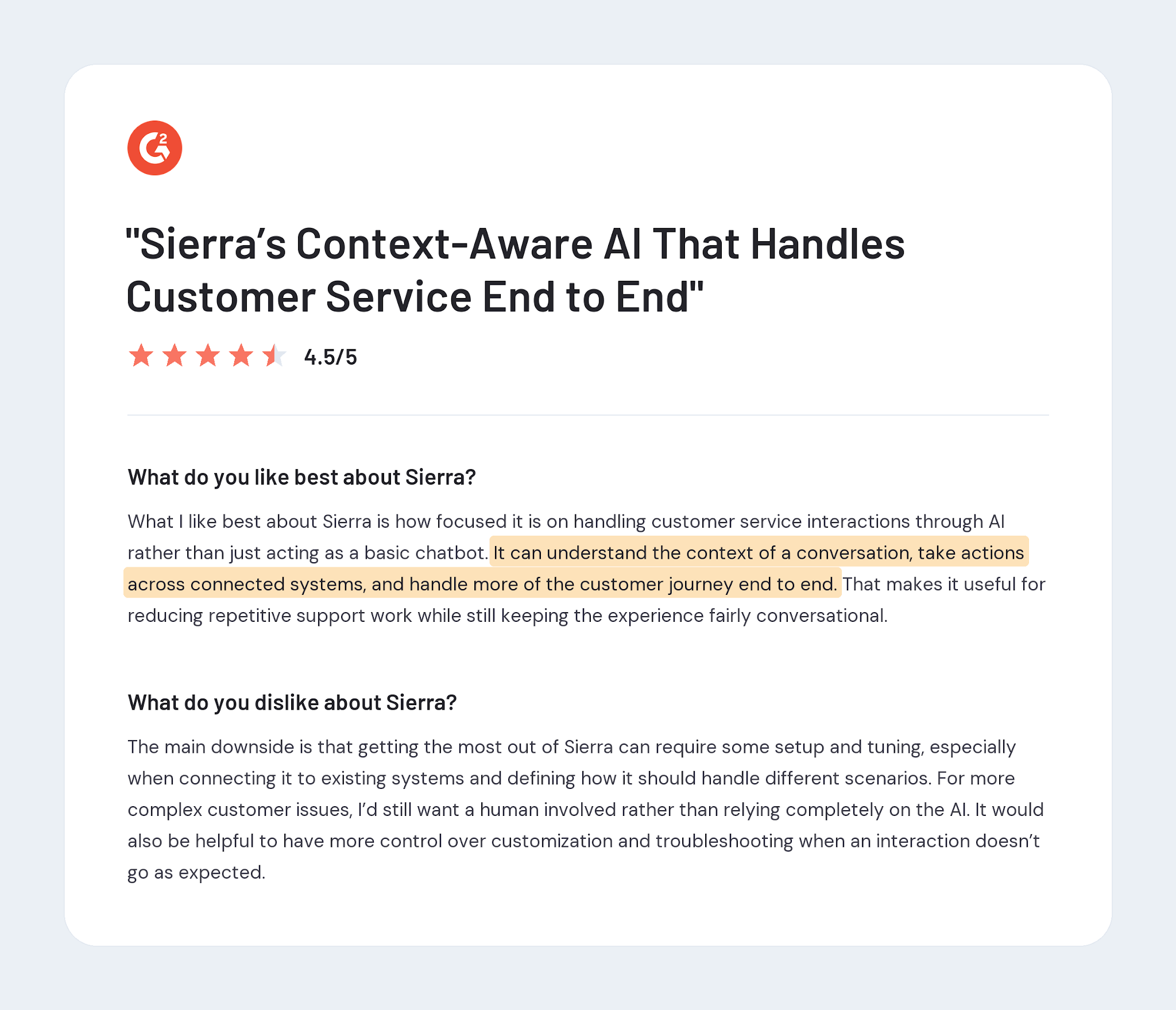
- Live Assist gives human reps grounded reply suggestions and one-click actions, using the same tools as the AI agent
- Supervisor models check responses and system-of-record actions run deterministically, which reduces hallucination risk; certifications include FedRAMP High and PCI DSS Level 1
Why choose Sierra over HappyRobot
When you operate outside freight and logistics and want customer service agents, choose Sierra. HappyRobot’s deepest integrations (TMS, load boards, and carrier workflows) are built for freight and logistics, so its strengths are still concentrated there.
Related: The best Sierra alternatives
4. Parloa
Parloa is a voice-first AI agent management platform for enterprise customer service that covers building, testing, monitoring, and optimizing agents on top of your existing CCaaS.
Highlights
- Agent Builder with Agent Blueprint keeps one agent definition as the source of truth, so one core change updates every deployed agent
- Performance Lab auto-generates simulations and A/B tests agent versions side by side, so teams can find problems before launch
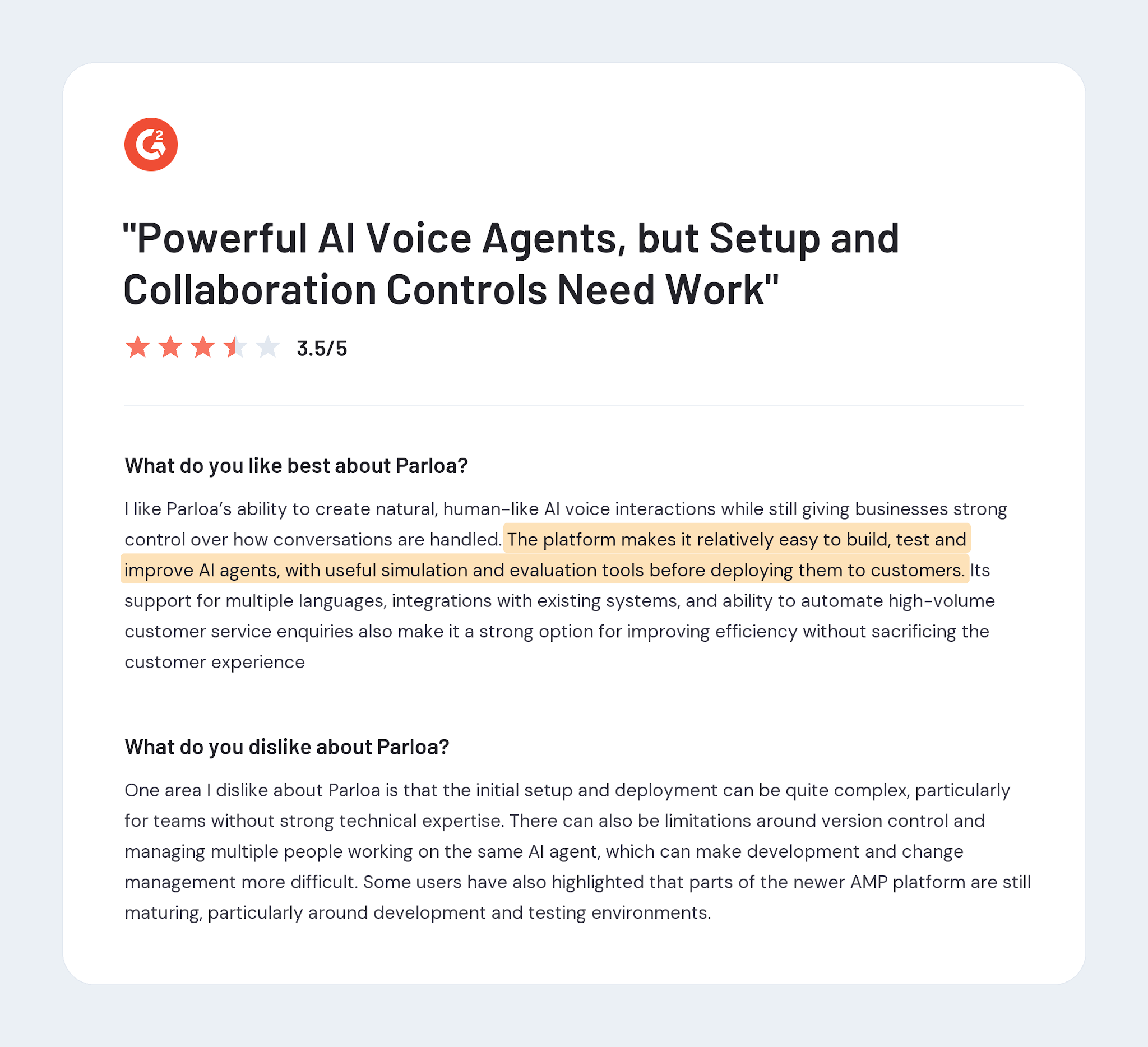
- Parloa Lens tracks real-time metrics and flags scope violations, PII leaks, and hallucinations, and it can also score human-agent conversations
- Direct SIP connectivity plugs into Genesys, Amazon Connect, Cisco, Avaya, and Talkdesk, with 140+ languages and adaptive barge-in, so you keep your current telephony
- LLM guardrails run at the infrastructure layer with PII redaction, Parloa Zones data residency, and ISO 27001, SOC 2, PCI DSS, and HIPAA certifications
Why choose Parloa over HappyRobot
When you want to automate high-volume voice calls on your existing CCaaS, choose Parloa. The platform connects directly to CCaaSs like Genesys, Five9, and Avaya, and while HappyRobot says it integrates with several CCaaS providers, it doesn’t name them.
Related: The best Parloa alternatives
5. NiCE Cognigy
NiCE Cognigy is an enterprise conversational and agentic AI platform for voice and digital AI agents and agent assist.
NiCE completed its $955 million acquisition of Cognigy in September 2025, and sells it both standalone and inside CXone Mpower.
Highlights
- AI Agent Studio blends LLM reasoning with deterministic flow steps and MCP connections, so you keep predictability where regulation requires it
- Voice Gateway lets you choose your speech engines and adds barge-in, DTMF, answering-machine detection, and 100+ languages
- Agent Copilot gives human agents CRM context, real-time sentiment, and wrap-up automation during live conversations
- Simulator runs synthetic-customer scenarios and regression tests, and next-gen Agent Tracing and Multivariate Testing are rolling out gradually from November 2026
Why choose NiCE Cognigy over HappyRobot
When your contact center already runs on NiCE CXone, choose NiCE Cognigy. HappyRobot sits outside that ecosystem and doesn’t name the CCaaS platforms it integrates with
Related: The top Cognigy alternatives
6. Retell AI
Retell AI is a voice agent platform for contact centers, with a no-code studio for CX teams and APIs for developers.
Highlights
- Agentic warm transfers let the agent decide when a person is needed and brief the human before connecting, so callers don't have to repeat themselves
- Static sentences handle disclosures and verification word for word, while generative replies cover the rest of the call
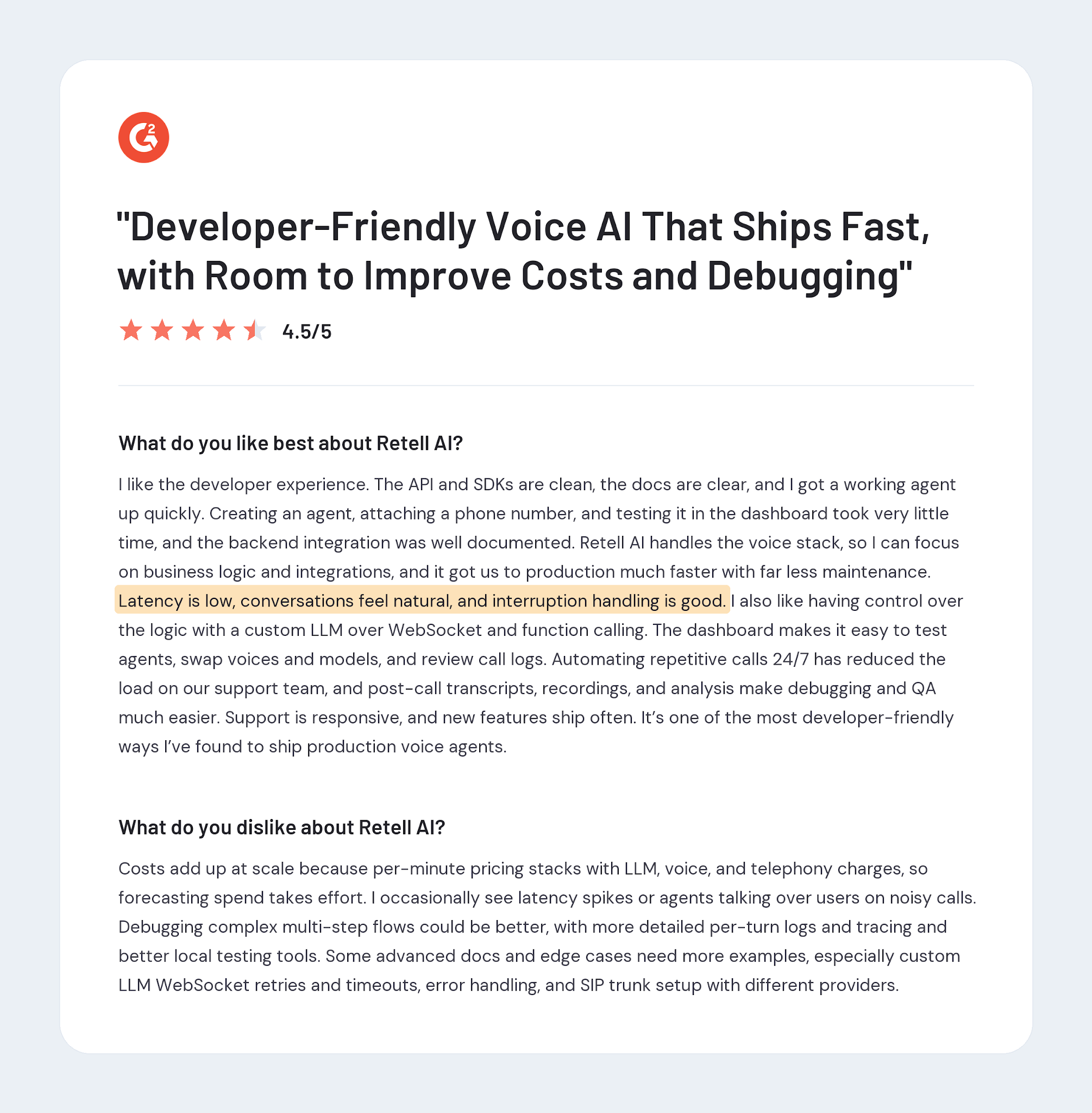
- Retell agents respond with low latency and handle interruptions, which keeps calls feeling natural
- Model choice spans OpenAI, Anthropic, and Google, or a custom LLM over WebSocket, so teams aren't tied to one model provider
- AI QA scores AI-agent calls against resolution criteria, sold as a paid add-on
Why choose Retell AI over HappyRobot
When you want to know what voice agents will cost before you talk to sales, choose Retell AI, which publishes usage-based per-minute pricing with no mandatory base subscription. HappyRobot doesn’t publish pricing, so you’d need a sales conversation to get a number.
7. Synthflow
Synthflow is an enterprise AI voice agent platform for contact centers, BPOs, and multi-location brands, sold through annual enterprise agreements and run inside your existing phone system.
Highlights
- Agents run inside existing phone systems such as Zoom, RingCentral, 8x8, and Twilio, so you keep your numbers and call flows
- Synthflow runs its own telephony and shows a SIP ladder, packet capture, and quality scores for every call, so telecom teams can debug single calls
- A visual flow builder with pre-launch simulations, version history, and Auto-QA can shorten build time for complex call flows
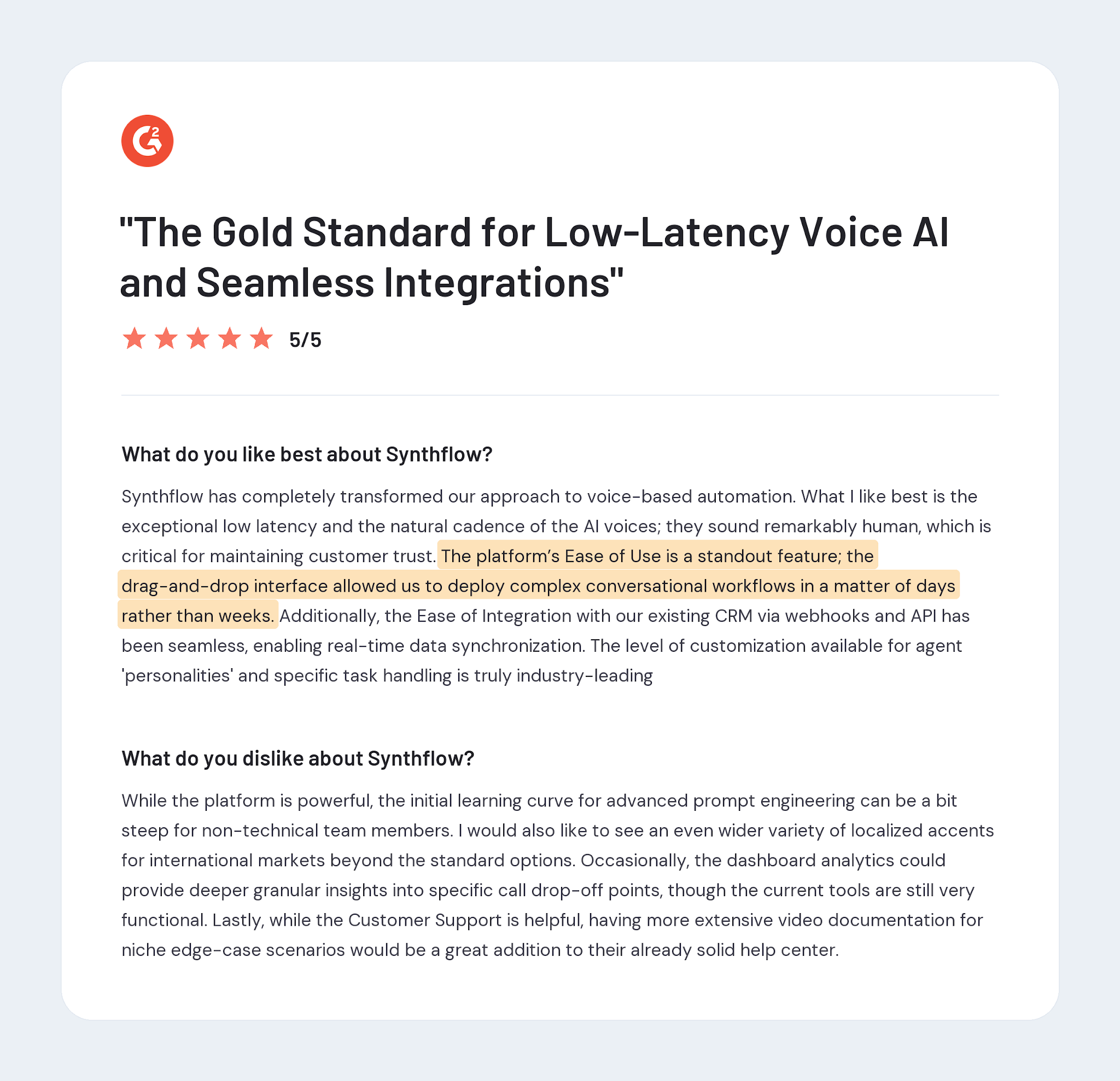
- Agents reply in about 500 ms, allow interruptions, switch languages mid-call, and warm-transfer with the full transcript
- Certifications include SOC 2 Type 2, ISO 27001, PCI DSS v4.0.1, and a HIPAA BAA, with a US or EU workspace region chosen at setup
Why choose Synthflow over HappyRobot
When you want AI agents inside the Zoom, RingCentral, or 8x8 phone system you already run, Synthflow connects natively and keeps your numbers and call flows. HappyRobot mentions direct integrations with several CCaaS providers without naming which ones.
Final thoughts
HappyRobot is a strong choice for operational, communication-heavy work, especially in freight and logistics, where its pre-built workflows run deepest. Its tools center on AI agents, though, so teams that also need to lift human-agent performance and analyze every conversation may find gaps.
Start evaluating HappyRobot alternatives when escalations grow as automation expands, or when human agents take complex calls without live guidance. Another signal is QA that still samples a small share of calls, leaving most conversations unreviewed.
As you build your shortlist, we also recommend running each finalist on your own conversations and asking every vendor how its AI and human agents learn from the same data.