Verint vs Zendesk: how to compare them
.avif)

- Choose Verint if you run a large or enterprise contact center and need deep workforce engagement, forecasting, scheduling, and quality automation
- Choose Zendesk if you want a mature, easy-to-adopt ticketing and omnichannel help desk that consolidates email, chat, phone, and social into one queue
- Both Verint and Zendesk lead in different categories, and neither is the current leader in real-time agentic Customer Experience AI
- Choose Cresta if you want real-time Customer Experience AI that augments agents live, automates the right conversations, and analyzes 100 percent of them on one platform
If you're modernizing an enterprise contact center and weighing workforce tools against a service help desk, you'll likely compare Verint and Zendesk.
Verint brings deep workforce engagement, quality automation, and analytics in one suite that layers onto your existing infrastructure. But many current and former users claim its interface is dated, and its reporting is slow and unintuitive.
Zendesk, on the other hand, gives you a stable, mature ticketing and omnichannel help desk that's fast to adopt and easy to centralize around. But its setup curve is steep, and advanced features and reporting sit behind higher-priced tiers.
We'll go deeper on each platform's pros and cons so you can evaluate them clearly. But first, here's how we compared the two platforms.
How we compared Verint and Zendesk
Our comparisons draw on analyst reports from Gartner and Forrester, third-party review sites (G2, TrustRadius, and Gartner Peer Insights), each vendor's product and positioning materials, and our own conversations with hundreds of prospects and customers.
We evaluated both platforms against five criteria:
- Core products and capabilities: Feature-list similarity can hide real gaps against the outcomes you're accountable for
- Deployment model and fit with existing infrastructure: Deployment approach drives migration risk, especially if you can't rip and replace what's already running
- Real-time, in-the-moment AI: Whether a platform can act during a live conversation rather than just automate post-interaction and self-service work decides if AI actually changes an outcome or just documents it
- Depth of conversation intelligence and quality coverage: Analyzing every interaction versus a small sample determines whether coaching and automation are built on the full picture or a guess
- Pricing and packaging as usage scales: Where advanced features sit in the tiers means what looks like a competitive quote now can turn into a much larger bill as usage grows
Verint overview
Verint positions itself as "The Customer Engagement Company" and centers on the Verint Open Platform, which brings AI, automation, and analytics together in one place.
It's built around Verint Da Vinci AI and a set of specialized bots (Quality Bot, Wrap Up Bot, Coaching Bot, and others), plus Agent Factory.
Pros
- Strong at enterprise-grade quality automation. Fiserv, a global fintech and payments company, went from 1 percent to 96 percent of calls evaluated using Quality Bot
- Broad suite that covers workforce engagement, analytics, and compliance in one platform, which reduces the number of point tools you stitch together
- Users often cite real operational gains from using the platform, highlighting its real-world efficacy

Cons
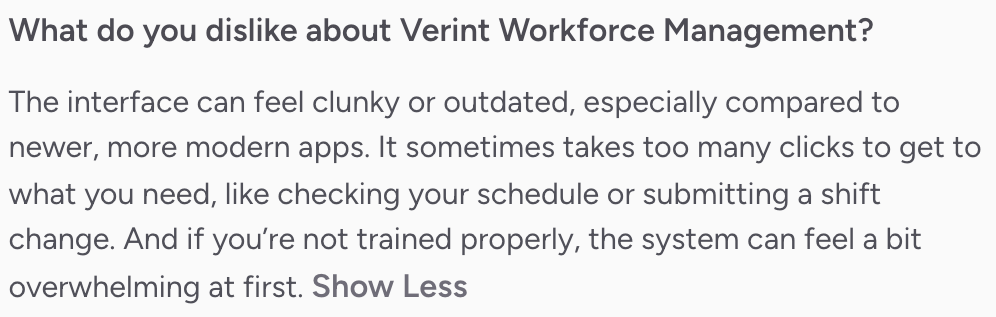
- There’s recurring criticism of a dated, clunky interface. For example, one workforce management user said (via G2) the interface feels relatively outdated and can take several clicks to get where they need
- There’s heavy change-management and implementation overhead, with one back-office user saying on G2 that a "simple change... might actually be a 3 or 4 day" job

- Verint recently dropped off the 2026 Forrester Wave for Conversational AI Platforms for Customer Service, signaling that the platform is losing momentum
Related: The top alternatives to Verint
Zendesk overview
Zendesk positions itself as an AI-first service platform and calls its offering "The Resolution Platform."
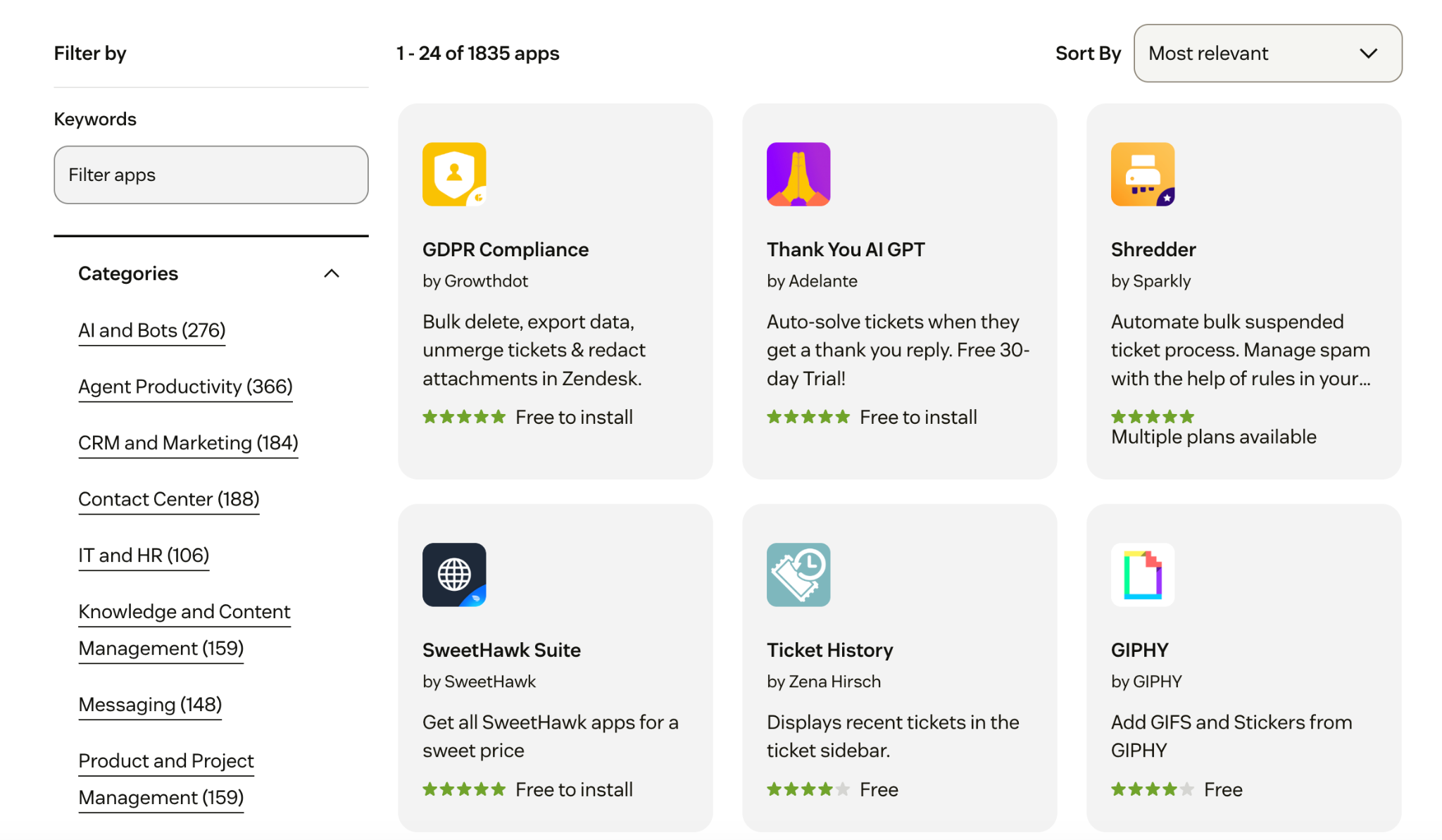
Its core product, Zendesk for Customer Service, is an AI-powered service solution with ticketing, omnichannel case management across email, chat, phone, and social messaging, a help center, AI agents, copilots, and a marketplace of more than 1,800 apps. Its scope covers customer service, employee service, and contact center as a service.
Pros
- The platform is consistently praised for being fast to adopt and easy to centralize around (the G2 review below is a good example of that)

- Named a Leader in the 2025 Gartner® Magic Quadrant™ for the CRM Customer Engagement Center
- Large marketplace of more than 1,800 apps, so you can extend the platform into your existing stack
Cons
- Steep setup and learning curve. G2 reviewers describe the initial setup and configuration as demanding and the learning curve as steep, especially for smaller teams

- The platform isn’t improving at the rate many users expect and want. One TrustRadius reviewer (shown below) shares this sentiment and has been a user for 5+ years

- Documented gaps on advanced features, with some reviewers saying (like the TrustRadius reviewer below) that you have to use their integrations to fill them

Given all the pros and cons of each platform, it can be hard to decide between the two. We'll help you navigate the decision more directly next.
Zendesk vs Verint: which should you choose?
Choose Zendesk if your priority is a mature ticketing and omnichannel help desk, you have a smaller or mid-size service team, and you can absorb the setup curve and tier-based pricing as you scale.
Choose Verint if you run a large or enterprise contact center where workforce engagement, forecasting, scheduling, and quality automation are the priority, and you need on-premises or hybrid deployment on existing infrastructure.
If your must-have is real-time AI that acts during the conversation, not after it, neither platform is built primarily for that.
Don't settle for Verint or Zendesk
Cresta is the leading AI platform for CX that unifies AI Agent, Agent Assist, and Conversation Intelligence on one conversation layer.
Our models are trained on your own conversations, not generic inputs, so the platform reflects how your business really runs.
Here’s where we differ from Verint and Zendesk:
- Real-time, not post-interaction. Verint's Quality Bot evaluates interactions after they happen, and Zendesk centers on ticketing and case management once a contact is logged. Our Agent Assist augments agents live, surfacing outcome-driven guidance during the conversation while the human stays in control
- Trained on your own conversations. Verint's Da Vinci AI and Zendesk's AI agents lean on more generic models. We fine-tune on your real conversation data, so guidance and automation reflect what actually works in your operation
- One unified platform. Verint's breadth draws recurring complaints about a clunky, stitched-together experience, and Zendesk relies on add-ons and marketplace apps. We run analysis, automation, guidance, and QA on one intelligence layer, so insight from every conversation feeds what agents see and how AI agents are built
See how Cresta can work in your contact center by scheduling a demo with our team!