
Leveraging Technology for AI Maturity: Choosing the Right Tools and Platforms
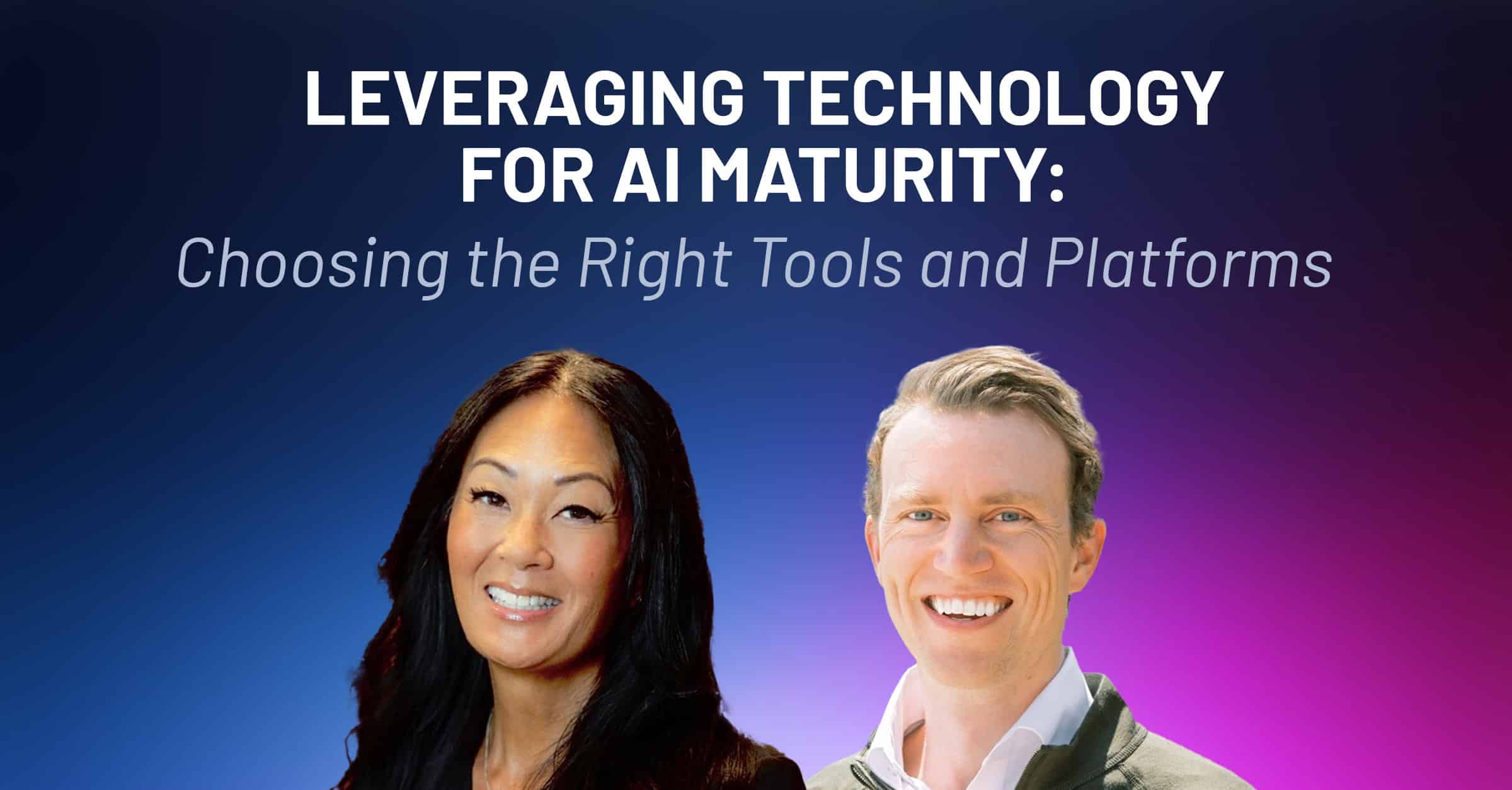
Welcome to the AI Maturity Blueprint webinar series, where expert speakers explore the four essential pillars of AI adoption in contact centers: People, Process, Technology, and ELT Buy-In. In this series, you’ll learn how to build a next-generation contact center where AI and human agents seamlessly collaborate to deliver exceptional results.
Episode #3 is all about cutting through the AI hype and getting real about technology. Choosing the right tools, avoiding costly mistakes, and building a tech stack that delivers on AI’s promise.
These days, everything claims to have AI—your CRM, your phone, maybe even your office coffee maker. AI is only as good as the tools behind it, and picking the right ones isn’t about chasing trends—it’s about choosing technology that actually moves the needle for your business.
The wrong tools? They lead to wasted budgets, frustrated agents, and AI that’s more buzzword than business driver. The right ones? They transform your contact center into a smarter, faster, and more efficient operation.
In this session, Ali Migaki, Chief Experience Officer at IQ Credit Union, and Brandon Teegen, Sr. Director of Strategy and Solutions at Cresta will take you through:
- How to evaluate AI solutions that truly enhance agent performance and customer experience
- The essential pillars of an AI-ready tech stack, from high-quality data inputs to real-time architecture
- Common pitfalls in AI tool selection—and how to avoid them
- Best practices for rolling out AI incrementally to maximize adoption and ROI
Whether you’re just beginning your AI journey or looking to optimize your existing investments, this webinar will equip you with the insights you need to build a future-proof contact center.
Speakers
View more resources
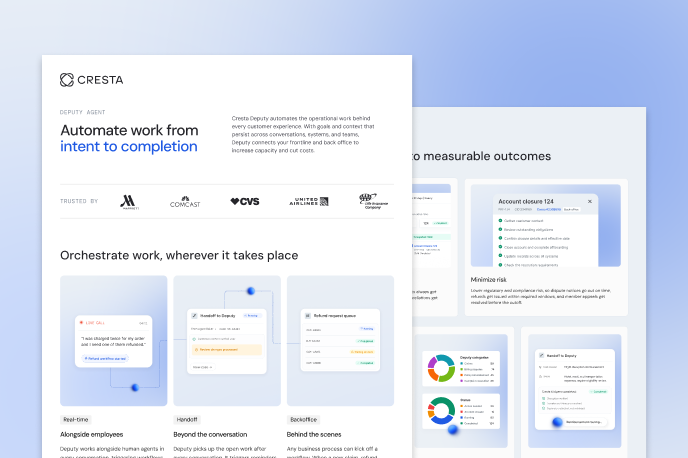
Cresta Deputy Agent
Cresta Deputy automates the operational work behind every customer experience from intent to completion.