
The best AI agents for healthcare contact centers in 2027


- AI agents for healthcare contact centers handle patient and member conversations by voice or chat, complete tasks like scheduling, and can hand off to staff
- Pick Cresta for unified AI and human agents, Observe.AI for QA-first teams, Kore.ai for custom builds, Cognigy.AI for NiCE CXone, and Hyro for Epic
- Evaluate AI agents by first confirming a signed business associate agreement (BAA), then test integrations, handoffs, guardrails, and QA coverage
If you find that routine patient calls to your call center crowd out the ones that need a human, you might decide to automate the former with an AI agent.
But not all healthcare AI agents are built equal.
Some are healthcare-native patient access agents that plug straight into patient records. Others are enterprise platforms that pair automation with live help for human agents and quality assurance (QA), or call review.
To help you pick the best AI agent for your healthcare contact center, we'll evaluate the top options and walk through how to evaluate each. But first, let's look at what these agents can do and where they fit.
Note: This article was updated on 11/06/2026. The information below can change in the future.
Overview on AI agents for healthcare contact centers
AI agents for healthcare contact centers hold patient and member conversations by voice or chat and finish routine tasks on their own. When a request needs a person, they hand the patient to staff along with the context of the conversation.
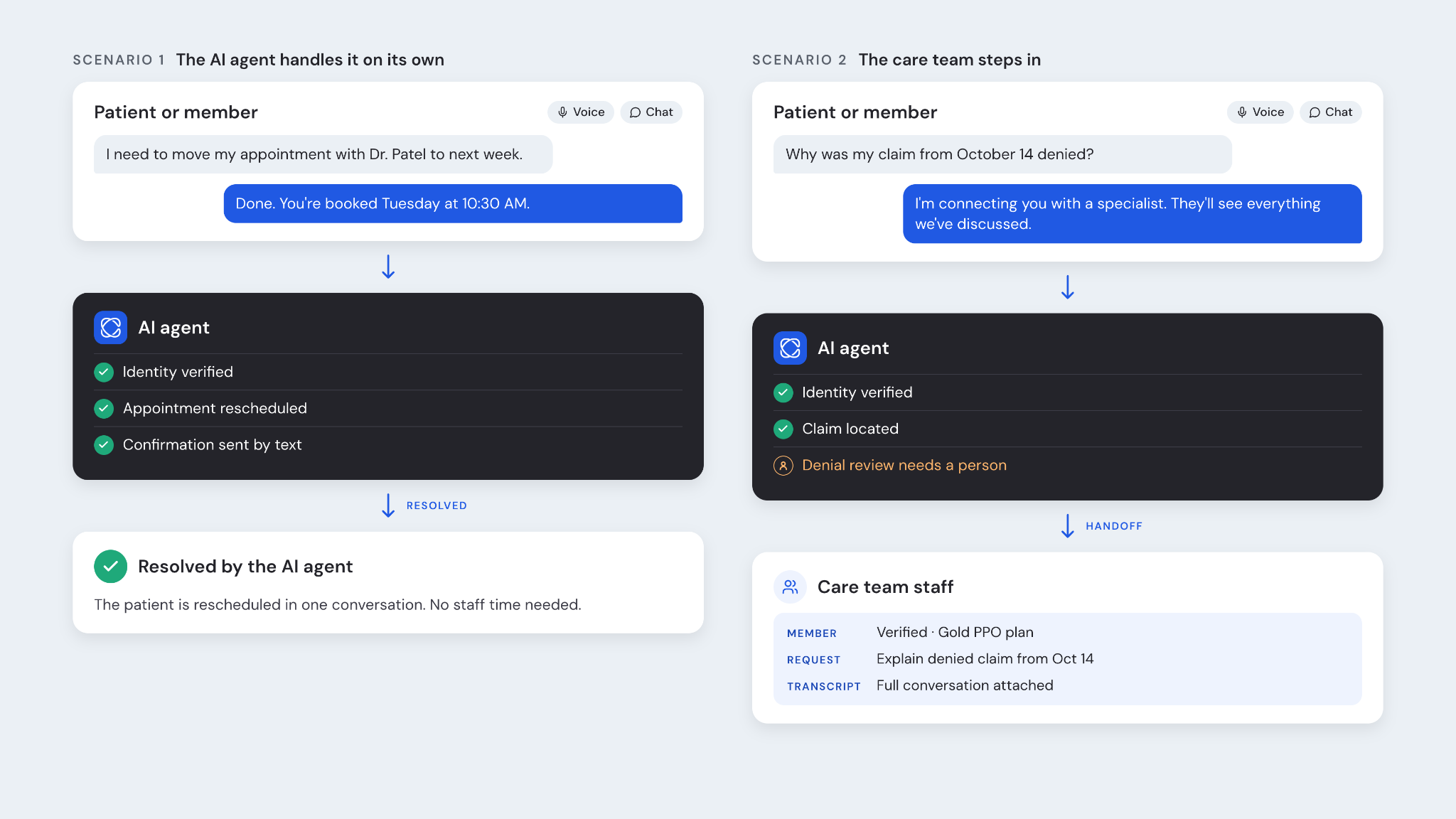
These AI agents typically use:
- Plain-speech understanding: patients say what they need in their own words, unlike interactive voice response (IVR) menus or scripted chatbots with fixed paths
- Patient authentication: the agent verifies a caller before sharing or changing protected health information (PHI), which the HIPAA Privacy Rule protects
- Record lookups and updates: the agent reads and updates the electronic health record (EHR), scheduling, and billing systems to finish the task
- Voice and digital channels: one agent works across phone, chat, and text, inside the contact center as a service (CCaaS) platform that routes conversations
- Handoff with context: staff get the transcript and what's already done, so patients don't repeat themselves
- Compliance safeguards: the vendor signs a BAA, the HIPAA contract for handling PHI, and the agent adds encryption and access controls
How we evaluated the best AI agents for healthcare contact centers
We built this list from G2 reviews, public product documentation, and our own conversations with customers and prospects.
We scored each contact center AI platform on these criteria:
- HIPAA posture and BAA: whether the vendor handles PHI under a signed BAA
- EHR and system integrations: how the AI agent reads and updates the EHR, customer relationship management (CRM), billing, and scheduling systems
- Voice and digital coverage: which channels the AI agent works on
- Human handoff and agent augmentation: how cleanly calls pass to staff and how the platform helps them live
- Guardrails and testing: how teams limit, test, and watch the AI before and after launch
- QA and analytics: whether every conversation gets reviewed for quality and compliance
Here's how the vendors compare across those criteria.
The best AI agents for healthcare contact centers
The best AI agents for healthcare contact centers are Cresta, Observe.AI, Kore.ai, Cognigy.AI, and Hyro. Each review covers who the platform fits, its key healthcare features, and what G2 reviewers say.
1. Cresta
Cresta is the AI operating system for CX. Its AI Agent automates patient support across scheduling, billing, eligibility verification, and care coordination.
It shares one conversation layer with Agentic Assist and Conversation Intelligence, while Deputy Agent takes on back-office work.
Key AI agent features
- Built from real conversations: AI Agent is designed from each customer's own conversation data, not idealized scripts
- Shared memory across channels: context carries across voice, chat, and handoffs, so patients don't repeat themselves
- Synthetic Customers testing: teams test AI Agent against simulated callers and surround it with guardrails before patients hear it
- System connections: AI Agent reaches CRM, billing, and scheduling systems through secure function calling and Model Context Protocol (MCP) support
- Agentic Assist on live calls: human agents see up-to-date eligibility, benefits, and billing details during the conversation
- QA on every call: Conversation Intelligence monitors each call for quality, accuracy, and regulatory compliance
- HIPAA support: Cresta supports HIPAA compliance and lists HIPAA on its Trust Center
What reviewers say
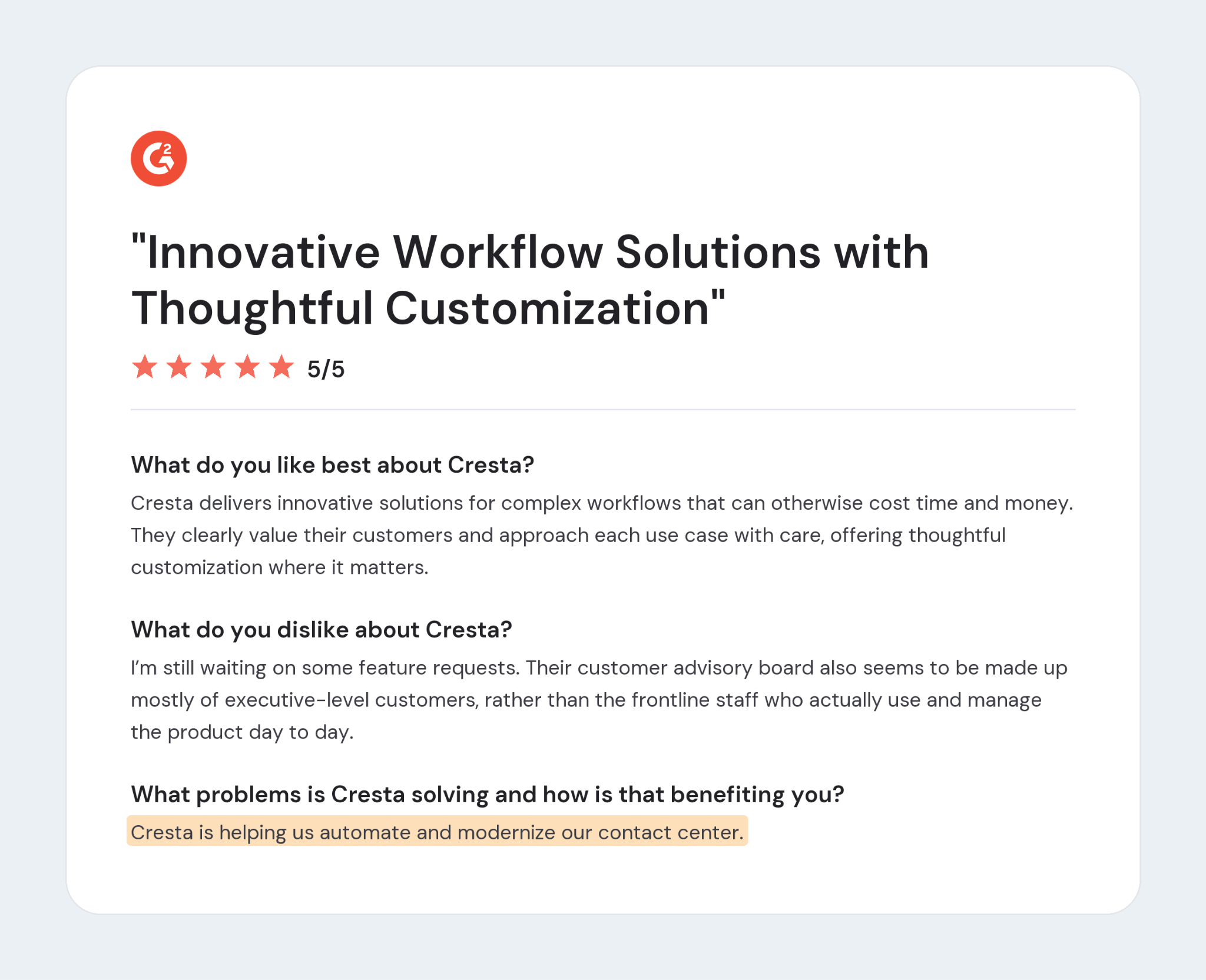
G2 reviewers value Cresta AI Agent’s ability to fully automate many use cases as well as its level of customizability.
Learn how Cresta AI Agent can handle scheduling, eligibility, billing, and more.
2. Observe.AI
Observe.AI pairs VoiceAI agents with real-time help for human agents and automated QA. It's built for healthcare payers and providers that want automation and call review in one product.
It's best for healthcare contact centers whose main priority is QA and coaching and that are adding voice agents.
Key AI agent features
- Patient call automation: VoiceAI agents handle scheduling, pre-authorization, prescription refills, referrals, and billing inquiries
- Care instructions: agents cover pre-visit preparation and discharge instructions
- Secure patient authentication: agents verify callers and follow structured, compliant workflows
- Compliance claims: Observe.AI claims HIPAA and PCI-DSS compliance for its healthcare work
- QA flags: automated QA flags missed disclaimers and potential HIPAA violations
What reviewers say
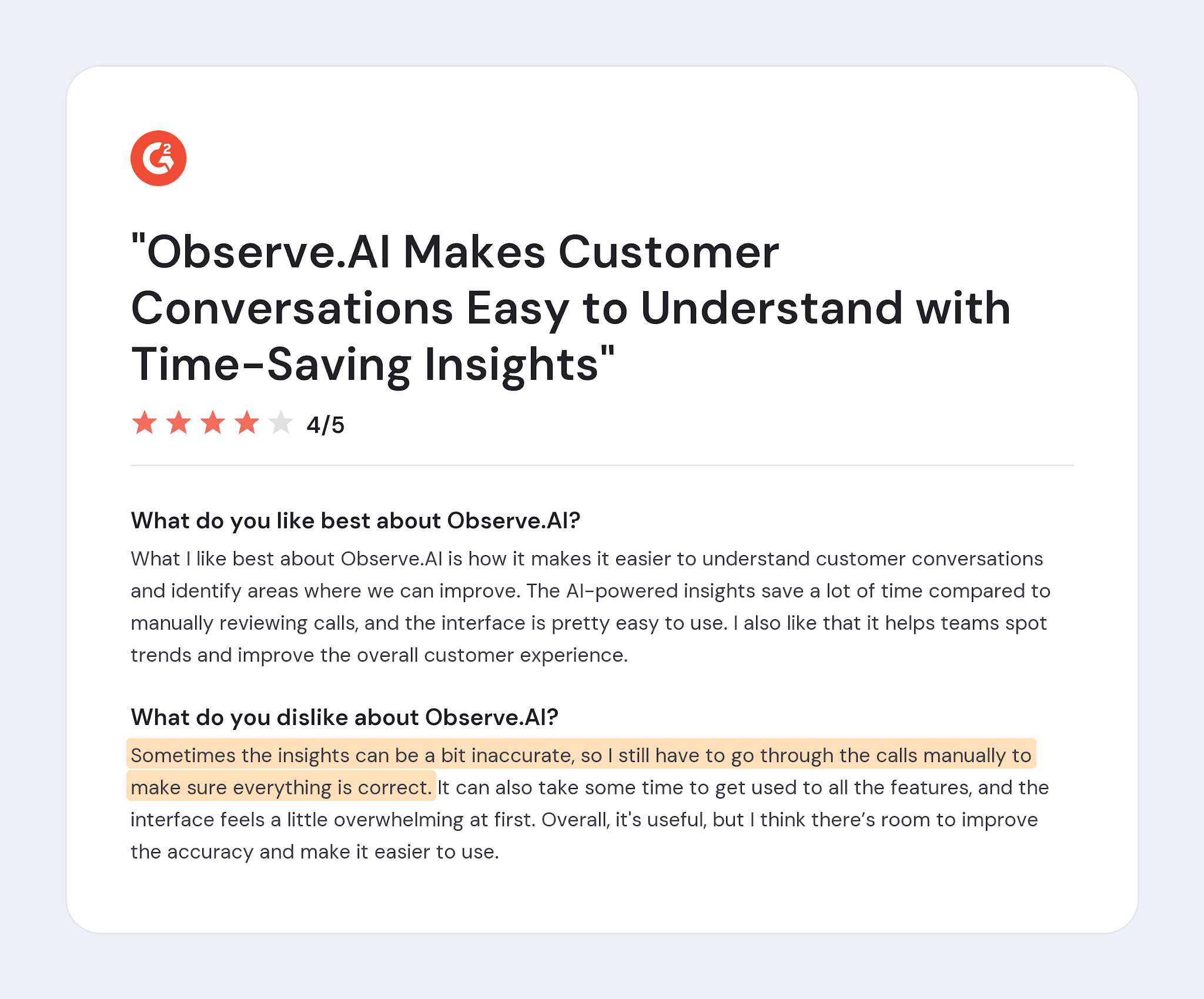
G2 reviewers value Observe.AI for efficiency, call analysis, and coaching. They also like its ease of use and support quality.
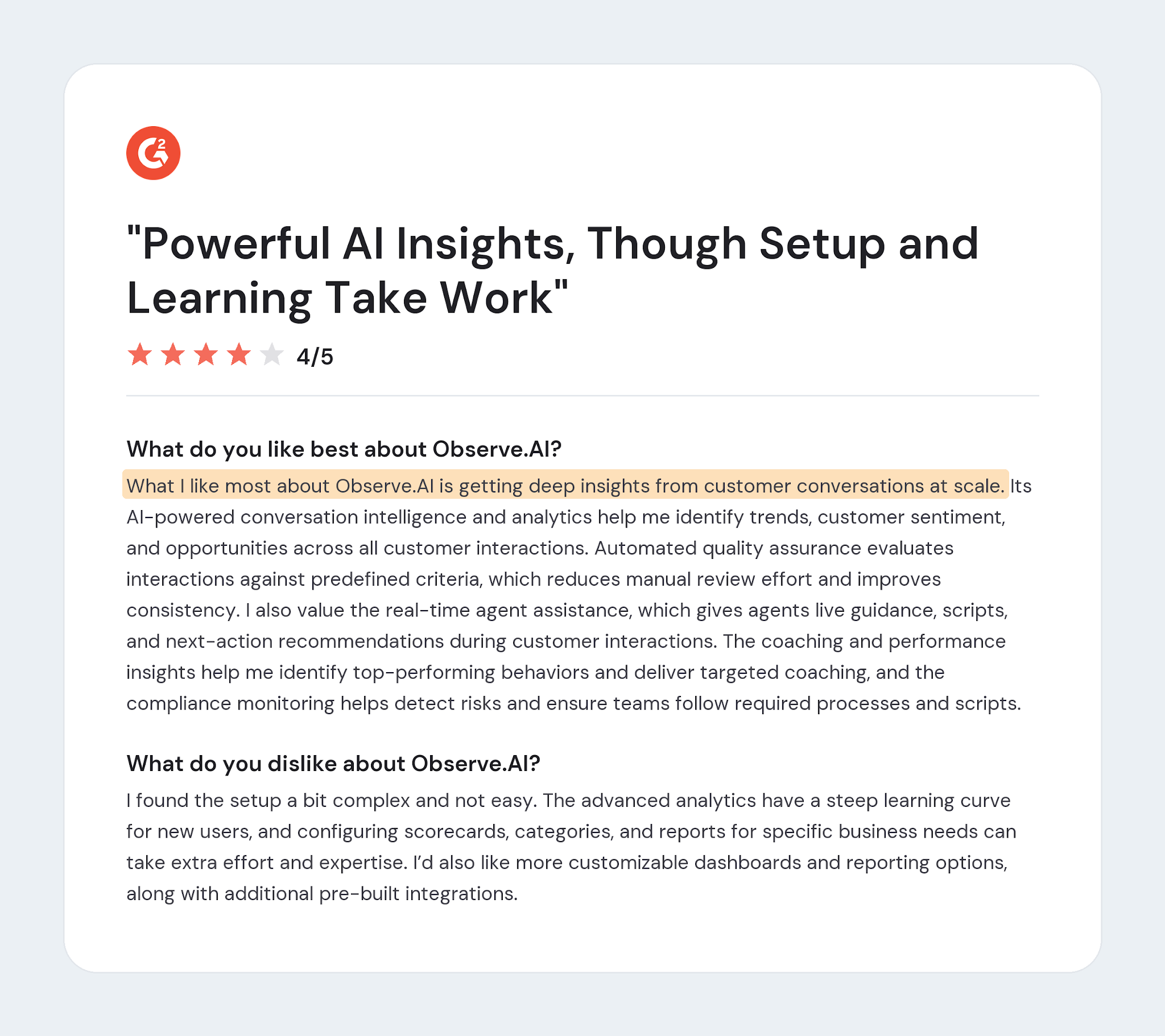
On the downside, some reviewers say insights can be inaccurate, so they still check calls by hand.
Related: The top Observe.AI alternatives
3. Kore.ai
Kore.ai offers prebuilt agentic healthcare apps for providers, payers, and life sciences on the Kore.ai Agent Platform. Teams configure those apps and build new agents on the same platform.
Key AI agent features
- Healthcare task agents: prebuilt agents cover appointments, prescriptions, lab results, registration, referrals, and prior authorization
- EHR integrations: Kore.ai connects with Epic, Oracle Cerner, NextGen, and other healthcare systems
- Audit trails: Kore.ai says every AI action follows policy rules and leaves an audit trail for Centers for Medicare & Medicaid Services (CMS) and HIPAA compliance
- Microsoft fit: it runs on Azure AI Foundry and connects with Microsoft's Dynamics contact center, Teams, and Copilot
- Multi-agent orchestration: several agents can work together across channels in one patient journey
What reviewers say
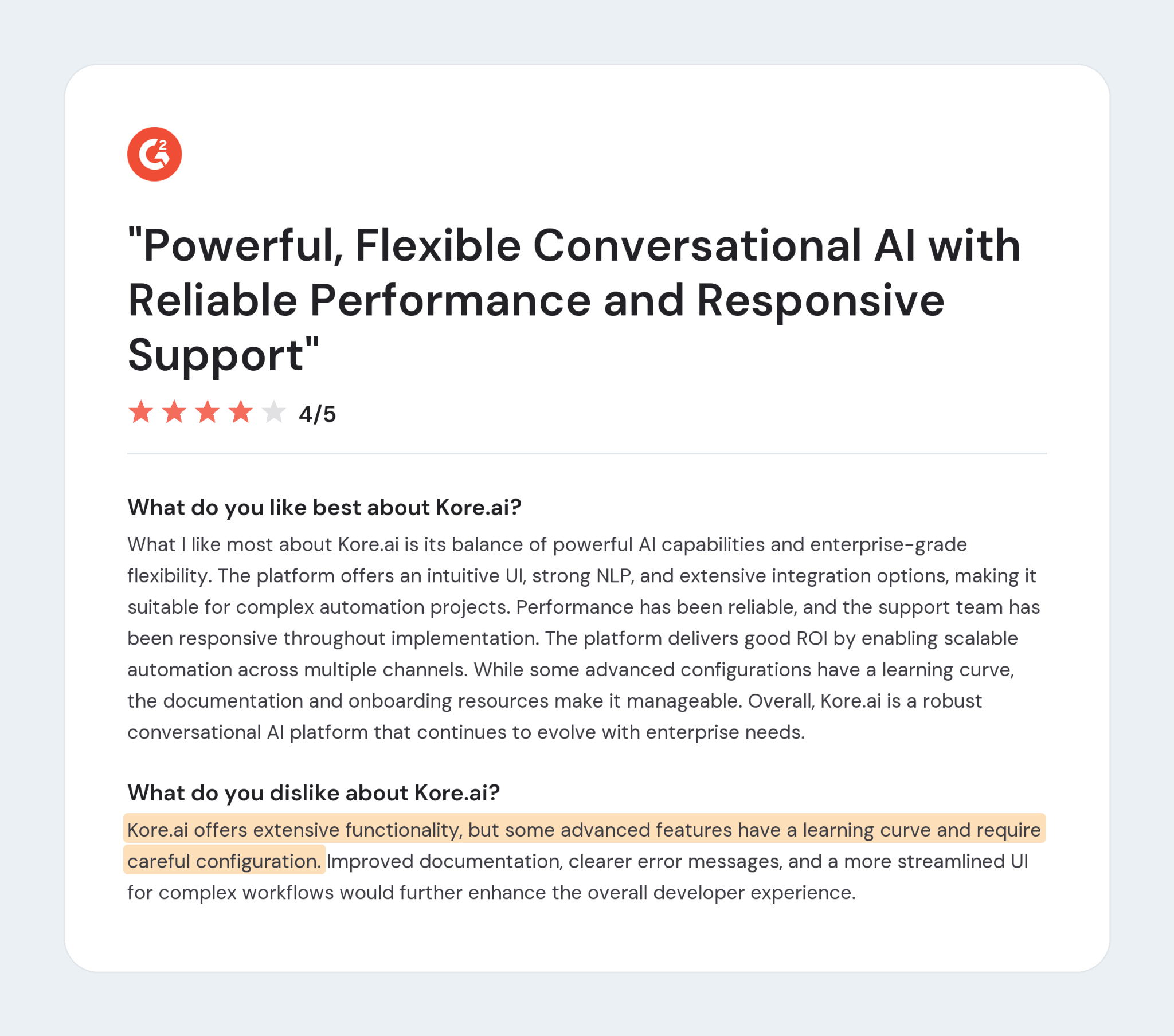
G2 reviewers like Kore.ai's no-code builder, ease of use, and platform breadth. Many also highlight its enterprise flexibility.
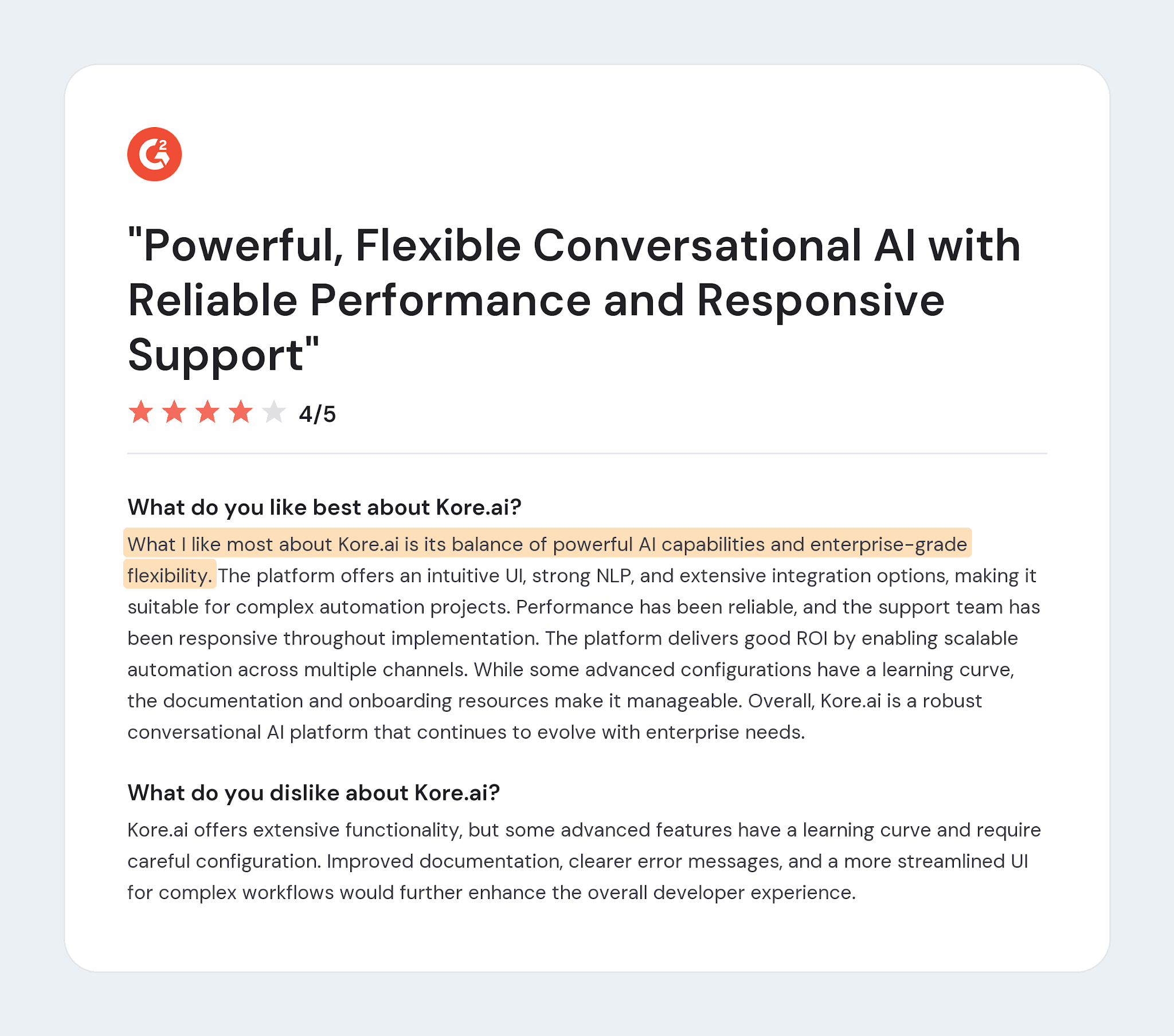
On the other hand, some reviewer's headline notes some complexity for deep customization.
Related: The top Kore.ai alternatives
4. Cognigy.AI
Cognigy.AI is an enterprise platform for voice and digital AI agents. Its healthcare agents book appointments, handle prescription refills, take payments, and help patients on any channel.
Key AI agent features
- Patient self-service: agents book appointments, handle prescription refills, and take payments
- Insurance and care updates: agents help with insurance claims and post-treatment care instructions
- Identity verification: agents verify callers and pull up the customer's profile before acting
- Handover to humans: human agents get auto-generated transcripts and summaries at handoff
- Data protection: the platform claims encryption, data masking, and access controls, plus a HIPAA compliance badge
What reviewers say
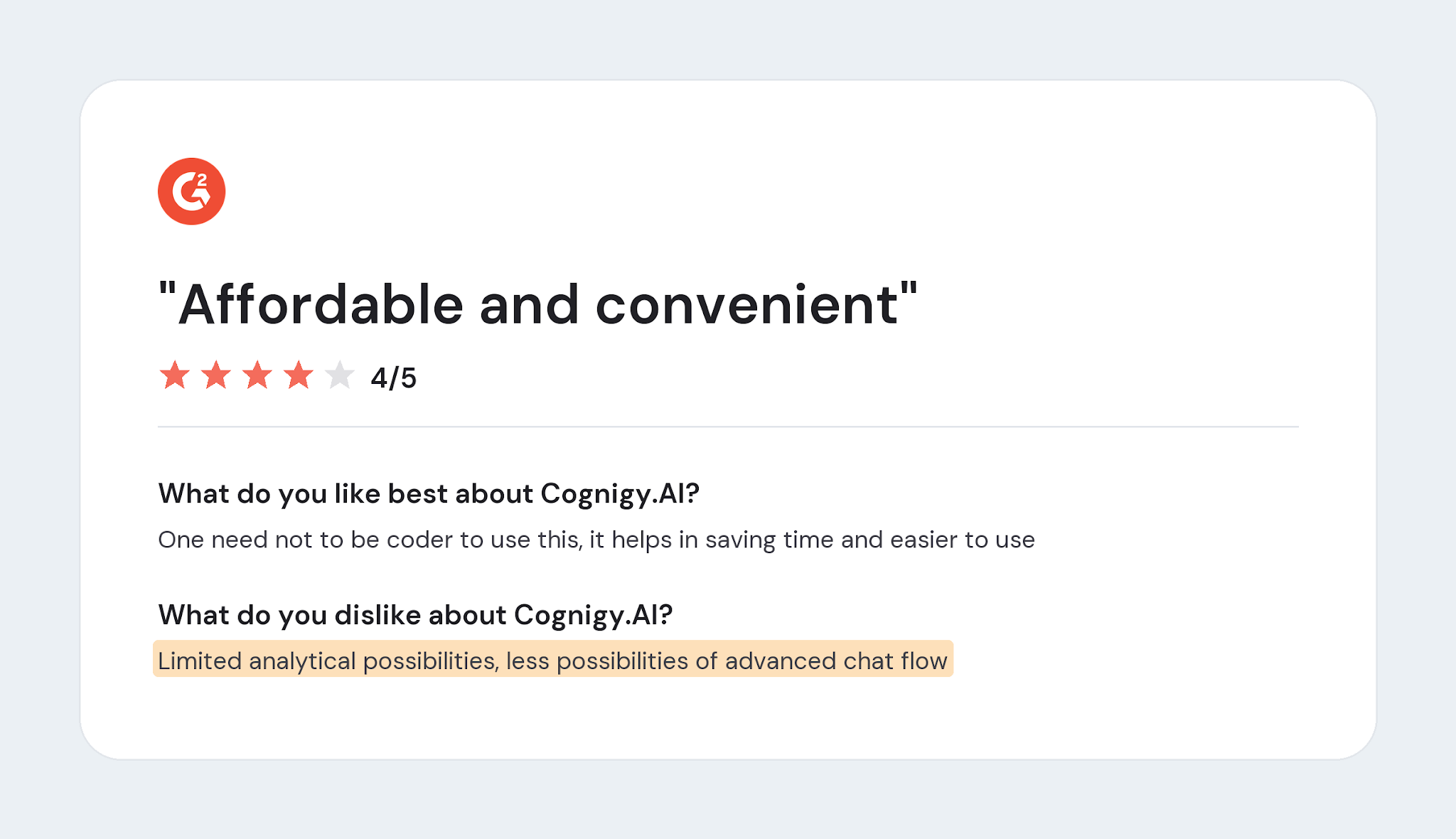
G2 reviewers like Cognigy.AI's low-code visual flows and ease of use. They also value having voice and chat on one platform.
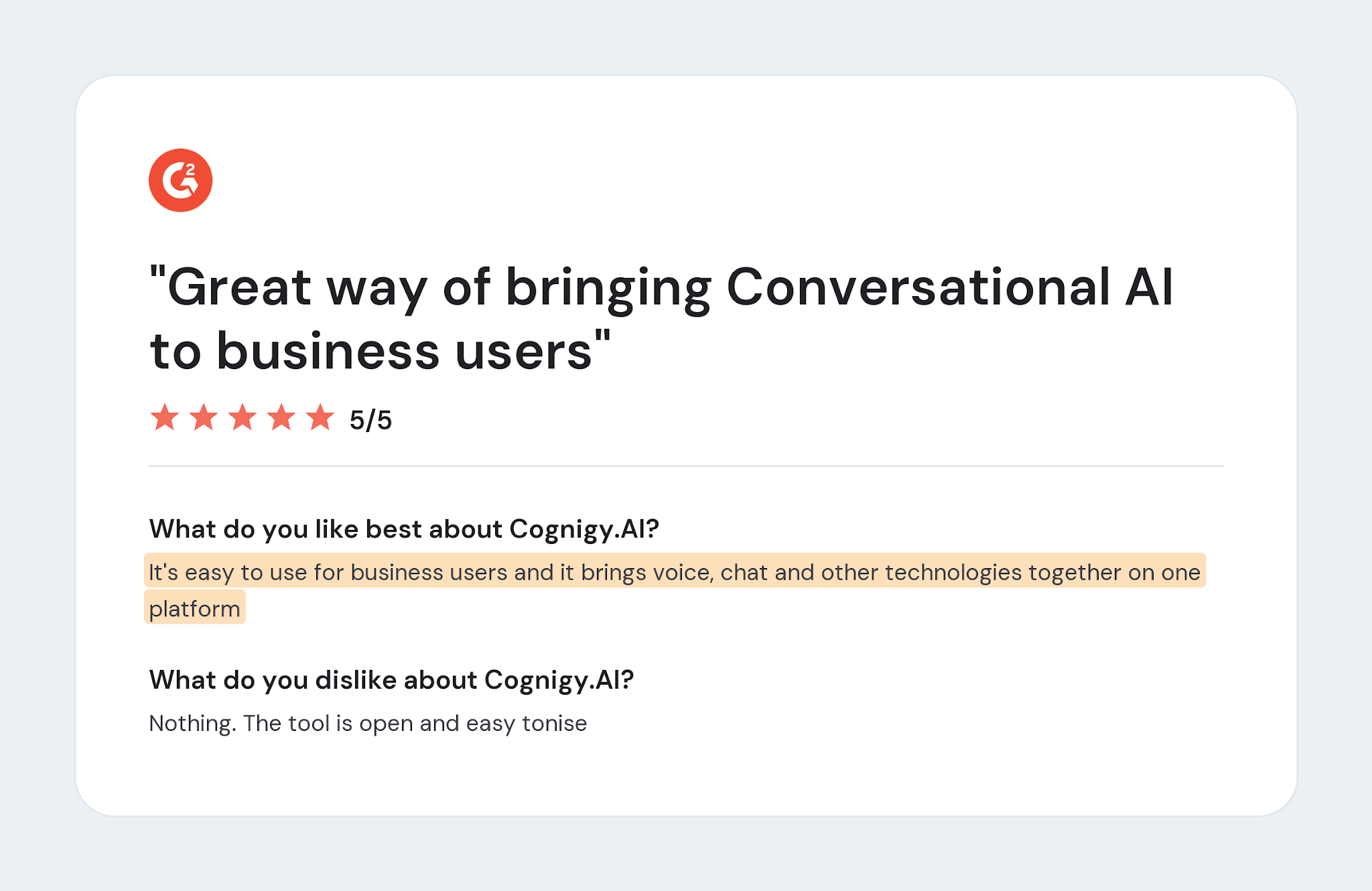
But some reviewers cite limited analytics and fewer options for advanced chat flows.
Related: The top Cognigy alternatives
5. Hyro
Hyro builds healthcare-native AI agents for patient access, called Agents OnCue. They work across phone, web chat, SMS, and mobile apps.
Key AI agent features
- Multichannel patient access: one set of agents covers phone, web chat, SMS, and mobile apps
- Epic certification: Hyro is Epic Vendor Services certified
- EHR connections: it connects through proprietary APIs, Fast Healthcare Interoperability Resources (FHIR) APIs, and flat files
- Patient access tasks: agents handle scheduling, prescription refills, and MyChart resets
What reviewers say
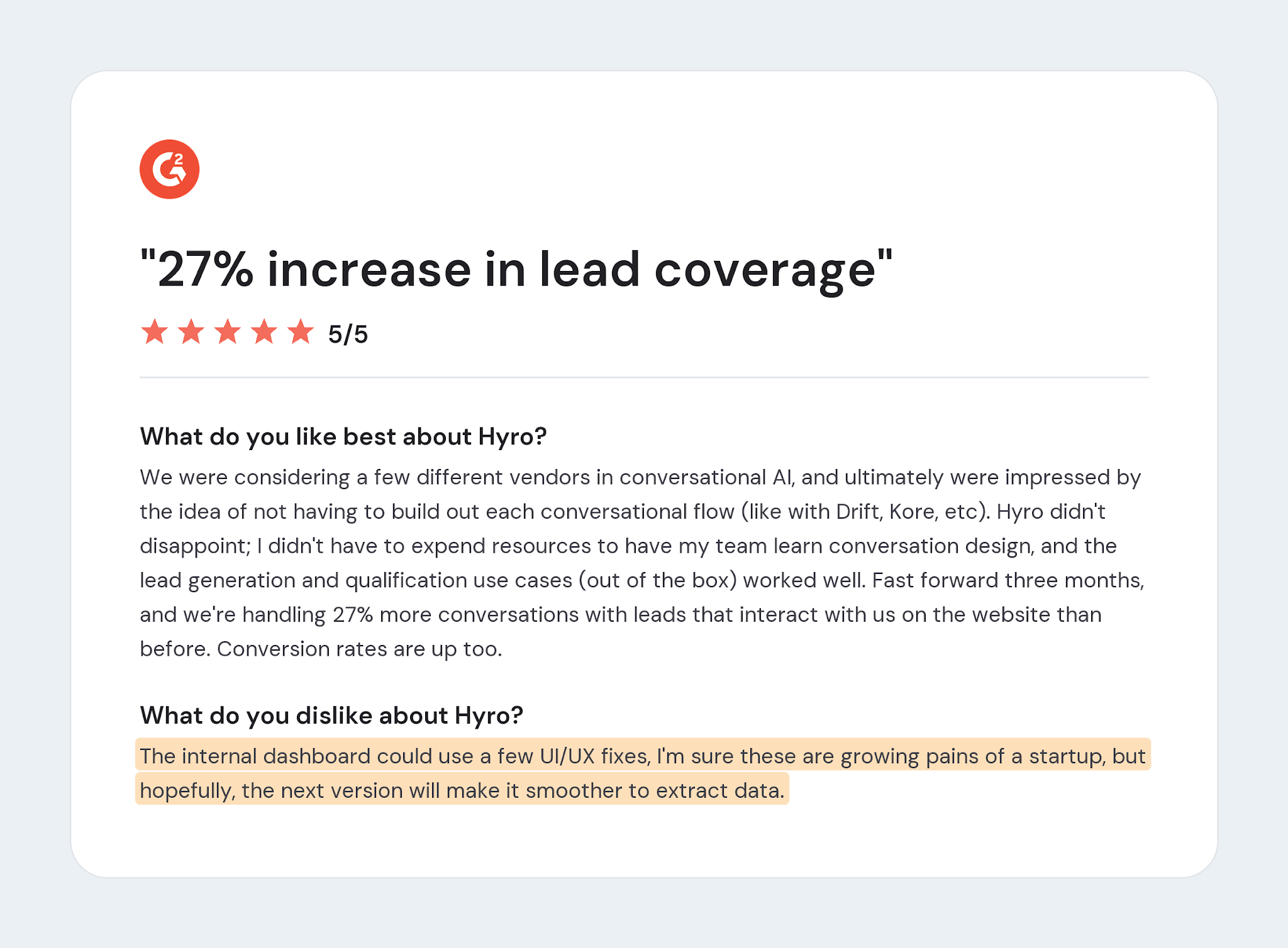
G2 reviewers praise Hyro's ease of use, quick setup, and natural conversations.
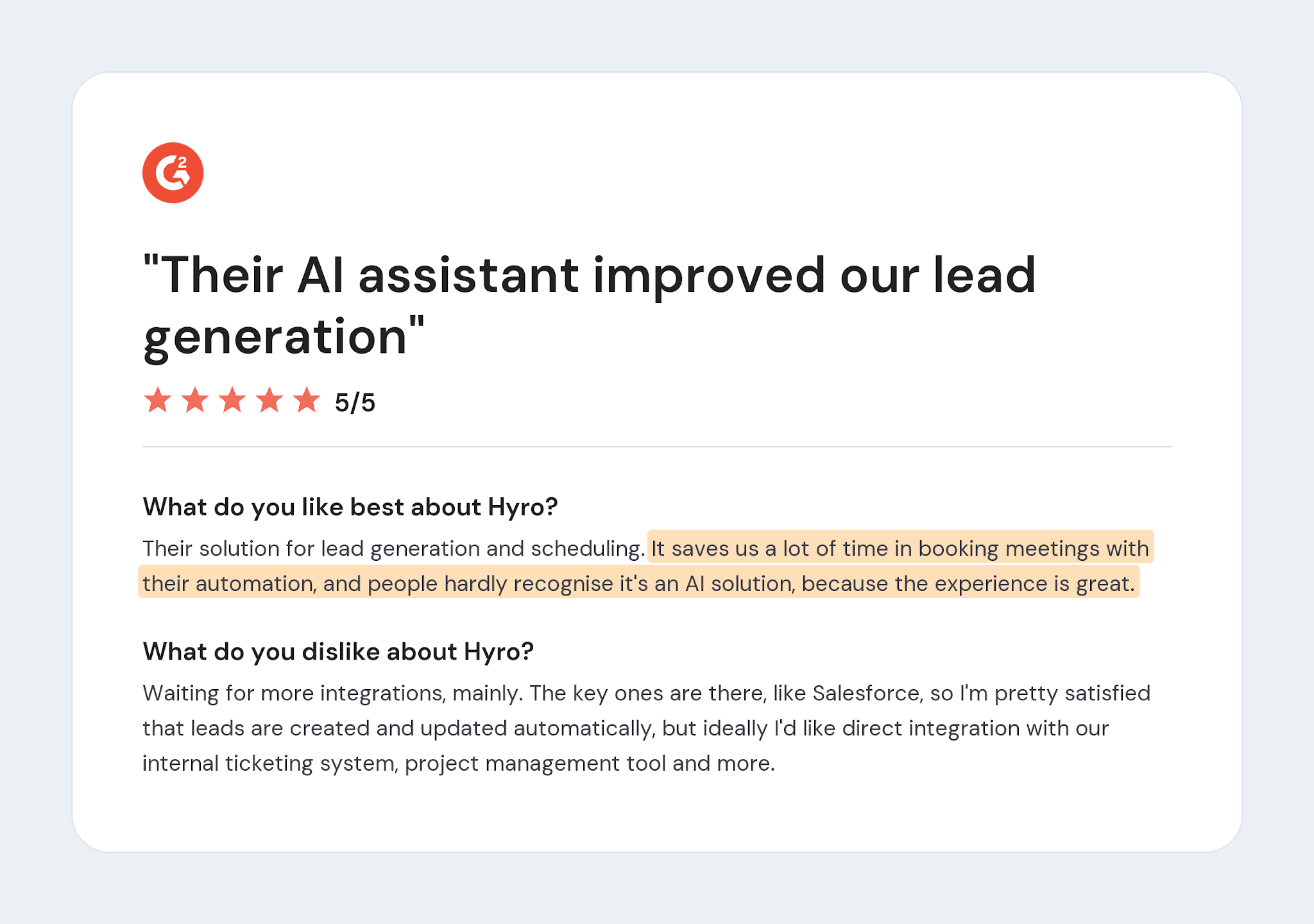
On the flip side, some reviewers flag dashboard issues that require fixes.
How to evaluate AI agents for healthcare contact centers
Once you've narrowed down your shortlist of the best AI agents for healthcare contact centers, evaluate each vendor on the criteria below.
HIPAA posture and a signed BAA
HHS business associate guidance says a provider or health plan can share PHI with a vendor only after the vendor signs a BAA.
To that end, a HIPAA compliant AI agent needs to starts with that contract, then add encryption, access controls, and redaction.
Look for an AI agent vendor that signs a BAA up front and can show how PHI moves through its system.
Integrations with EHR, CRM, and CCaaS systems
An AI agent can only finish a task if it can read and update the right system. AI patient scheduling needs live access to the EHR calendar, and AI for prior authorization needs payer and clinical data.
Look for AI agent solutions that support integrations with the following solutions:
- Electronic health record (EHR): AI patient scheduling needs live access to provider templates, appointment types, visit-length rules, and open slots. It also needs to write the booking back so the calendar never double-books
- Payer and clinical data: AI for prior authorization needs the patient’s coverage, the payer’s criteria for the requested service, and the supporting clinical documentation (notes, labs, imaging orders). It also needs a way to submit the request and track the determination
- CRM and CCaaS: The CRM holds patient outreach history, campaign status, and care gaps. The CCaaS platform handles telephony, routing, queues, and recordings. The agent needs both to recognize who’s calling, act on what’s already known, and hand off to a human with full context when needed
Clean handoffs and human agent augmentation
Even the best AI agents for healthcare contact centers can't handle every patient call.
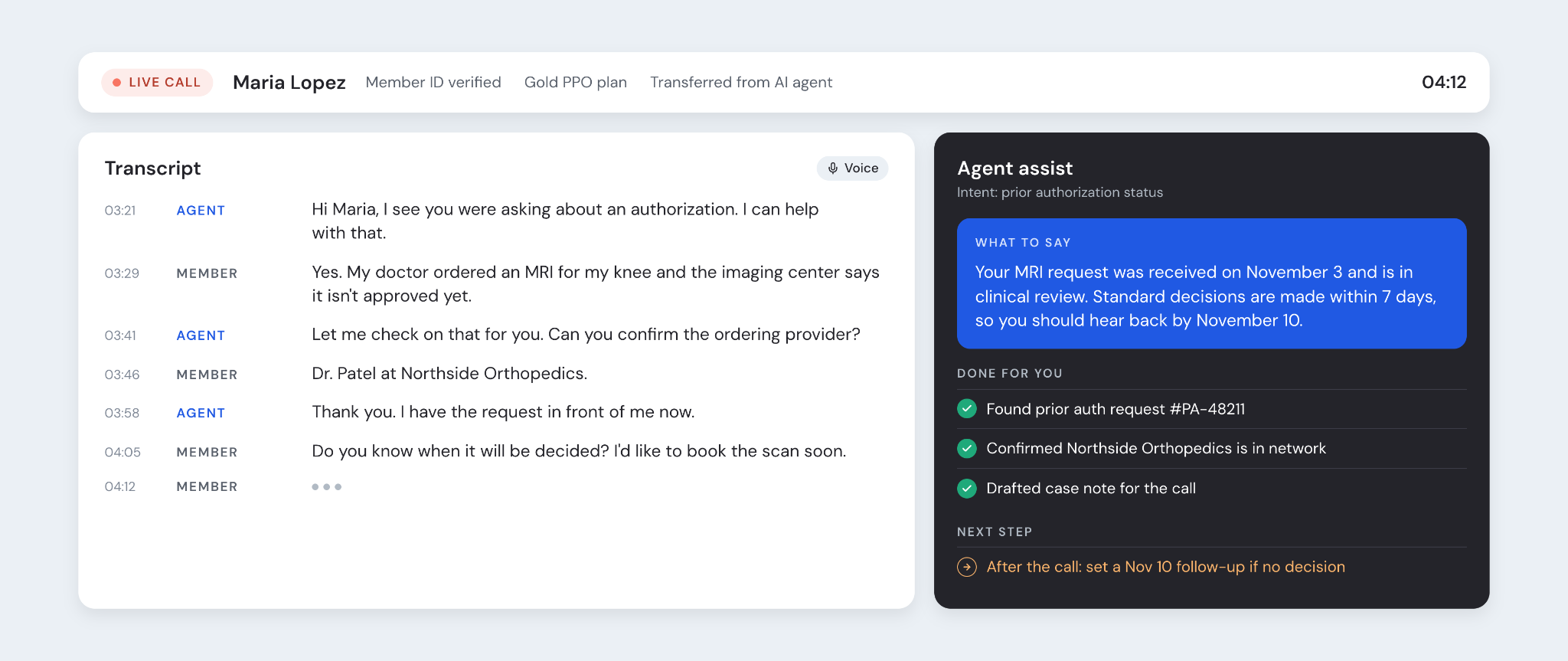
When the AI agent hands off, staff should see the transcript, the patient's identity, and what's already been done.
The platform’s agent assist functionality should also provide live guidance that augments the human agent for the rest of the call.
Guardrails, testing, and live oversight
Patients don't follow clean scripts, so an AI agent needs limits on what it can say and do.
With that in mind, look for a solution that offers:
- Simulated patient calls to stress-test the agent before launch. These should be scored, repeatable tests built from your real call types and edge cases
- Guardrails that block clinical advice and escalate urgent situations. The agent never diagnoses or recommends treatment, and it hands off symptoms like chest pain to a human right away
- Live monitoring to catch problems after launch. These include call-level reviews, alerts on unusual behavior, and the ability to pause the agent or reroute to humans at any time
Quality management on every conversation
Reviewing every AI and human conversation shows where the AI agent fails and where staff need coaching.
Look for automated QA that scores every conversation for accuracy and compliance and feeds that insight back into coaching.
More specifically, prioritize solutions that:
- Score every conversation, AI and human alike. The same criteria apply to both, so you can compare performance and see where each one struggles
- Cover accuracy and compliance in scoring. Did the agent give the right information, verify identity before sharing protected health information, avoid clinical advice, and follow your required disclosures?
- Turn failures into fixes. Patterns in the AI agent’s misses feed into updated guardrails, prompts, and test cases, so the same mistake doesn’t repeat
- Get insights to people, too. Scores and flagged calls go to supervisors as specific coaching moments for staff, such as a missed verification step or a confusing explanation of benefits
- Show results over time. Trends by call type, team, and AI agent version show whether quality is improving after each change
Final thoughts
The best AI agents for healthcare contact centers fit different teams.
Cresta suits teams that want one platform for both AI and human agents. Observe.AI suits QA-first teams adding voice agents, and Kore.ai suits health systems with in-house builders. Cognigy.AI fits multichannel centers on NiCE CXone, and Hyro fits Epic health systems that want patient access automation fast.
Whichever you shortlist, confirm the BAA first. Then test integrations, handoffs, guardrails, and QA on your real patient calls.