
Why Real-Time Artificial Intelligence?
It typically takes agents 4-6 months to become proficient in selling products or resolving customer requests, but most organizations still find massive gaps between their top performers and the rest of their workforce, even after training. When analyzing customer data, we typically see a 3x- 4x gap in top and bottom performers for metrics like revenue per chat, conversion rates, or average order value. This gap compounds over time, amplifying lost revenue.
Forward-thinking organizations are moving toward real-time artificial intelligence to solve this issue. Learn how real-time AI is disrupting legacy categories like chatbots, conversational AI, and experience management in this comprehensive Ebook.
Here's what you'll learn:
- The three categories of real-world artificial intelligence
- The drawbacks of self-service, post-conversational analytics, and experience management tools
- How real-time artificial intelligence improves prospect and customer interactions.
View more resources
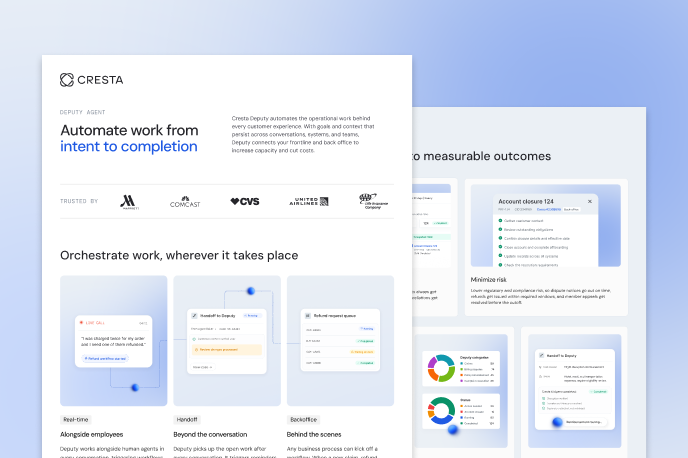
Cresta Deputy Agent
Cresta Deputy automates the operational work behind every customer experience from intent to completion.