
9 Best Automated Call Scoring Solutions in 2026
.avif)

• Manual quality management (QM) only reviews a handful of calls per agent per month. At that sample size, performance gaps stay invisible and coaching ends up disconnected from what's actually happening on the floor.
• There's an important distinction between real-time scoring and post-conversation scoring. The guide breaks down which operating model makes more sense depending on what your team actually needs.
• Scoring only drives improvement when it's connected to business outcomes. Most platforms automate the old process at scale without fixing the core problem of scores that don't correlate with customer results.
• The strongest platforms close the loop between quality data and supervisor action, turning call scores into something that measurably changes agent performance over time.
What to prioritize when evaluating platforms
Once the comparison starts, the challenge is not a lack of vendor claims but deciding which differences actually matter operationally. Every platform claims broad coverage and AI-driven scoring, but without criteria grounded in industry standards, that comparison turns into checkbox counting, not a test of actual operational fit.
Coverage that closes the visibility gap
Coverage matters, but coverage alone does not differentiate vendors–virtually all platforms claim to score or analyze all interactions. Buyers still need to understand how scoring is conducted, whether it is live or post-call, across which channels, and how it is calibrated against human evaluators.
Business level insight alongside agent level scoring
COPC identifies this as one of the most operationally important distinctions in quality management. Agent-level coaching opportunities matter, but quality programs also need to surface process failures and service journey design problems that generate unnecessary contact volume. An effective QM platform separates individual coaching needs from broader operational issues.
Scoring connected to outcomes
COPC also warns that traditional quality scores rarely connect to actual business results, whether resolving customer issues or producing closed sales. Platforms that correlate specific agent behaviors with measurable outcomes give leaders stronger evidence for where to invest in coaching and operational improvement.
AI governance built in from the start
The NIST AI RMF is presented here as a governance baseline for enterprise AI procurement. NIST research has also documented that AI agents can craft outputs that score highly on automated grading without actually solving the intended task, making validation against real customer outcomes more important than internal grading consistency alone.
Narrow down your list with these 12 questions
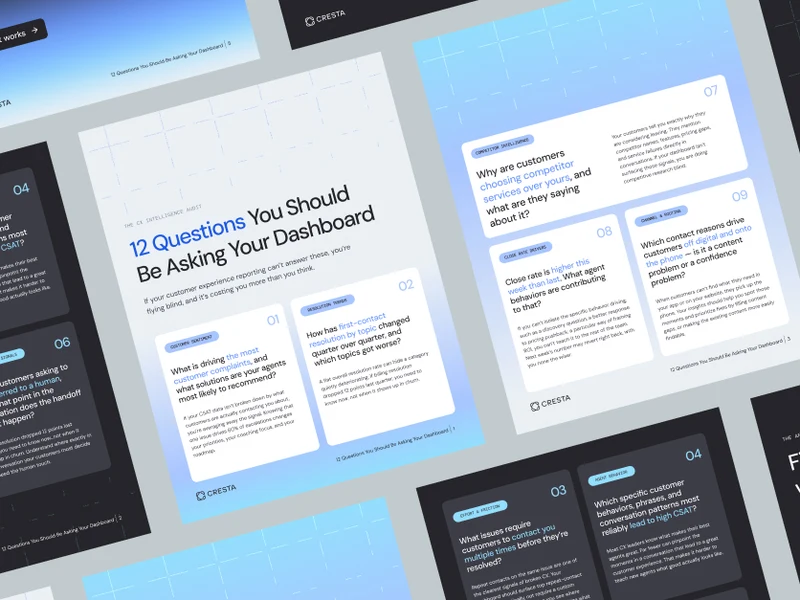
At a glance
The table below maps each platform against the evaluation criteria covered above. The biggest differences show up in outcome correlation, real-time intervention, and whether scoring data flows into coaching workflows or stops at dashboards.
9 automated scoring and agent performance platforms compared
The platforms below span a capability spectrum from full-stack CCaaS suites with embedded QM to specialist scoring tools to real-time guidance platforms.
Use this section to match platform depth to your operational needs. If you need scoring connected to coaching and outcomes, the field narrows quickly. If you need compliance verification inside existing infrastructure, several options fit.
1. Cresta
Overview
Cresta connects scoring, coaching, and operational analysis within a single shared data layer, something most platforms treat as separate workflows. Cresta's AI-native architecture shares data, models, and governance across Conversation Intelligence, AgentAssist, AI Agent, and quality management so that findings in one area feed directly into actions in another.
Key features
- Outcome Insights correlates specific agent behaviors with measurable business results including resolved issues, CSAT, and closed sales
- Hybrid QM workflows bridge automated and human scoring with analyst review quotas, model conversation benchmarks, and calibration against human evaluators
- AI Analyst lets leaders ask natural language questions across conversation data, surfacing patterns that feed into targeted coaching suggestions
- Knowledge Agent combines live conversation audio with on-screen context like account status and order history to deliver cited answers without requiring agents to search
Strengths
- Agent performance scorecards reflect behaviors the data shows to be impactful rather than rule-based criteria alone
- Scoring, coaching, knowledge delivery, and operational analysis share one connected data layer
- Conversation Intelligence surfaces process failures and service journey design problems alongside individual coaching needs
- AI-targeted coaching suggestions identify which agents to coach and which behaviors to address
Best for
Contact center leaders who want quality data to flow into supervisor actions the same day. The strongest fit is where coaching based on 1-2% sampling has left wide performance gaps and leaders need scoring connected to outcomes, not more dashboards.
2. NICE CXone Mpower
Overview
NICE approaches QM as one module within a full-stack CCaaS commitment. Contact centers already running NICE for routing, WFM, and telephony get scoring as part of the broader suite with no separate vendor needed.
Key features
- Enlighten AI scores soft skill behaviors and includes tools for analyzing interactions and predicting CSAT
- Bundled QM ships inside the broader NICE ecosystem, so existing NICE customers add scoring without additional procurement
Strengths
- No separate vendor needed for contact centers already on the NICE stack
- Broad CCaaS coverage across routing, WFM, telephony, and quality in one purchase
Weaknesses
- QM sits inside a larger CCaaS purchase and is not a standalone quality and performance intelligence layer
- Limited public detail on whether scoring insights flow into coaching workflows or stay siloed inside the broader platform
Best for
Contact centers already committed to the NICE ecosystem that want embedded quality without adding a separate vendor. Buyers should evaluate whether they want QM inside a broad suite or a focused system built around coaching and outcome analysis.
3. Verint
Overview
Verint distributes QM across a modular, bot-based architecture powered by Da Vinci AI. Individual bots handle specific micro-workflows for scoring, transcription, knowledge creation, and coaching.
Key features
- Quality Bots auto-score interactions across voice, chat, and digital channels
- Additional bots handle transcription, knowledge creation, and coaching as separate micro-workflows
- Cloud or on-premises deployment supports contact centers with strict data residency requirements
Strengths
- Modular bot structure offers deployment flexibility for contact centers with specific infrastructure needs
- On-premises option addresses data residency requirements
Weaknesses
- Detailed public documentation of how individual bots work together is limited in the materials available
- Public positioning emphasizes ROI and efficiency more than behavior-to-outcome linkage or coaching workflow depth
Best for
Contact centers that need deployment flexibility and on-premises options. Buyers should evaluate how the separate bot approach affects calibration, workflow continuity, and supervisor usability, and whether the components create one coherent feedback loop or a set of adjacent automations.
4. Calabrio ONE
Overview
Calabrio ONE entered automated scoring more recently than others on this list, but its focus on setup flexibility makes it worth evaluating. The platform offers two paths that reflect different team readiness levels.
Key features
- Standardized mode produces scoring results in approximately 20 minutes
- Customizable mode allows teams to train the LLM on their own knowledge base and scorecards
- Omni Agent Intelligence gives buyers a vendor-agnostic view of quality across both human and AI agents regardless of the underlying CCaaS platform
Strengths
- Vendor-agnostic quality view works across CCaaS platforms, not locked to one stack
- Two setup paths let teams start fast with standardized scoring or invest in customization
Weaknesses
- Auto QM reached general availability in late 2024, so depth of functionality is still maturing relative to longer-established QM-focused platforms
- Coaching workflow integration is still maturing compared to more established QM-focused platforms
Best for
Contact centers running mixed CCaaS environments that need a vendor-agnostic quality view. Buyers should evaluate how much work the customizable path requires and whether automation features are embedded in daily coaching workflows or still maturing.
5. CallMiner Eureka
Overview
CallMiner brings speech analytics expertise to automated scoring and has expanded into real-time capabilities and coaching tools, though its primary positioning remains analytics and compliance.
Key features
- Omnichannel scoring covers calls, chat, email, SMS, social media, and surveys
- Coach product provides automated performance scoring with role-based dashboards for supervisors and agents
- Alert product delivers real-time next-best-action guidance during live calls
- Flexible deployment offers both fully hosted and on-premises SaaS options for contact centers with specific hosting needs
Strengths
- Speech analytics heritage gives deep coverage across voice interactions
- Omnichannel reach extends beyond traditional voice-only QM into text, social, and survey channels
- Alert product adds real-time intervention capability alongside post-conversation analytics
Weaknesses
- Primary positioning and heritage remain in post-conversation analytics rather than real-time coaching
- Limited direct behavior-to-outcome correlation compared to platforms built specifically around outcome linkage
Best for
Contact centers where quality management extends beyond voice into chat, email, SMS, and social channels and the primary need is analytics and compliance. Teams that want scoring connected to business outcomes should evaluate how effectively CallMiner's analytics layer feeds into coaching actions and whether the Alert product meets their real-time intervention needs.
Related: A guide to CallMiner alternatives
6. Observe.AI
Overview
Observe.AI has expanded from its conversation intelligence and automated QM roots into AI Agents (voice and chat) and AI Copilots for real-time agent support. Its QM layer remains strongest in post-conversation analysis, evaluation, and compliance.
Key features
- Full coverage interaction evaluation with automated and manual scoring operating alongside each other
- Screen recording synchronized with audio and transcripts for additional evaluation context
- AI Copilots provide real-time agent, coaching, and insights support
- AI Agents handle voice and chat conversations autonomously
- Coaching tools and automated redaction for compliance
Strengths
- Screen recording adds evaluation context beyond audio and transcripts alone
- Full coverage scoring with both automated and manual review paths operating together
- Strong QM foundation with expansion into AI Agents and real-time copilot capabilities
Weaknesses
- QM layer remains strongest as a post-conversation review and compliance platform rather than a closed-loop outcome system
Best for
Teams that need strong post-conversation analysis, screen recording, and compliance support and want a platform that is expanding into AI agents and real-time copilots. Teams that want closed-loop coaching connected to business outcomes through the QM layer specifically may need more than post-conversation analysis alone.
Related: The best alternatives to Observe.AI
7. Level AI

Overview
Level AI takes a semantic approach to scoring, using intent recognition rather than keyword matching as its foundation. Its Scenario Engine uses semantic intelligence to recognize conversational intent without requiring specific keyword triggers.
Key features
- InstaScore auto-scores agents against rubrics using semantic understanding
- InstaReview flags interactions with extended handle times, frequent escalations, or low sentiment
- AI-generated satisfaction score for every conversation using customer effort, resolution, and sentiment signals
- Real-Time Manager Assist and Real-Time Agent Assist provide live dashboards and in-call guidance
Strengths
- Semantic intent recognition goes beyond keyword matching to detect nuanced conversational behaviors
- AI-generated satisfaction scoring provides per-conversation quality signals
- Real-time manager and agent assist capabilities add live intervention alongside post-call scoring
Weaknesses
- Fewer enterprise-scale deployments, raising questions about maturity at volume
Best for
Teams that want semantic scoring beyond keyword matching and are willing to invest in upfront scoring design. Buyers should evaluate how easily the platform adapts when customer issues, policies, or workflows change, since scenario-driven approaches can make long-term maintenance a bigger part of the operational burden.
Related: The top Level AI alternatives
8. Balto

Overview
Balto is positioned differently from most other platforms on this list. Its primary function is real-time, in-conversation guidance rather than post-conversation scoring, though it has expanded into QA, coaching, and business insights. It layers onto existing infrastructure as a complementary tool.
Key features
- Agent prompts deliver compliance checklists, coaching alerts, and knowledge base answers during live conversations
- Real-time QA scores calls as they happen with customizable scorecards and weighted criteria
- Manager alerts surface real-time coaching opportunities as conversations happen
- Coaching tools identify which agents need coaching and surface coachable conversations
- Integration-based deployment layers onto existing infrastructure, helping preserve current technology investments
Strengths
- Real-time intervention catches compliance and coaching issues during the conversation, not after
- Real-time QA scoring provides immediate performance visibility during live calls
- Overlay deployment preserves existing CCaaS investments without replacement
Weaknesses
- AI agent coverage is primarily voice-focused
- No post-conversation outcome correlation or behavior-to-business-result linkage
Best for
Contact centers in high-compliance or high-conversion environments where intervention timing matters more than retrospective analysis. Insurance and financial services teams should weigh real-time guidance ROI carefully. Balto does not replace a broader analytics and outcome-focused QM system, so buyers should evaluate it as a complementary layer.
9. Scorebuddy
Overview
Scorebuddy offers focused QM scoring with integrated coaching and a built-in learning management system. It serves teams that need configurable evaluation coverage without bundled CCaaS or workforce management capabilities.
Key features
- GenAI auto-scoring with highly configurable scorecards
- Multichannel coverage across calls, emails, live chat, and social media
- Integrated coaching plans with agent dashboards for personalized feedback
- Built-in learning management system for continuous agent development
Strengths
- Highly configurable scorecards adapt to specific evaluation criteria
- Multichannel reach includes social media alongside calls, email, and chat
- Integrated coaching and LMS connect scoring data to agent development workflows
Weaknesses
- No real-time agent guidance during live conversations, leaving QM scoring disconnected from in-the-moment intervention
- No outcome correlation capabilities linking agent behaviors to business results like resolution, CSAT, or sales
- Coaching tools work from QA data but do not connect to the closed-loop outcome systems that some buyers need
Best for
Contact centers that need configurable scoring, evaluation coverage, and coaching from QA data without broader CCaaS bundling. If the goal is to connect quality measurement to business outcomes and drive coaching based on which behaviors change results, the limits of a QM-focused approach become more important.
How to match your scoring needs to the right platform
The path from scoring to coaching is the most important architectural question in this evaluation. Contact centers with high turnover gain the most, because newer agents benefit disproportionately from coaching loops. Teams that need scoring to inform coaching, surface design failures, and connect behaviors to outcomes should prioritize platforms built around that feedback loop. Those seeking compliance verification on existing CCaaS infrastructure may find embedded modules sufficient.
Cresta connects automated scoring to outcome correlation and coaching in a single platform, so supervisors can act on results the same day. Request a demo to see how it works.
Cresta is dedicated to helping businesses of all sizes make informed decisions. We adhere to strict editorial guidelines to ensure that our content meets and maintains our high standards.
.jpg)


