
AI for Customer Experience: A Practical Guide for Contact Center Leaders


- Contact centers face opposing constraints, like rising call volume without additional headcount
- AI for CX isn’t one technology. It analyzes conversations, augments agents with real-time guidance, and automates the right conversations
- The business case for AI rests on three areas: productivity gains, cost reduction, and full visibility into every conversation
- New human agents reach proven performance faster with real-time guidance and coaching built from your best conversations
- Success comes from treating AI as an operating change, not a software rollout
According to Forrester's 2025 CX Index, 25% of brands' CX rankings declined last year while only 7% improved.
To address this, contact center leaders are by and large investing in or planning to invest in generative AI.
But before you (or any contact center leader) can invest in AI successfully, you’ll need to ask yourself three questions:
- Where does AI reduce cost without degrading service?
- What breaks if we automate the wrong conversations?
- How do we keep the human touch while scaling?
This guide answers each question.
We’ll cover what AI for customer experience means, why contact centers are investing in AI now, how teams use it in real situations, and how to roll it out without adding friction for agents or customers.
What is AI for Customer Experience?
AI for customer experience is a set of applications that analyze conversations, augment agents during live interactions, and automate customer requests.
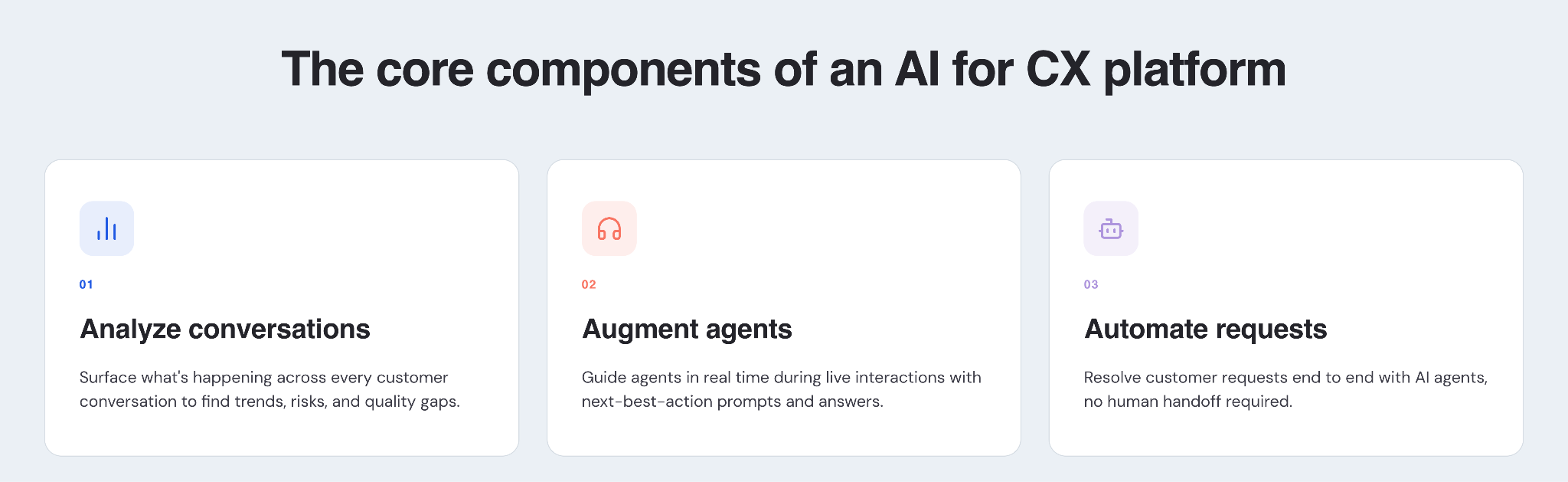
Here’s a closer look at each area:
- Conversation intelligence: Analyze conversations for insights, quality, and coaching so that….. Ideally, you can analyze 100% of interactions to surface what’s driving outcomes
- Augment agents in real time: An AI Agent can suggest what to say, write call summaries, and speed up typing so agents stay focused on the customer
- Full automation: An AI Agent can handle routine requests such as password resets, troubleshooting, prescription fulfillment, and collections
It’s worth noting that most AI solutions fail to cover all of these areas, forcing your contact center to invest in several platforms. At Cresta, we made the intentional decision to build a single, unified platform because the shared data and context work together to consistently improve every interaction.
Why Use AI in Customer Experience?
The value shows up in three areas: productivity, cost, and visibility.
Productivity Gains
There are several types of productivity improvements. Here are just a few:
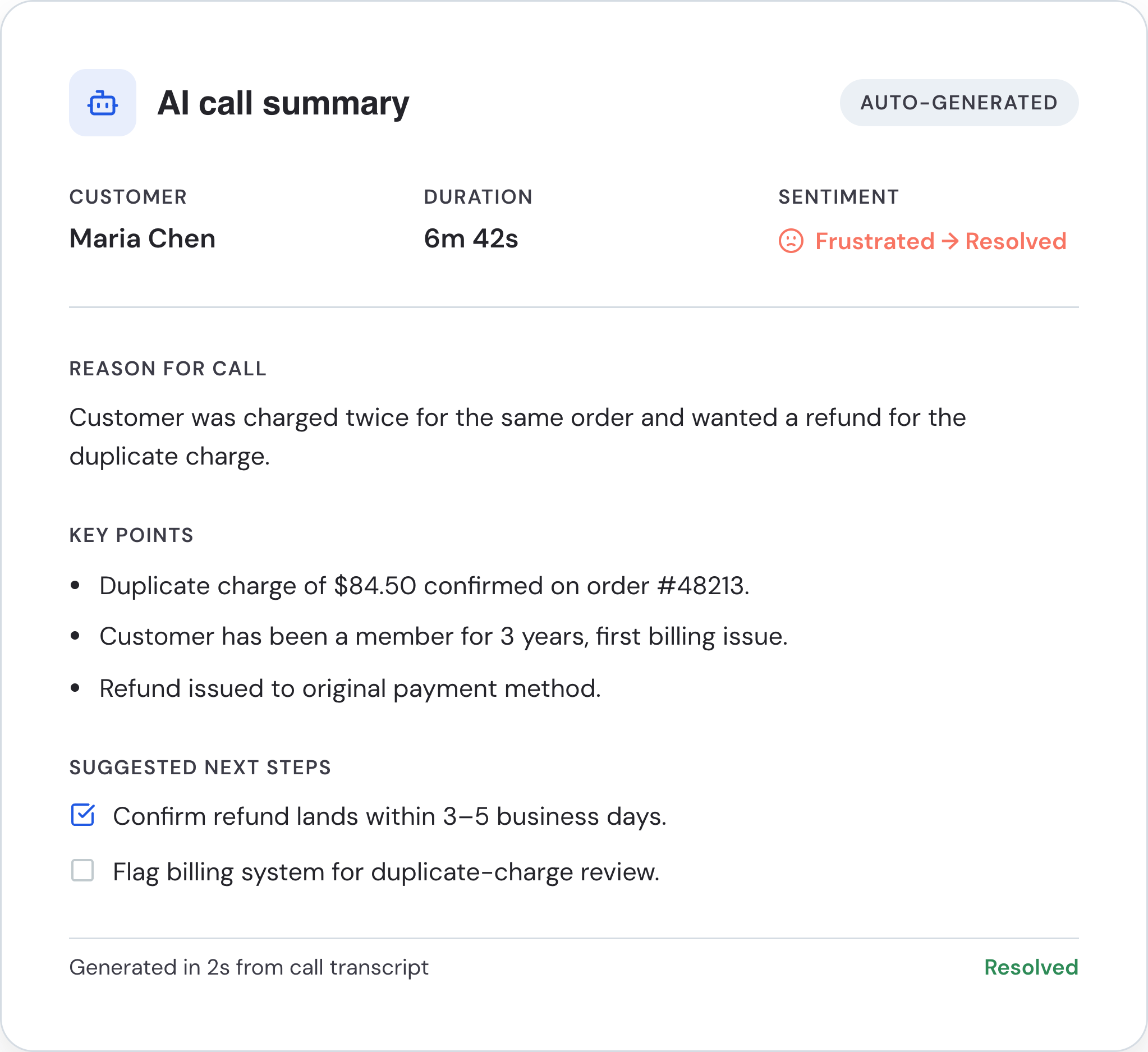
- Automated summarization reduces after-call work for agents
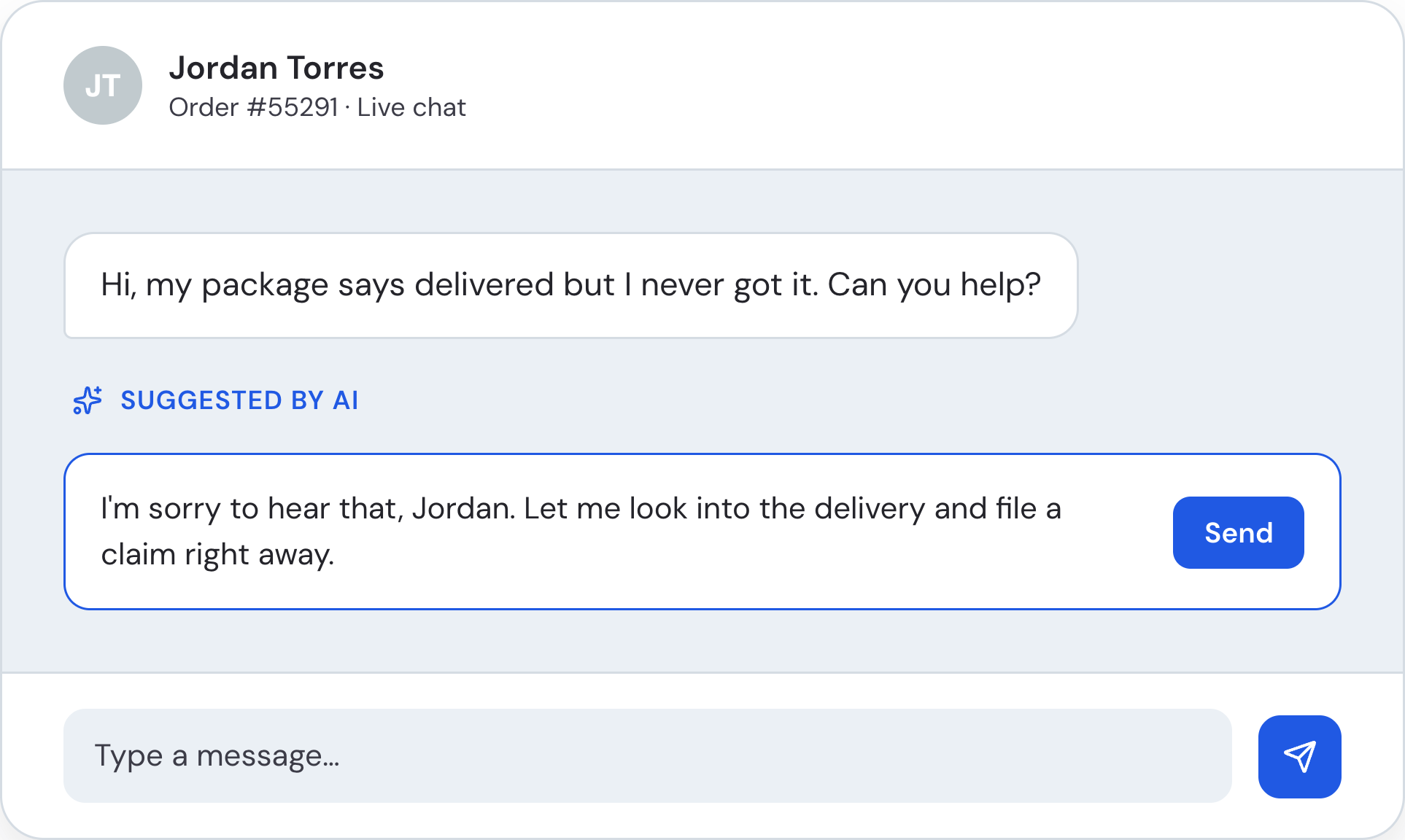
- Typing automation speeds up agents’ responses
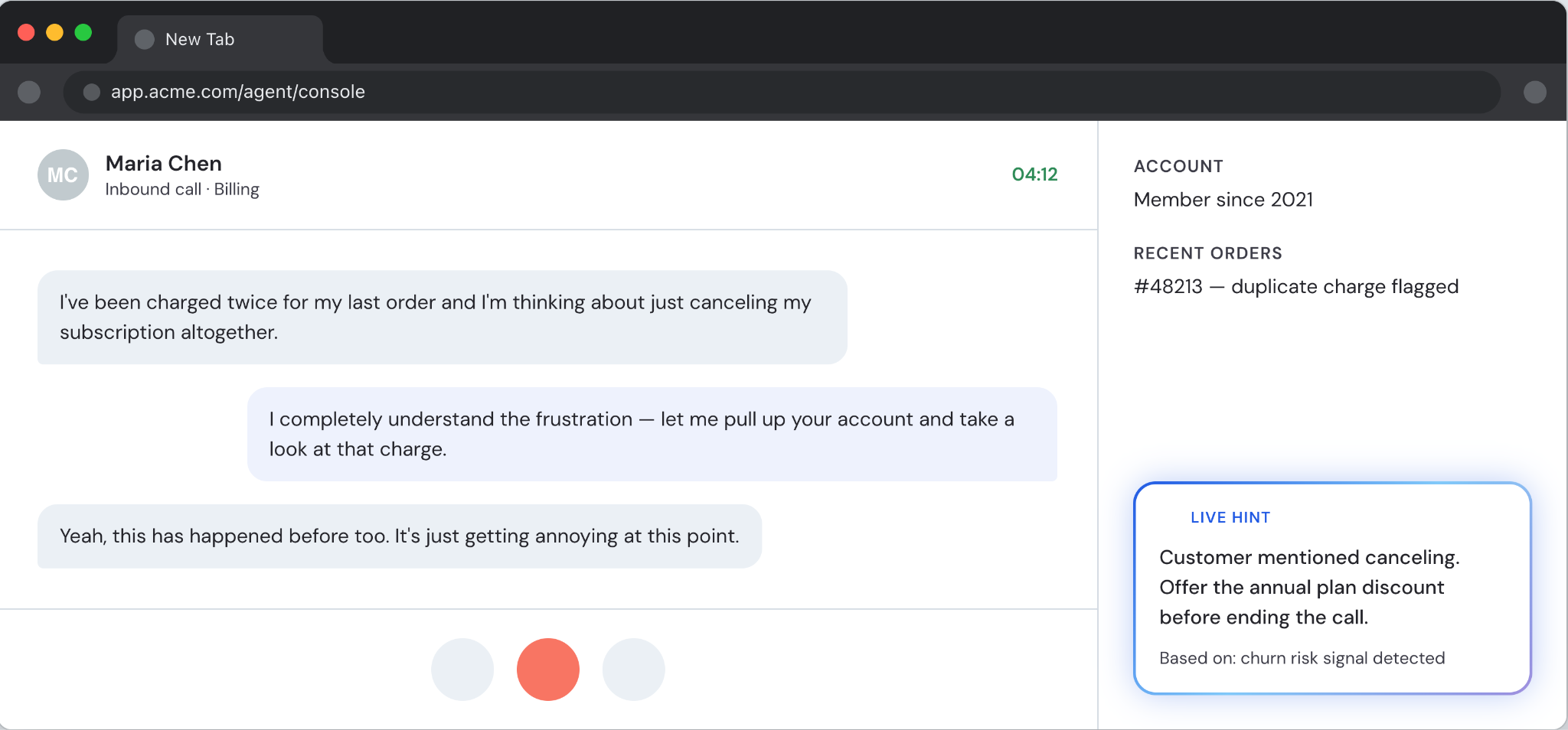
- In-context knowledge cuts search time and average handle time. Instead of pausing to look something up, an agent gets the answer surfaced in the moment, grounded in the live conversation
The gains are measurable. In one study of 5,000 agents at a single company, McKinsey found generative AI increased issue resolution by 14 percent an hour and reduced handle time by 9 percent. It also cut manager escalations by 25 percent, because agents could resolve more on their own.
Ramp time improves too. McKinsey reports the typical six-to-nine-month ramp can fall to three months in some deployments. New hires get real-time access to the techniques and knowledge that used to take years to build, so they perform closer to a tenured agent much sooner.
Cost Savings
AI agents resolve high-volume, clear-goal conversations end to end, which lowers cost per contact and allows you to avoid hiring more agents.
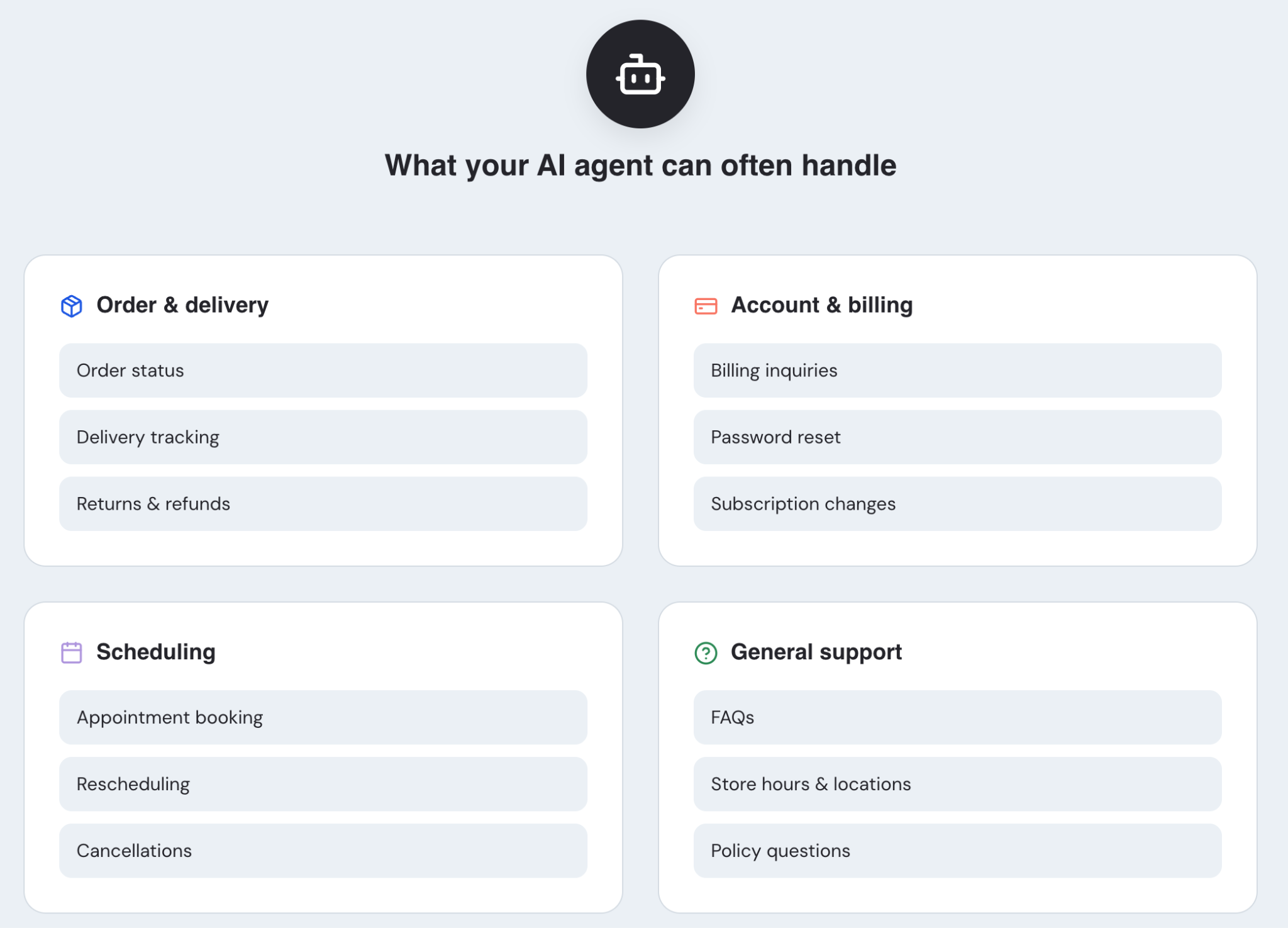
We’ve seen this play out with our own customer base. Aqua Finance, a consumer finance company, increased dollars collected per hour by 61% and cut after-call work in half with Cresta.
Quality management is a second source of savings. Manual QA reviews a few percent of calls and still consumes hours of supervisor time. With automated scoring, your team can cover every interaction at a fraction of the cost, and it frees supervisors to coach rather than tally scorecards.
Complete Visibility
Conversation intelligence can help you analyze every conversation instead of the small sample most quality programs review manually.
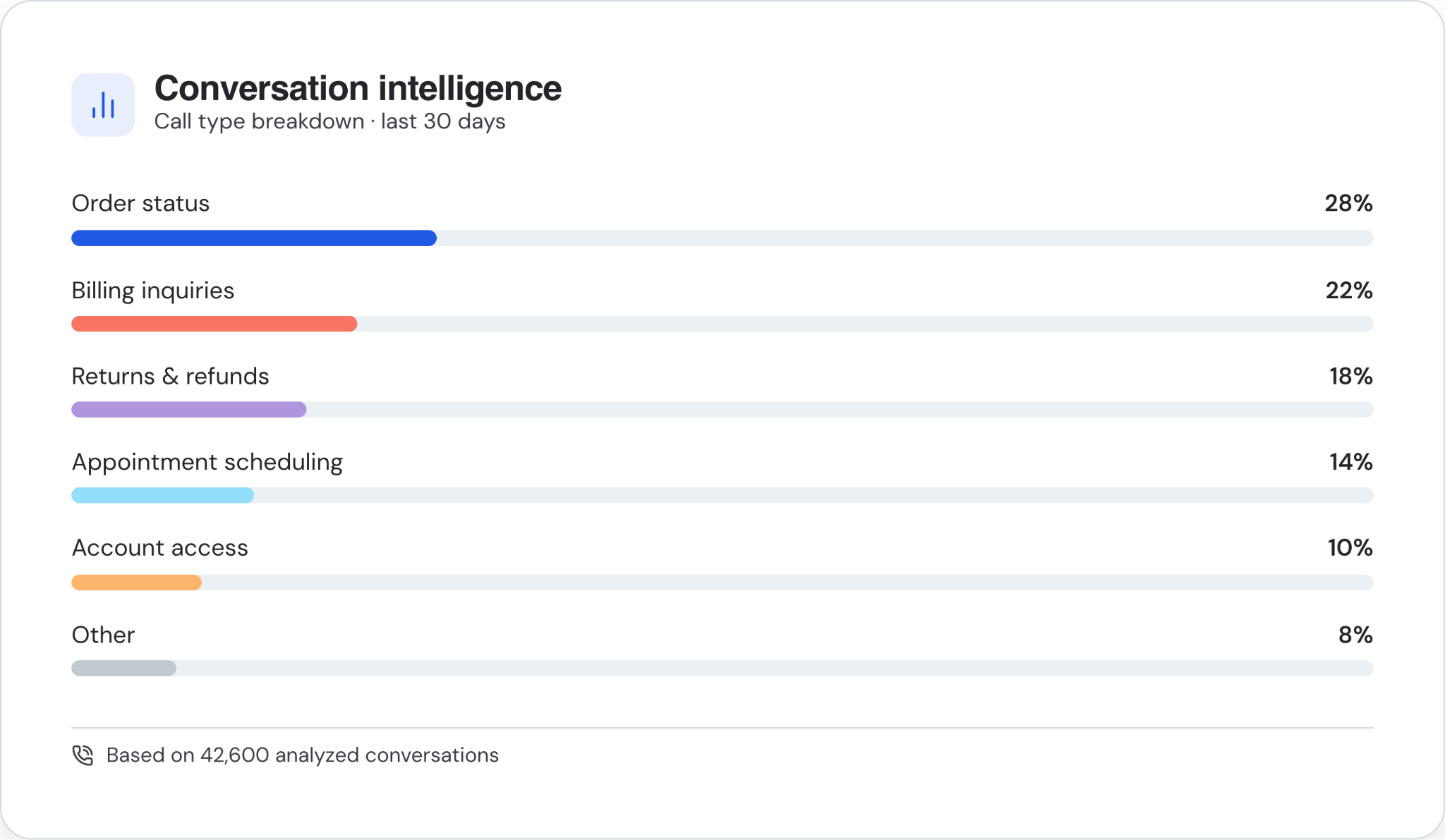
This gives you visibility into what’s driving outcomes and spot conversations that shouldn’t have happened in the first place, from confusing bills to broken self-service flows.
That full-coverage view lets you perform root-cause analysis quickly and effectively and even determine the areas that are ready for automation.
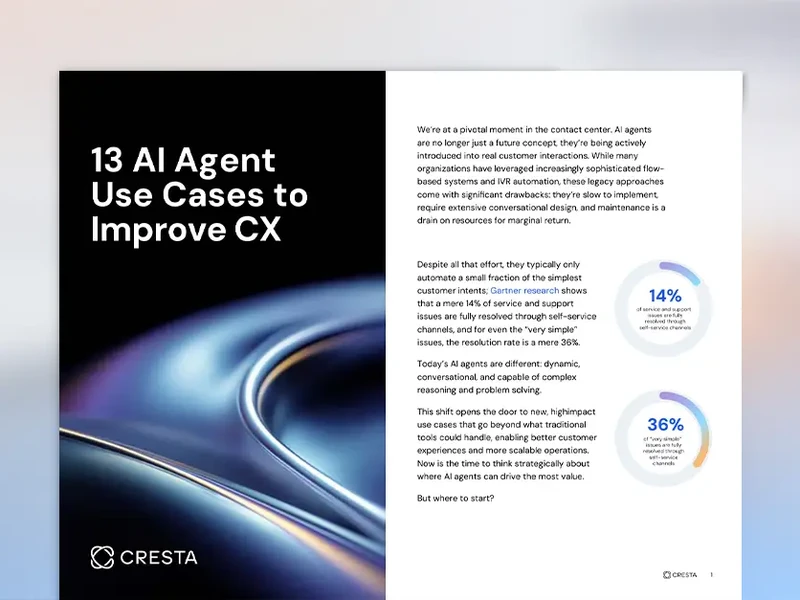
Uncover the best use cases for getting started
How Contact Centers Use AI
Now that you know how AI for contact centers generally works, let’s dive into some practical use cases.
Real-Time Agent Assistance and Insights
An AI Agent can listen to live conversations and augment agents in the moment.
This can be suggesting specific phrases proven to work and automatically showing knowledge base content so agents stop searching mid-call. The agent ultimately stays in control and decides what to use.
What separates guidance that scales from guidance that plateaus is behavioral recognition.
Rather than matching keywords, the underlying platform reads the full context of a conversation, detects a churn signal or a compliance trigger, and delivers a targeted intervention designed to drive a specific outcome. It also writes summaries continuously, so after-call work shrinks and handoffs carry full context.
Quality Management
Conversation intelligence lets you score every interaction against your call center agent scorecard instead of the few percent a manual program can review.
For example, your contact center can automatically score whether agents verify the customer’s identity, acknowledge the issue, ask the right discovery questions, use approved language, and summarize next steps before ending the call.
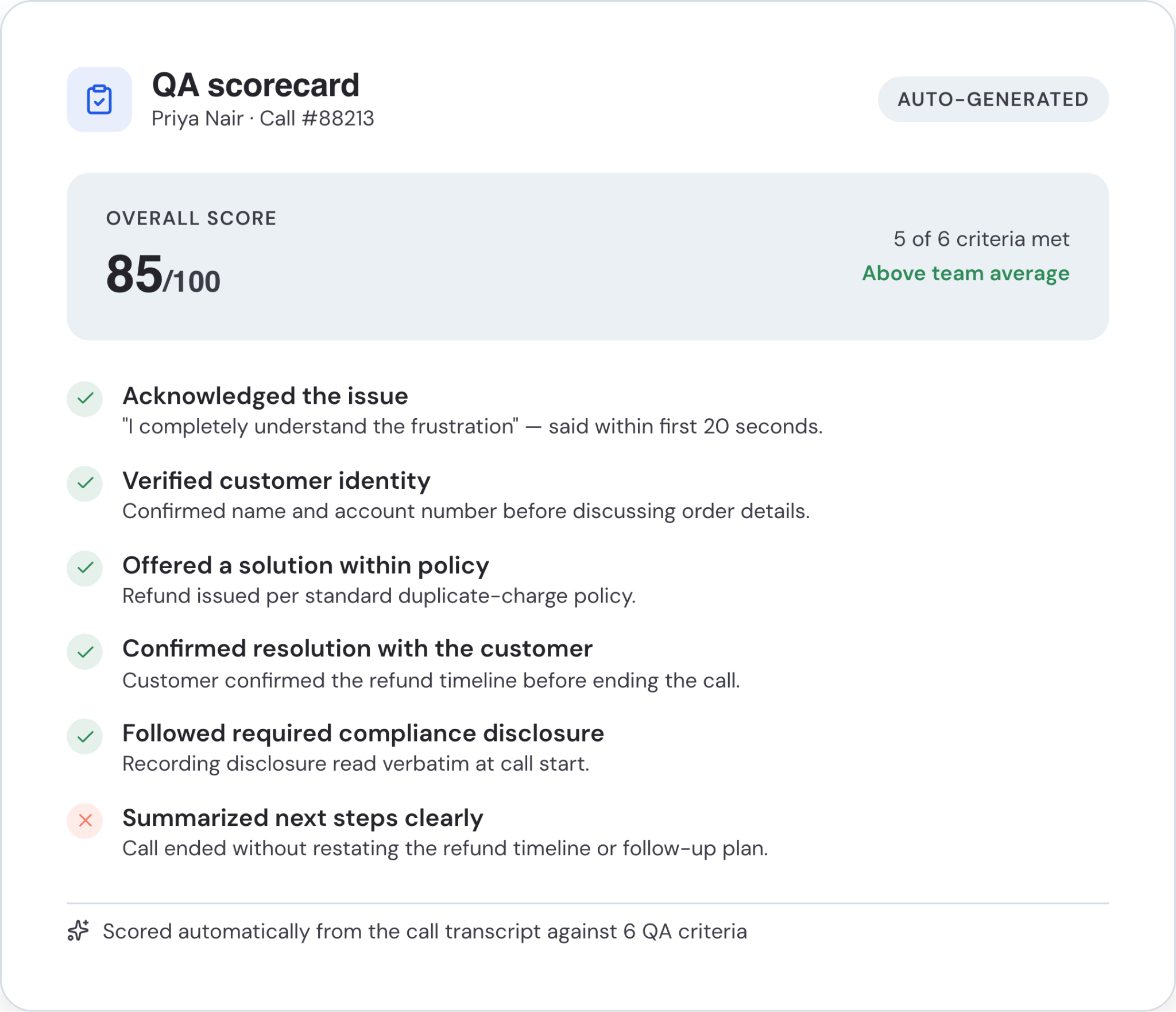
Automated scoring gives QA and compliance teams complete, consistent coverage and a defensible record, which is why AI is essential to quality management.
Because scoring can run on the same conversation data that powers live guidance, a behavior you decide to measure can also become a behavior you coach and guide toward. You build the rule once, and it works across measurement and action.
Agent Coaching
Supervisors can see which behaviors lead to better results and build targeted skill plans instead of coaching from memory or giving impersonal advice to an agent.
Pest-control provider Aptive, for example, used Cresta’s real-time guidance and conversation intelligence to raise empathy adherence from 33% to 79%. The same work lifted its save rate from a 42.2% goal to 46% and generated $2.37 million in additional annual revenue.
Self-Service Automation
An AI Agent can handle billing questions, appointment changes, troubleshooting, collections, and retention conversations end to end.
Because it can reason over the whole conversation rather than following a fixed script, it can resolve several intents in one session across voice and digital channels.
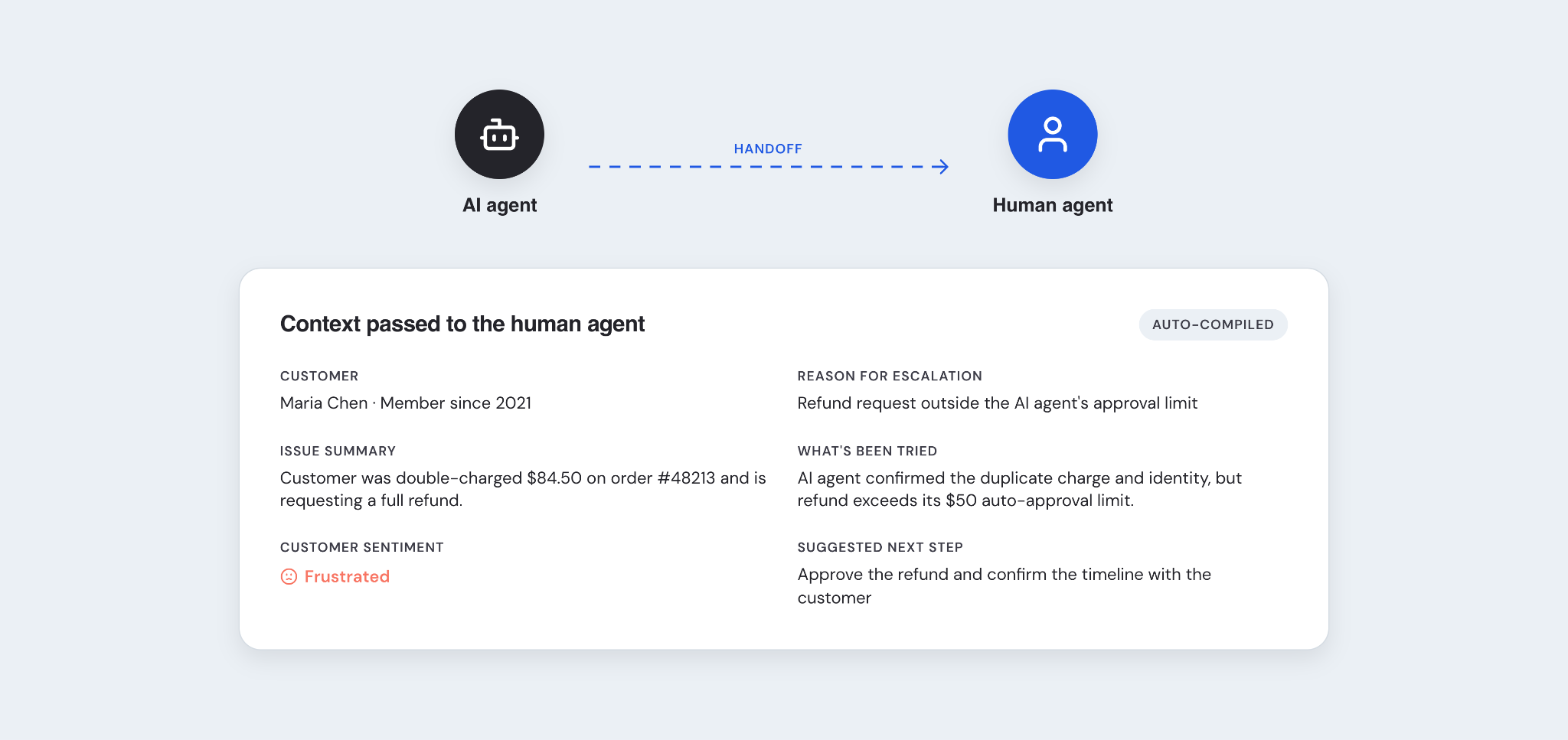
It can also hand off to a human when a conversation needs judgment or carries high emotion, and the receiving agent gets full context so the customer doesn’t repeat themselves.
How to Implement AI for Customer Experience
The implementations that work treat AI as a shift in how the operation runs, not a software rollout. A few practices separate the deployments that stick from the ones that stall.
- Involve agents from the start. The people on the phones know where the friction is, and their buy-in drives adoption
- Start with quick wins. Pick a high-volume, clear-goal use case, prove the outcome, then expand
- Clean up your data. Guidance and automation are only as good as your knowledge bases, so fix stale and conflicting content first
- Build in security from day one. Define your security measures, access controls, and oversight before you scale
- Measure business outcomes. Track metrics that matter, such as first contact resolution (FCR), not just usage
- Plan for humans and AI to work together. A we’ve covered, AI can augment human agents, and help them avoid the tedious, repetitive requests so they can focus on the higher-value work
You’ll ultimately need to treat the rollout as a change program with clear owners, milestones, and feedback loops.
Start Making AI Work for Your Contact Center with Cresta
Cresta is a unified AI platform for customer experience that brings together AI agents, real-time support for human agents, and conversation intelligence on one system.
Here’s a closer look at Cresta’s platform:
- AI Agent: Automates customer conversations across voice and digital channels, handling multi-step workflows and escalating to a human when needed
- Agent Assist: Gives human agents real-time guidance, knowledge, next-best actions, and automated summaries during live conversations
- Conversation Intelligence: Analyzes every interaction, scores key behaviors, and turns findings into insights, quality evaluations, and targeted coaching
Learn more about how Cresta can help your contact center improve every customer interaction by requesting a demo today.
.jpg)


