



There is a pitch making the rounds in AI agent evaluations: build one AI agent, use the same configuration across voice, chat, SMS, and email, and gain efficiency without compromising the customer experience. It sounds compelling. It also demos well. But a shared agent foundation is not the same thing as an identical interaction model.
Across every AI Agent configuration we have deployed, our analysis found meaningful differences in prompt design, runtime configuration, tool contracts, and implementation code across voice and chat. These differences appeared even within deployments where both channels shared the same customer or business-domain foundation.
The question we asked was straightforward: which parts of an AI agent can genuinely remain shared, and which parts must adapt to the channel?
The answer is neither one flat configuration nor a collection of disconnected agents. It is a shared foundation for customer state, governance, integrations, and business logic, combined with channel-native orchestration, runtime controls, and tool adapters.
Voice and Chat Impose Different Interaction Constraints
Voice and chat differ at the level of timing, human behavior, and interface mechanics, not just message format.
Turn-taking is immediate in spoken conversation. A 2009 cross-language study of ten languages (Stivers et al., PNAS, 2009) found that turn transitions clustered within roughly 0 to 200 milliseconds of the previous turn, with an overall median of about 100ms and a mean of about 208ms. That creates a narrow response window for a voice agent. In voice, delays beyond roughly 1.5 seconds can rapidly degrade the experience.
Chat latency still matters, but text interaction is not governed by the same acoustic turn-taking rhythm.
This is why we invest in semantic turn detection that uses conversational context to determine whether a caller has finished speaking. Chat has no equivalent problem. It has a different one: customers multitask, go quiet for minutes, and expect the conversation to still make sense when they return.
But while the conversation persists, its interactive visual components may not. A payment link can expire. An appointment slot can be taken. A button or form may no longer reflect the customer’s current account state. A production chat agent therefore has to manage the lifecycle of what it sends. It must know when an action expires, validate that an option is still available, and recover when the customer returns to stale content.
Speech is ephemeral, text persists. A chat user can simply scroll up. A caller cannot. That single fact reshapes response design.
Voice responses need to be short, sequential, and easy to confirm. Chat can carry links, images, structured lists, and custom UI components, but those elements must remain current, recoverable, and safe to resume.
Voice input is noisy. Voice agents receive Automated Speech Recognition (ASR) transcripts, not clean text. They must tolerate transcription errors, filler words, and mid-sentence interruptions. Phone audio is also narrowband, typically sampled at 8 kHz versus the 16+ kHz you may hear in a browser demo, which is one reason AI agents that sound great in a web demo can rapidly degrade on a real phone line.
Interruption is a voice-native event; callers barge in and don’t always reply the way one might anticipate. A production voice agent needs turn detection so it stops talking and adapts without losing conversational state.
Chat has no analog. What it needs instead is grounding: rules for when to answer from the knowledge base and when to hand the customer something to read for themselves. If the channels differ this much at the input and output layer, the agent's behavior has to differ too. Our production data shows exactly that.
What the Production Data Shows
Across production deployments, the biggest difference is not the wording. It is what the agent has to do before it can respond. Even when voice and chat support the same customer and use case, they often need a different sequence of decisions.
On voice, the agent is managing a live call. It has to work out intent quickly, keep answers easy to follow, recover when the caller interrupts, and pass useful context along if the call moves to a person. In chat, some of that work shifts to the interface. The agent can show options, send a link, or let the customer return to the conversation later.
That is also where reuse starts to break down. Tools, policies, knowledge, APIs, and business rules can be shared. Prompts and the way results are presented often cannot. The closer the logic is to the actual interaction, the more likely it is to be channel-specific.
This does not mean building two separate systems. It means sharing the parts that should stay consistent and letting the conversation flow change by channel. The examples below show how that plays out in handoffs, interruptions, and routing.
Airline agent handoff
For a major airline customer, chat and voice use different intake flows before a human handoff. Chat can collect a short written brief with the issue, relevant booking or account details, and what has already been tried. If the customer asks for an agent right away, chat can use a simple form.
Voice keeps the intake lighter. The assistant first asks what the caller needs, then collects only the details required for that issue. It uses the stated reason and recent conversation to choose the right team, without making every caller work through the same checklist.
Hospitality interruption handling
For a hospitality operator, voice and chat share the same brand persona, policies, and knowledge. The difference appears in how each channel recovers when the conversation breaks.
Voice must decide whether a pause means the caller is finished, stop when the caller interrupts, and keep enough state to resume. Chat receives complete messages, so it focuses instead on keeping links, forms, and availability current when a customer returns later.
Fintech backend tool routing
For a financial services customer, voice starts by resolving intent because it replaces a phone menu. Chat opens with knowledge retrieval because the visitor often arrives from a page that already provides context. The same customer need can therefore enter through a different conversation flow.
Both channels call the same underlying integrations. Each uses its own wrapper to decide when a tool runs, what information it needs, and how the result is presented. The integration is shared even though the surrounding flow is channel-specific.
The Right Architecture: Shared Core, Channel-Native Behavior
So should every company build two disconnected agents? No. That is the opposite failure mode, and it is what customers actually complain about: repeating themselves when they move from chat to voice.
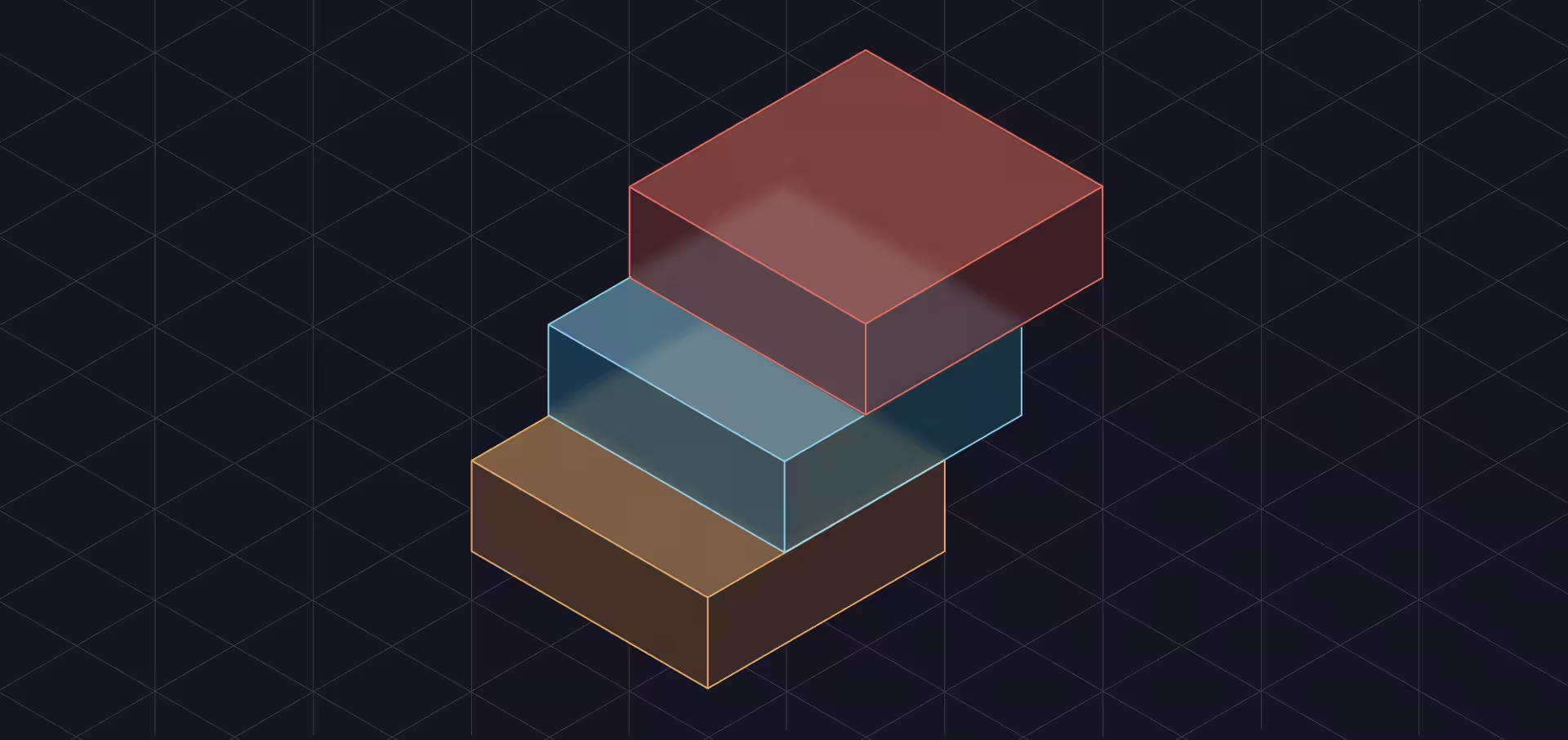
The pattern across prompts, runtime configuration, tool contracts, and implementation examples supports a shared foundation with channel-specific interaction layers:
- The shared foundation preserves omnichannel continuity: It holds customer identity, conversation history, intent, progress, brand persona, policies, guardrails, backend integrations, and core business logic. This state should carry across channels and AI-to-human handoffs. A customer who starts a dispute in chat and calls the next day should not have to start over.
- The channel layer adapts behavior to the interaction model: For voice, this includes turn detection, barge-in, spoken-output constraints, telephony behavior, and voice-specific sequencing. For chat, it includes asynchronous state management, retrieval, widgets, links, rich media, and stale-action validation. Even within text formats, channel semantics matter: supplemental SMS code for deployments shows that transfer behavior, metadata contracts, and routing side effects must change materially from web chat, further proving that a monolithic channel configuration is insufficient.
- Tool adapters connect the two layers: Shared backend APIs can remain consistent while channel-specific wrappers control when a tool is called, what information it requires, and how its result is presented.
This is how we build. Our decentralized design composes agents from task-oriented sub-agents that share brand persona and system-level governance globally while letting each channel's behavior be tuned independently, an approach that also removes up to two seconds of round-trip latency per turn compared to central orchestrators. [Note: verify current latency claim] It is also why an independent evaluation found our voice agents had the lowest latency among the AI agent vendors tested, and used filler language on roughly 16% of turns versus closer to 50% for others.
How to Evaluate an Omnichannel AI Agent Architecture
When evaluating an AI agent vendor, ask three questions:
- Which parts of the agent are shared across channels, and which are channel-specific?
A strong answer distinguishes shared customer state, policies, integrations, and business logic from channel-specific orchestration and runtime behavior. A claim that every channel uses an identical configuration should trigger deeper technical scrutiny.
- What context reaches the human agent during a voice or chat handoff?
Both channels should preserve the customer’s intent, progress, and relevant account state. Voice may require more explicit structured extraction because the receiving agent cannot always rely on a visible conversation conversation. Chat should preserve conversation continuity while validating that links, forms, and other actions remain current.
- Where does customer context live?
If state is trapped inside separate channel agents, the architecture is multichannel rather than truly omnichannel. If behavior is forced to remain identical across channels, the resulting experience is likely optimized for the lowest common denominator.
The “one agent everywhere” pitch often optimizes for configuration reuse and a clean buying demo. Production environments demand a more precise balance: share what should remain consistent and adapt what the channel requires.
Customers do not experience an architecture diagram. They experience a phone call that responds quickly without cutting them off and a chat conversation that provides the right action with their history intact. Getting both right means designing each interaction model deliberately on top of one shared foundation.
See how Cresta combines shared customer context with channel-native AI agent behavior. Request a demo.