Reduce Average Hold Time in Contact Centers

• Hold time and queue wait time are two different problems that require completely different fixes. Most efficiency investments target queue wait time through staffing and routing, while the mid-call delays that frustrate customers just as much go unaddressed.
• The root cause of hold time isn't how work gets distributed. It's that agents lack immediate access to the information they need during live conversations, and searching disconnected systems while customers wait is where time disappears.
• Traditional approaches like callback queues and IVR optimization shift the problem around without fixing it. Agents who reach customers quickly but then put them on hold multiple times while hunting for answers still create poor experiences.
• Pushing agents to reduce hold time through speed alone creates quality tradeoffs. Without proper knowledge tools, rushed agents produce incomplete resolutions that drive repeat contacts, which increases total handling cost even as individual calls get shorter.
• The most direct lever is surfacing the right information at the moment agents need it during live conversations, without requiring them to search, prompt a system, or switch between tabs while customers wait.
Real-time agent guidance cuts hold time at the source by surfacing answers the moment agents need them, so customers never hear "let me check that for you." Most contact centers approach hold time by optimizing staffing and scheduling, but these capacity-based fixes don't address why agents put customers on hold in the first place. The problem is almost always information access. Agents toggle between disconnected knowledge bases, policy documents, and customer relationship management (CRM) screens while customers sit in silence. Each search creates a delay that chips away at customer satisfaction (CSAT) scores and inflates handle time.
The 2024 CCW Market Study on the Future of Contact Center Employees found that 73% of contact center leaders say agents waste too much time looking up knowledge, and 71% report agents spend excessive time on non-interaction work like notes, summaries, and data logging. When agents can't find what they need instantly, they either put customers on hold or give incomplete answers that lead to repeat contacts.
This guide covers what drives hold time in contact centers, why traditional reduction strategies fall short, and how real-time AI agent assist technology addresses the root cause.
What is the difference between hold time and queue wait time?
Hold time and queue wait time are frequently confused, but they require completely different interventions. Queue wait time is the period customers spend waiting in line before they reach an agent. Hold time measures the silent pauses during an active conversation when agents stop to search for information, verify policies, or consult other systems. Staffing improvements, better forecasting, and routing adjustments reduce queue wait time. In-conversation knowledge tools reduce hold time.
The distinction matters because organizations that invest heavily in queue optimization often overlook the mid-call delays that frustrate customers just as much. A customer who reaches an agent in 15 seconds but then sits through three separate holds while the agent hunts for answers still leaves the interaction dissatisfied.
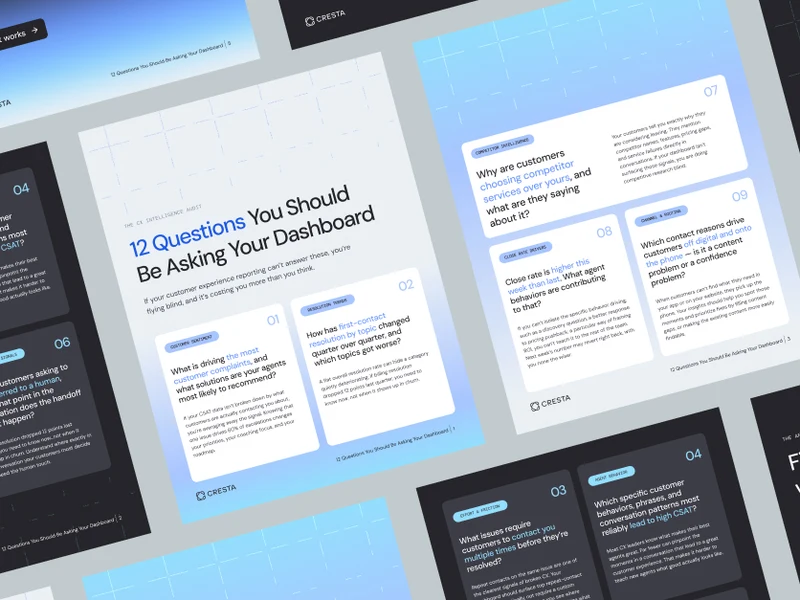
Find the root cause first with these questions
How does hold time fit into average handle time?
AHT breaks down into three components that each respond to different interventions. Talk time covers the actual conversation between agent and customer. Hold time captures every pause where the agent mutes the line to search, consult, or process. The third component, wrap time (also called after-call work), includes all post-conversation tasks like writing notes, updating CRM records, and logging dispositions.
Reducing any one of these components lowers AHT, but the approach matters. Cutting talk time by rushing agents harms resolution quality. Cutting wrap time through automation improves throughput without affecting the customer experience.
Cutting hold time through better in-conversation knowledge delivery improves both speed and quality simultaneously, because agents who find answers faster also give more complete responses. That makes hold time the highest-leverage target for AHT reduction that doesn't sacrifice customer outcomes.
What are healthy benchmarks for hold time and related metrics?
Before optimizing, teams need a baseline to measure against. A commonly referenced service level standard is answering 80% of calls within 20 seconds, and industry average AHT is often cited at around 6 minutes for a well-run operation, though this varies significantly by vertical. Financial services typically runs 6 to 8 minutes, while healthcare tends toward 8 to 12 minutes. Retail operations are often shorter at 3 to 4 minutes.
The same report places average call abandonment rates around 5 to 6%, with top performers achieving 2 to 3%, and standard occupancy rates at 75 to 85%. These benchmarks provide useful reference points, but they should be measured alongside outcome metrics like first call resolution (FCR) and CSAT. An operation that hits strong AHT numbers while driving repeat contacts or low satisfaction scores is optimizing the wrong thing.
What causes mid-call holds in contact centers?
At the core, mid-call holds come from two sources. The first is knowledge gaps, where agents can't find the information they need to answer a customer question. The second is back-end process work, where agents need to complete system tasks like verifying account details or processing changes across multiple tools. Both force the customer into silence while the agent works behind the scenes.
Fragmented knowledge systems
This is the biggest driver. Agents frequently need to search across multiple disconnected platforms, including knowledge bases, CRM systems, policy portals, and product databases, to answer a single customer question. The 2024 CCW Market Study found that 61% of contact center leaders say agents struggle with the contact center systems themselves, adding friction to every interaction. Each system switch creates a hold, and complex questions that span multiple systems can generate several holds per call.
Inadequate routing
When customers reach agents who lack the specific expertise to handle their issue, those agents spend more time searching for answers or escalating. Many centers still use basic round-robin distribution that treats all agents as interchangeable, even though skills-based routing could direct customers to agents who already have the knowledge to resolve their issue without additional research.
Training gaps that create information dependency
Centers that lack thorough training produce agents who are more dependent on external lookups during live calls. According to Cresta's 2024 State of the Agent Report, agents given one-size-fits-all training are 2x more likely to leave within six months, creating a constant cycle of undertrained replacements who rely heavily on holds.
After-call work that bottlenecks throughput
When agents spend several minutes on post-call documentation for every interaction, they return to the queue slower. That increases wait times for the next set of callers and creates a cascading effect where longer gaps between calls compound into longer hold times across the operation. Automating after-call work (ACW) turns agents from summary creators into editors, freeing them to return to the queue faster.
What operational strategies reduce queue wait time and transfers?
While in-conversation AI guidance is the most direct lever for mid-call hold time, several operational strategies reduce the delays that happen before and between conversations.
Skills-based routing directs customers to the most qualified agent for their issue, reducing the chance that an agent needs to put the customer on hold while searching for specialized information. Some operations also use last-agent routing to reconnect repeat callers with the same agent who handled their previous interaction, or account-status routing to flag customers with specific conditions during the IVR stage and direct them to specialists.
Staffing models like the Erlang C formula remain the industry standard for calculating how many agents are needed at any given time. Understaffing at peak times inflates queue wait time, which compounds customer frustration before agents even have the chance to resolve the issue.
Hold time is also a problem to prevent by reducing unnecessary inbound volume. When customers contact the center because a self-service flow is broken or a policy change was poorly communicated, those calls generate avoidable holds. Conversation Intelligence can surface these upstream friction points by analyzing 100% of customer interactions and identifying recurring conversation topics that point to process issues beyond the contact center.
Why do traditional hold time strategies fall short?
The operational strategies above help manage queue flow and reduce unnecessary volume, but they don't address the mid-call holds that happen once a conversation is underway.
Callback systems let customers request a return call instead of waiting, which reduces perceived wait time before a customer reaches an agent. However, they shift pre-agent delay rather than removing mid-call holds. Predicting callback timing windows is difficult, and customers who schedule callbacks may not be available when agents return the call.
Better IVR design can deflect simpler calls to self-service, but it doesn't help with the holds that happen after a customer reaches an agent. Most calls that reach agents genuinely need human handling. The bottleneck is that agents can't find answers fast enough once the conversation starts. And customers who just navigated repeated menu options arrive at the agent conversation already frustrated, which makes them far less tolerant of any additional hold time.
Pushing agents to reduce AHT through sheer speed creates quality tradeoffs. Without proper support tools, agents rushed to meet targets may provide incomplete resolutions that lead to repeat calls. The 2023-24 ContactBabel guide on US Customer Experience Decision-Makers identifies FCR as a key driver of customer experience that impacts both cost and satisfaction, yet notes it remains one of the hardest metrics to measure and improve.
How does real-time agent assist technology reduce hold time?
Cresta Agentic Assist works by analyzing live conversations and providing instant recommendations, information retrieval, and guided responses during the call. Instead of optimizing how work gets distributed or scheduled, it removes unnecessary delays by giving agents immediate access to information while conversations are happening.
When a customer asks about product compatibility, policy exceptions, or troubleshooting steps, Cresta's Knowledge Agent automatically surfaces relevant information without agents needing to search or put customers on hold. Knowledge Agent is an agentic assistant that continuously listens to the live conversation and reads real-time on-screen context to generate precise, cited answers tailored to the specific customer scenario.
Proactive knowledge delivery
What sets Knowledge Agent apart from other agent assist tools is how it delivers information. Many copilot-style tools require agents to manually type a query into a separate window before they see anything useful, which pulls focus from the conversation and can create the same hold it was supposed to prevent. Knowledge Agent works differently. It connects and consolidates knowledge from multiple sources into a single source of truth, then proactively identifies moments during conversations where information is needed and delivers relevant, source-verified answers with no searching or prompting required.
Those answers appear inside a persistent, browser-based sidebar that follows agents wherever they work, with cited sources so agents can verify and trust what they see. Through a feature called Context Fields, Knowledge Agent references specific data points on the agent's screen, like a customer's loyalty tier, booking class, or account status, to tailor every response to the exact customer situation.
This approach helped Snap Finance, a consumer financing provider experiencing 40-50% year-over-year growth, achieve a 40% reduction in AHT after implementing Cresta's platform. With real-time knowledge delivery feeding answers during conversations, agents stopped putting customers on hold to search through scattered documentation. Snap Finance also saw 23% higher CSAT and increased Employee NPS and engagement scores. "Their expectations were realistic and frankly they over-delivered in everything," noted Adam Christensen, Senior Director of Resource Management at Snap Finance.
Step-by-step workflow guidance
Beyond answering questions, Cresta Agentic Assist provides step-by-step guided workflows for multi-step processes. Knowledge Agent automatically identifies the right procedure or workflow for any sales or support scenario, then guides agents through approved playbooks and best practices. These workflows support both linear processes and complex branching paths with variables based on customer input.
The practical effect is that agents no longer need to pause, think about what comes next, and search for the right procedure. According to Cresta's 2024 State of the Agent Report, 79% of agents say good software makes or breaks whether an agent is good at their job, and 81% report performing better because of the technology available to them.
United Airlines saw these benefits firsthand after implementing Cresta Agentic Assist with its care chat team to address longer handle times as the airline prepared for a significant increase in chat-preferring customers. With agents receiving real-time knowledge and workflow support during live conversations, United Airlines achieved a 15% reduction in AHT and a 15% increase in agent response time. Agent experience scored 90% positive, and employee satisfaction reached 97%. "We are excited and really optimistic about where we're going with AI. It has already been a massive efficiency saver for our agents and our customers," noted Asif Majeed, Senior Manager of Global Contact Centers at United Airlines.
Typing automation and after-call work reduction
Cresta Agentic Assist also reduces hold-adjacent delays through chat efficiency features and automated documentation. Smart Compose suggests completed text as agents type responses, while AI-generated suggestions draw on top-performing historical data to speed up chat interactions. For voice interactions, the system automatically generates conversation summaries and syncs them directly with systems of record such as CRM platforms, removing the manual note-taking burden.
These documentation features don't reduce hold time during the active call, but they increase agent availability by cutting the gap between conversations. When combined with Knowledge Agent and guided workflows, the effect compounds. Agents who spend less time on documentation and searching move through interactions with less friction, and that smoother flow means fewer mid-call interruptions.
How the unified platform connects these capabilities
The unified platform design matters because these capabilities reinforce each other. Conversation Intelligence identifies where holds happen and surfaces operational insights about handle time and agent behaviors. Those insights feed into Knowledge Agent configuration and behavioral guidance. The coaching loop then tracks whether agents are applying new behaviors and correlates those changes with outcome improvements.
What does reducing hold time deliver across your operation?
When agents resolve issues faster and with fewer interruptions, the benefits compound across customer satisfaction, agent retention, and operational throughput.
Fewer holds and faster resolutions mean customers spend less time waiting and more time getting their problems solved. The 2023-24 ContactBabel guide on US Customer Experience Decision-Makers found that around half of customers across all age groups report having to call back multiple times "very often" or "fairly often," and FCR is consistently identified as one of the primary drivers of positive customer experience.
Contact center turnover is often cited in the 30-45% annual range, nearly 3x the rate of other industries, according to Cresta's State of the Agent Report 2024. When agents have the right tools at their fingertips, they can resolve issues without interrupting the conversation, which lowers frustration and builds competence. The same report found that 91% of agents with personalized AI-powered coaching are happy at work, compared to 57% with standard coaching.
When AHT drops and agents return to the queue faster, the center absorbs more volume without proportionally increasing headcount. The 2024 CCW Market Study found that 83% of contact center leaders feel agents spend too much time on simple, repetitive interactions. Automating the information retrieval and documentation work that drives those inefficiencies frees up capacity without adding staff.
How to measure hold time improvement safely
Reducing hold time without tracking its relationship to quality metrics risks creating a faster but worse customer experience. The safest approach is connecting hold time measurement to complementary metrics so you can see the full picture.
- FCR. If hold time drops and FCR rises simultaneously, the intervention is working as intended.
- CSAT. Confirms that faster interactions are actually improving the customer experience, not just shortening it.
- ACW duration. Reveals whether agents are shifting hold time work into post-call tasks rather than eliminating it.
- Transfer rate. If hold time drops but transfers increase, agents may be rushing through calls without resolving the issue.
- Repeat contact rate. Catches cases where faster calls are generating callbacks that offset any efficiency gains.
Hold frequency per call matters alongside duration as well, since five short holds can frustrate customers more than one longer one. For operations leaders looking to identify safe optimization targets, compare hold time alongside quality measures across agent cohorts. Low hold time paired with high quality scores reveals practices to replicate. Low hold time paired with declining resolution rates signals a speed-over-quality problem that needs correction.
A 30-60-90 day roadmap for reducing hold time
Turning these strategies into action requires a structured rollout that builds momentum without disrupting operations, moving from diagnosis through pilot to full deployment so each stage informs the next.
Days 1 through 30. Diagnose the problem
Start by auditing current hold time data to distinguish mid-call holds from queue wait time. Identify the top five reasons agents put customers on hold by reviewing call recordings and agent feedback. Map the knowledge systems agents access during calls and establish baseline metrics for AHT, hold frequency, FCR, and CSAT.
Days 31 through 60. Pilot real-time knowledge delivery
Deploy Knowledge Agent or equivalent real-time guidance tools with a pilot group and connect knowledge sources into a unified system. Measure hold frequency and duration against the baseline throughout the pilot period. Comparing pilot group metrics to a control group across AHT, hold time, FCR, and CSAT will show whether the intervention is producing the expected gains.
Days 61 through 90. Scale and optimize
Expand deployment based on pilot results and configure guided workflows for the most common multi-step procedures identified during the diagnostic phase. Activate automated conversation summaries to reduce ACW and improve queue return times. Feed conversation intelligence insights back into knowledge base updates and workflow refinements so the system improves continuously.
Fix the root cause of hold time, not the symptoms
The biggest gains come from putting knowledge, workflows, and decision support directly into the conversation so agents never need to pause and search. Cresta is built for this shift. The platform brings together Cresta Agentic Assist with Knowledge Agent, behavioral guidance, AI summaries, and automated documentation alongside Cresta Conversation Intelligence. Because these capabilities share data, models, and integrations across a unified platform, insights flow into frontline action without fragmentation.
Visit our resource library to explore more agent assist approaches, or request a demo to see how Knowledge Agent and behavioral guidance work in practice.